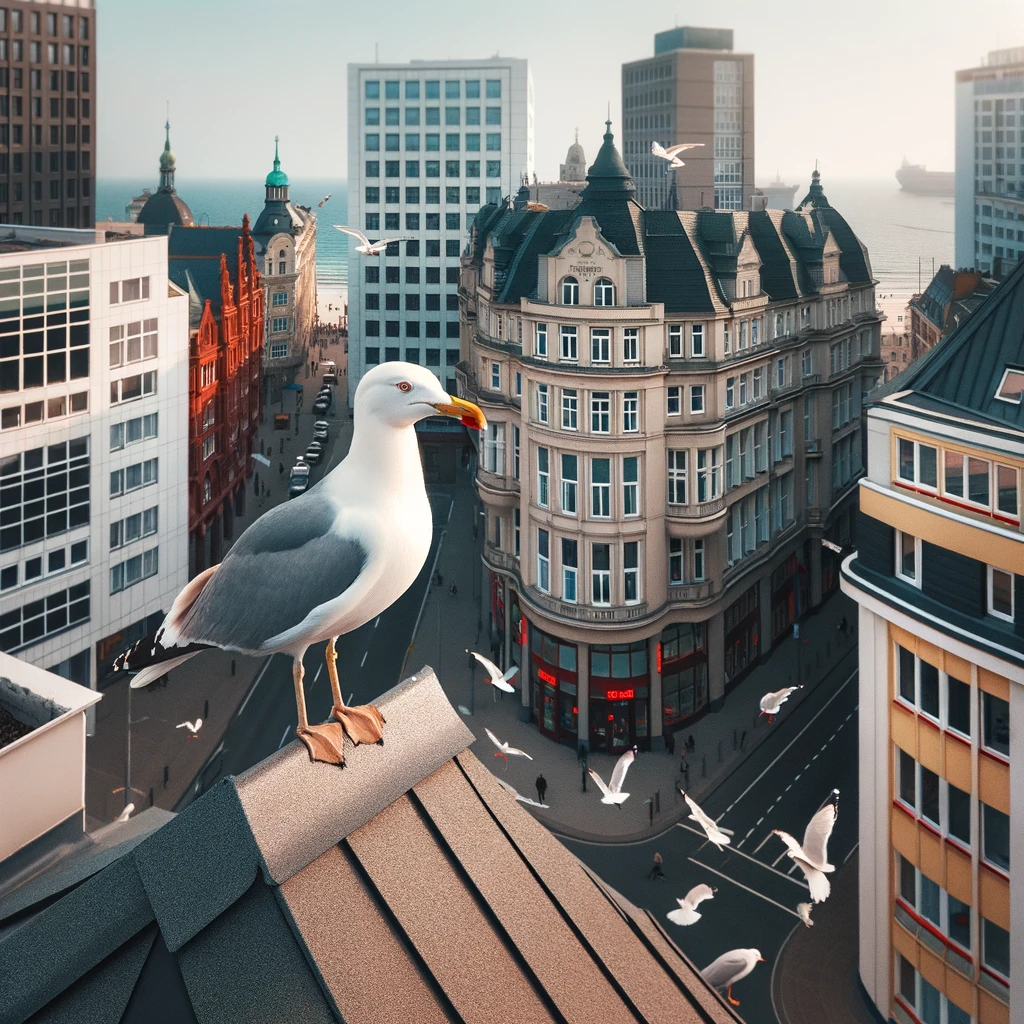
Scientists are urging people to see seagulls as "charismatic" rather than "criminal" and to learn to live alongside them. Seagulls are being forced into urban areas due to the loss of natural habitats and are coming into conflict with humans over food. However, experts argue that these birds should be respected for their intelligence and adaptability. They have learned to scavenge for food by observing older birds and have developed clever behaviors to obtain food from bins or directly from humans. Simple solutions to the problem include providing larger, more secure bins and educating people not to leave leftover food lying around.
The decline of gull populations in the wild is a growing conservation concern. The six main gull species in the UK are all declining and are either amber- or red-listed. A recent national survey of winter gulls aimed to assess the number and distribution of populations overwintering in the UK. The survey revealed that breeding gull populations have been declining, although there is limited data on the increase of gulls nesting on buildings. More data on winter gulls will be collected at the end of the year to develop better conservation strategies.
Seagulls are often seen as aggressive and a nuisance, especially during the breeding season. However, they are an important part of our natural world and have adapted to urban life due to human activities. They are intelligent birds that have learned to survive in urban areas by scavenging for food. By understanding their behavior and implementing simple solutions, such as secure bins and responsible food disposal, we can coexist with seagulls and appreciate their unique qualities.
In conclusion, seagulls should be seen as "charismatic" rather than "criminal" and we should learn to live alongside them. Their intelligence and adaptability have allowed them to survive in urban areas, but their populations are declining in the wild. By respecting their intelligence and implementing simple solutions, we can coexist with seagulls and contribute to their conservation.
Original news source: Seagulls 'charismatic' not 'criminal', say scientists (BBC)
🎧 Listen:
📖 Vocabulary:
Group or Classroom Activities
Warm-up Activities:
– News Summary
Instructions: Divide the class into pairs or small groups. Give each group a copy of the article. Instruct them to read the article and summarize the main points in a news report format. They should focus on the key information and present it concisely. After a set amount of time, have each group share their news summary with the class.
– Vocabulary Pictionary
Instructions: Write a selection of vocabulary words from the article on separate pieces of paper and put them in a hat or container. Divide the class into teams. One student from each team will come up and randomly select a word from the container. They must then silently act out or draw the word for their team to guess. The team that guesses correctly earns a point. Continue until all the words have been used or a set amount of time has passed. The team with the most points wins.
– Opinion Poll
Instructions: Ask the class to form two lines facing each other. One line will be "agree" and the other line will be "disagree". Read out a statement related to the topic of the article, such as "Seagulls should be seen as 'charismatic' rather than 'criminal'". Instruct the students to move to the agree or disagree line based on their opinion. Give them a few minutes to discuss their reasons with the person opposite them. Afterward, randomly select a few students to share their opinions and reasoning with the class.
– Think-Pair-Share
Instructions: Ask the class to think about the following question: "In what ways have seagulls adapted to urban environments?" Give them a few minutes to think about their response individually. Then, pair the students up and have them discuss their thoughts with their partner. Afterward, bring the class back together and have a few pairs share their ideas with the group.
– Pros and Cons
Instructions: Divide the class into small groups and give each group a sheet of paper. Instruct them to create a pros and cons list about living alongside seagulls. They should consider both the positive and negative aspects of coexistence. After a set amount of time, have each group share their lists with the class and facilitate a discussion about the different perspectives.
🤔 Comprehension Questions:
🎧✍️ Listen and Fill in the Gaps:
Scientists are urging people to see seagulls as "charismatic" rather than "criminal" and to learn to live alongside them. are being forced into urban due to the loss of natural habitats and are coming into conflict with humans over food. However, experts argue that these birds should be respected for their intelligence and . They have learned to for food by observing older birds and have developed clever behaviors to obtain food from bins or directly from humans. Simple solutions to the problem include providing larger, more secure bins and educating people not to leave leftover food lying around. The decline of gull populations in the wild is a growing concern. The six main gull species in the UK are all declining and are either amber- or red-listed. A recent national of winter gulls aimed to assess the and of populations overwintering in the UK. The survey revealed that breeding gull populations have been declining, although there is limited data on the increase of gulls nesting on buildings. More data on winter gulls will be collected at the end of the year to develop better conservation strategies. Seagulls are often seen as aggressive and a nuisance, especially during the season. However, they are an part of our world and have adapted to urban life due to human activities. They are intelligent birds that have learned to survive in urban areas by for food. By understanding their behavior and implementing simple solutions, such as bins and responsible food disposal, we can coexist with seagulls and appreciate their unique . In , seagulls should be seen as "charismatic" rather than "criminal" and we should learn to live alongside them. Their intelligence and adaptability have allowed them to in urban areas, but their populations are declining in the wild. By respecting their intelligence and implementing simple solutions, we can coexist with seagulls and contribute to their conservation.
💬 Discussion Questions:
1. How do you feel about seagulls being forced into urban areas?
2. What is a simple solution to the conflict between seagulls and humans?
3. Do you think seagulls should be respected for their intelligence and adaptability? Why or why not?
4. How would you feel if seagulls were considered a nuisance in your city?
5. Do you like observing seagulls and their behaviors? Why or why not?
6. What are some ways that humans can coexist with seagulls in urban areas?
7. How do you think seagulls have adapted to urban life?
8. Do you think seagulls should be protected as part of our natural world? Why or why not?
9. How would you feel if seagull populations continued to decline in the wild?
10. What are some unique qualities of seagulls that you appreciate?
11. How do you feel about the idea of implementing secure bins to help with the seagull problem?
12. Do you think educating people about responsible food disposal will make a difference in the conflict with seagulls? Why or why not?
13. How would you feel if seagulls were considered "charismatic" rather than "criminal" in your community?
14. What are some other animals that have adapted to urban areas due to human activities?
15. How do you think collecting more data on winter gulls will help with conservation strategies?
Individual Activities
📖💭 Vocabulary Meanings:
Click a dot next to a word, then click the dot next to its meaning to draw a line connecting them.
Words
Meanings
🔡 Multiple Choice Questions:
🕵️ True or False Questions:
📝 Write a Summary:
Write a summary of this news article in two sentences.
Check your writing now with the best free AI for English writing!