
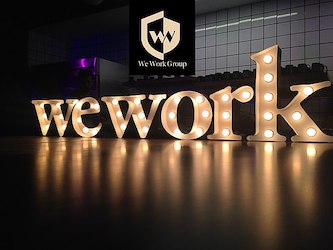
Neumann's charismatic leadership and unconventional approach, including offering free beer and creating a work environment that blurred the lines between professional and personal life, attracted a young and dynamic workforce. With substantial investments from prominent backers, WeWork rapidly expanded globally, but its financial losses were substantial, and questions arose about its valuation as a technology company. The company's attempt to go public in 2019 revealed deeper financial issues, leading to a significant decline in its value and Neumann's resignation as CEO.
Despite WeWork's downfall, Neumann managed to disentangle his personal finances from the company, walking away with a substantial sum. He has since moved on to invest in other ventures and secured backing from a major venture capital firm. The cautionary tale of WeWork and Neumann serves as a reminder of the perils of unchecked ambition and the dangers of overvaluing a company based on speculative potential rather than sound financial fundamentals.
In the end, WeWork's rapid rise and fall exemplify the risks of chasing unsustainable growth and overreliance on investor enthusiasm. The company's story underscores the importance of prudent financial management and a realistic assessment of a business's value, rather than succumbing to the allure of rapid expansion and inflated valuations. Neumann's journey serves as a cautionary tale for entrepreneurs and investors alike, highlighting the need for a balanced approach to business growth and financial sustainability.
Original news source: How WeWork’s founder flew too close to the Sun (BBC)
📖 Vocabulary:
Group or Classroom Activities
Warm-up Activities:
– Headline Creation
Instructions: Divide students into small groups and ask each group to create a compelling newspaper headline that could accompany the article about WeWork and Adam Neumann. Encourage them to capture the essence of the story in a short and catchy way. Afterward, each group presents their headline, and the class votes on which one they think is the most effective.
– Speed Summarizing
Instructions: Pair students and challenge them to summarize the article in just 60 seconds to their partner. After one student has finished, the other student takes a turn. This will help them focus on the main points of the story and practice concise speaking.
– Opinion Spectrum
Instructions: Create a line in the classroom that represents a spectrum of opinions from "strongly agree" to "strongly disagree." Read out statements related to themes in the article, such as "Rapid growth in business is always a positive sign" or "Charismatic leadership is more important than sound financial management." Have students place themselves along the spectrum according to their opinion and discuss their reasoning with the nearest classmate.
– Synonym Challenge
Instructions: Write down several key terms from the article (e.g., ambitious, downfall, valuation, sustainable, speculative). Students work in pairs or small groups to come up with as many synonyms as possible for each word within a set time limit. This helps to expand their vocabulary and understand the nuances of language.
– Future Predictions
Instructions: Ask students to imagine they are financial analysts or venture capitalists five years in the future. Based on the events in the article, have them write a short prediction about the coworking industry, Adam Neumann, or WeWork. Students can share their predictions with the class, and discuss the likelihood and potential impact of these predictions coming true.
🤔 Comprehension Questions:
The core concept behind WeWork's business model was providing flexible workspaces, which became particularly appealing in the aftermath of the financial crisis, as commercial premises were plentiful and the advent of mobile technology facilitated remote work.
Adam Neumann's charismatic leadership and unconventional approach, such as offering free beer and creating a work environment that blended professional and personal life, contributed to WeWork's initial success by attracting a young and dynamic workforce.
The unconventional work environment that included perks like free beer and a blurred line between professional and personal life attracted young and dynamic workers to join WeWork.
Questions arose about WeWork's valuation as a technology company due to its rapid global expansion coupled with substantial financial losses, leading to skepticism about its classification as a tech company and the justification for its high valuation.
The consequences of WeWork's attempt to go public in 2019 were the revelation of deeper financial issues, a significant decline in the company's value, and Adam Neumann's resignation as CEO.
Adam Neumann managed to disentangle his personal finances from the company's downfall, walking away with a substantial sum despite WeWork's financial troubles.
Since his resignation from WeWork, Adam Neumann has moved on to invest in other ventures and has secured backing from a major venture capital firm.
The story of WeWork and Adam Neumann highlights the importance of prudent financial management and a realistic assessment of a business's value, rather than chasing unsustainable growth and inflated valuations. It serves as a cautionary tale for the perils of unchecked ambition and the importance of financial sustainability in business.
🎧✍️ Listen and Fill in the Gaps:
The rise and fall of WeWork and its founder, Adam Neumann, is a story that resembles a modern-day parable. Neumann's larger-than-life persona and grand ambitions led the company to great heights, only to come crashing down in a spectacular fashion. WeWork's of flexible workspaces was not entirely new, but it a chord in the aftermath of the financial crisis, when commercial premises were abundant, and mobile technology remote work. Neumann's charismatic leadership and unconventional approach, including free beer and creating a work environment that blurred the lines between professional and personal life, attracted a young and dynamic workforce. With substantial investments from prominent backers, WeWork rapidly globally, but its financial losses were substantial, and questions arose about its valuation as a company. The company's attempt to go public in 2019 deeper financial issues, leading to a significant decline in its value and Neumann's resignation as CEO. Despite WeWork's downfall, Neumann managed to disentangle his personal finances from the company, walking away with a substantial sum. He has since moved on to in other ventures and secured backing from a major venture capital firm. The cautionary tale of WeWork and Neumann serves as a reminder of the perils of unchecked and the dangers of overvaluing a company based on potential rather than sound financial . In the end, WeWork's rapid rise and fall exemplify the risks of chasing unsustainable growth and overreliance on enthusiasm. The company's story underscores the importance of prudent management and a realistic assessment of a 's , rather than succumbing to the allure of rapid expansion and inflated valuations. Neumann's journey serves as a cautionary tale for entrepreneurs and investors alike, highlighting the need for a balanced approach to business growth and financial sustainability.
💬 Discussion Questions:
1. What is your definition of a "modern-day parable" and do you think the story of WeWork fits this description? Why or why not?
2. How would you feel if you worked for a company that provided perks like free beer and a blurred line between professional and personal life?
3. Do you like the idea of flexible workspaces? Why or why not?
4. Do you think charismatic leadership is more important than sound financial management in a company's success? Why or why not?
5. What is your opinion on the role of investor enthusiasm in a startup's growth? Is it always beneficial?
6. Have you ever worked in a startup environment similar to WeWork's? If so, what was your experience like?
7. How do you think a company should balance rapid expansion with financial sustainability?
8. Do you think it's ethical for a CEO to disentangle their personal finances from their company and walk away with a substantial sum after the company's downfall? Why or why not?
9. What is your opinion on the importance of a realistic business valuation?
10. Do you think the concept of "overvalued" companies is a problem in today's business world? Why or why not?
11. Have you ever been attracted to work for a company because of its culture or perks? What drew you to it?
12. How do you feel about the trend of companies promoting a blend of personal and professional life within the workplace?
13. Do you think there's a risk in businesses branding themselves as technology companies for better valuations, even when their core service is not tech-based?
14. What qualities do you think are essential for an entrepreneur to have in order to avoid the pitfalls that Adam Neumann faced with WeWork?
15. Do you think the story of WeWork will have a lasting impact on how future startups are funded and managed? Why or why not?
Individual Activities
📖💭 Vocabulary Meanings:
Click a dot next to a word, then click the dot next to its meaning to draw a line connecting them.
Words
Meanings
🔡 Multiple Choice Questions:
🕵️ True or False Questions:
📝 Write a Summary:
Write a summary of this news article in two sentences.
Check your writing now with the best free AI for English writing!