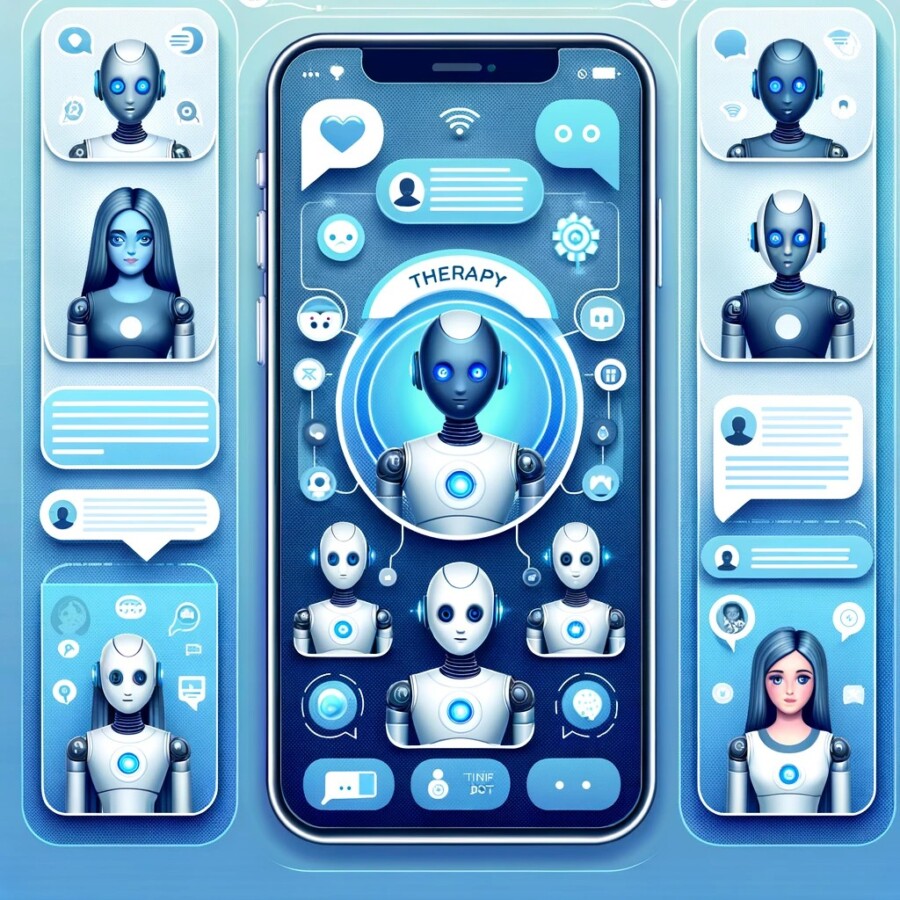
Young people are increasingly turning to AI therapist bots for support and guidance. One popular platform, Character.ai, allows users to create chatbots based on fictional or real people. While the platform offers a wide range of AI personas to interact with, one bot called Psychologist has been particularly in demand. Since its creation just over a year ago, the bot has received a total of 78 million messages, with 18 million of those messages exchanged since November. Character.ai has not disclosed the number of individual users, but it receives 3.5 million daily visits.
Psychologist is described as someone who helps with life difficulties, and it has garnered positive reviews from users who find it helpful in navigating mental health issues. The bot was trained by a psychology student named Sam Zaia, who used principles from his degree to shape its responses to common mental health conditions. While Sam acknowledges that a bot cannot fully replace a human therapist, he believes that AI therapy appeals to young people because it provides a source of comfort and is accessible at any time.
Character.ai has a total of 475 bots with therapy-related names, including "therapist" and "psychologist," which can communicate in multiple languages. While some bots are designed for entertainment purposes, the most popular ones are those that provide mental health support. However, there are concerns about the effectiveness of AI therapy. Some professionals argue that the bots make assumptions and fail to gather all the necessary information, highlighting the limitations of relying solely on AI for therapy.
Character.ai has 20 million registered users, and people spend more time on the platform compared to other AI chatbot services. The company emphasizes that users should consult certified professionals for legitimate advice and guidance. While chat logs are private, they can be accessed by staff for safeguarding purposes. It is important to remember that the AI technology behind these bots is not capable of thinking like a human, and conversations should be approached with caution.
Despite the potential drawbacks, AI therapy is gaining popularity among young people who find comfort in the immediate and spontaneous nature of text-based conversations. The rise of AI therapy may also reflect the high demand for mental health resources and the lack of public resources available. While AI therapy is not a substitute for human therapy, it is seen as a valuable tool for those in need of support.
Original news source: Character.ai: Young people turning to AI therapist bots (BBC)
🎧 Listen:
📖 Vocabulary:
Group or Classroom Activities
Warm-up Activities:
– News Summary
Instructions: Divide the class into pairs or small groups. Give each group a few minutes to read the article. Then, ask each group to summarize the main points of the article in a concise news summary. Encourage them to include the most important information and key details. Afterward, have each group share their news summary with the class.
– Opinion Poll
Instructions: Divide the class into pairs or small groups. Ask each group to discuss and come up with their opinions on the topic of AI therapy based on the information in the article. Once they have discussed their views, have each group create an opinion poll with a few questions related to AI therapy. They can then survey other groups or the entire class to gather opinions. Afterward, have each group share their findings and discuss the results.
– Vocabulary Pictionary
Instructions: Choose a few vocabulary words from the article that may be unfamiliar to the students. Write each word on a separate piece of paper or on the board. Divide the class into teams. One person from each team will come to the front of the class and choose a word. They must then draw a picture to represent the word, without using any letters or numbers. The rest of their team must try to guess the word based on the drawing. The team that guesses correctly earns a point. Continue until all the words have been guessed, and then tally up the points to determine the winning team.
– Pros and Cons
Instructions: Divide the class into pairs or small groups. Ask each group to discuss and come up with a list of pros and cons related to AI therapy, based on the information in the article. Afterward, have each group share their lists with the class. Encourage a class discussion where students can debate the merits and drawbacks of AI therapy.
– Future Predictions
Instructions: Ask the class to imagine the future of AI therapy. Divide them into pairs or small groups and give them a few minutes to discuss and come up with their predictions. Then, have each group share their predictions with the class. Encourage them to think about how AI therapy might evolve, the potential benefits, and any concerns or ethical considerations.
🤔 Comprehension Questions:
🎧✍️ Listen and Fill in the Gaps:
Young people are increasingly turning to AI therapist bots for support and guidance. One popular platform, , allows users to create chatbots based on fictional or real people. While the platform offers a wide range of AI personas to interact with, one bot Psychologist has been particularly in demand. Since its creation just over a year ago, the bot has received a total of 78 million , with 18 million of those messages exchanged since . Character.ai has not disclosed the number of individual users, but it receives 3.5 million daily visits. Psychologist is described as someone who helps with life difficulties, and it has garnered reviews from users who find it helpful in navigating mental health issues. The bot was trained by a psychology student Sam Zaia, who used principles from his degree to shape its responses to common mental health . While Sam acknowledges that a bot cannot fully replace a human therapist, he believes that AI therapy appeals to young people because it provides a source of comfort and is at any time. Character.ai has a total of 475 bots with therapy-related names, including "therapist" and "psychologist," which can communicate in multiple languages. While some bots are designed for entertainment purposes, the most popular ones are those that provide mental health support. However, there are about the effectiveness of AI . Some professionals argue that the bots make assumptions and fail to gather all the necessary information, highlighting the limitations of relying solely on AI for therapy. Character.ai has 20 million registered users, and people spend more time on the platform compared to other AI chatbot services. The company emphasizes that users should consult certified professionals for legitimate and guidance. While chat logs are , they can be accessed by staff for safeguarding . It is important to remember that the AI technology behind these bots is not capable of like a human, and conversations should be approached with caution. Despite the potential drawbacks, AI therapy is gaining popularity among young people who find comfort in the immediate and nature of text-based conversations. The rise of AI therapy may also reflect the high demand for health resources and the lack of public resources available. While AI therapy is not a substitute for human therapy, it is seen as a valuable tool for those in need of support.
💬 Discussion Questions:
1. What is your opinion on using AI therapy bots for mental health support?
2. Have you ever used any AI therapy bots or platforms? If so, what was your experience like?
3. How do you think AI therapy compares to traditional human therapy?
4. Do you think AI therapy is a valuable tool for those in need of support? Why or why not?
5. How would you feel if you were relying solely on an AI therapy bot for mental health support?
6. What are some potential drawbacks or limitations of AI therapy?
7. Do you think AI therapy is a good solution for the lack of public mental health resources? Why or why not?
8. How do you think AI therapy bots could be improved to be more effective?
9. What are some potential risks or concerns of using AI therapy bots?
10. How do you think AI therapy bots could be integrated with traditional human therapy?
11. Do you think AI therapy bots can accurately understand and respond to complex mental health conditions? Why or why not?
12. How do you think AI therapy bots could be used in conjunction with other mental health resources?
13. What are some advantages of using AI therapy bots over traditional therapy methods?
14. Do you think AI therapy bots could ever fully replace human therapists? Why or why not?
15. How do you think AI therapy bots could be used to supplement or enhance traditional therapy?
Individual Activities
📖💭 Vocabulary Meanings:
Click a dot next to a word, then click the dot next to its meaning to draw a line connecting them.
Words
Meanings
🔡 Multiple Choice Questions:
🕵️ True or False Questions:
📝 Write a Summary:
Write a summary of this news article in two sentences.
Check your writing now with the best free AI for English writing!