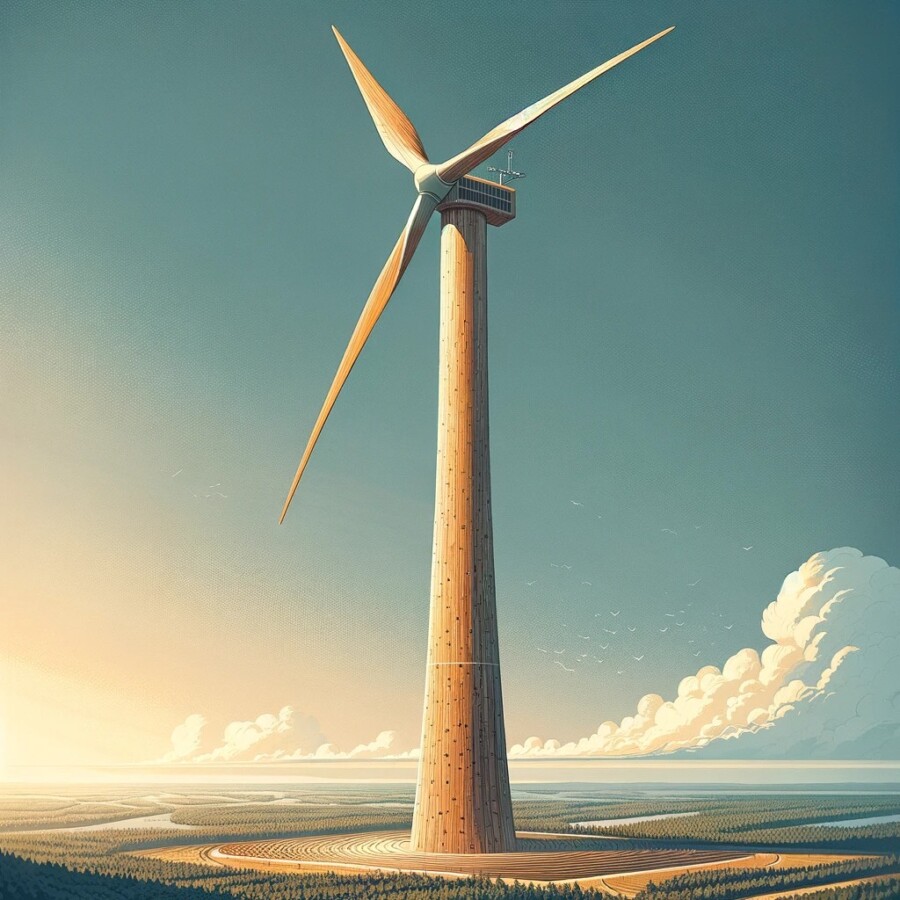
A Swedish start-up called Modvion has recently constructed the world's tallest wooden wind turbine tower, marking a significant milestone in the use of wood for wind power. The tower stands at 150 meters (492 feet) and has a 2 megawatt generator on top, supplying electricity to around 400 homes. The company believes that using wood for wind turbines has great potential due to its lighter weight compared to steel, allowing for the construction of taller turbines with less material.
Steel has been the primary material used for turbine towers, but it has limitations, especially for onshore projects. As turbines have become taller and larger, the steel towers supporting them have had to increase in diameter, posing challenges for transportation. In contrast, wooden towers can be built in smaller, modular sections, making them easier to transport and assemble. Modvion's tower is made of laminated veneer lumber (LVL), which provides strength and flexibility. The company's goal is to build even taller wooden turbines in the future.
The exterior of the wooden turbine is similar to its steel counterparts, with a white coating and fiberglass blades attached to a generator. However, the interior reveals the unique features of the wooden tower, with curved raw wood walls resembling a sauna. The tower's strength comes from the layers of LVL, which have been glued and compressed together. Modvion believes that wood and glue are a perfect combination, allowing for the construction of taller turbines with less material.
While some experts see the modular system of wooden towers as an advantage, others believe that it may require more resources and time for installation compared to steel towers. Siemens Gamesa, one of the world's largest turbine manufacturers, considers wooden towers as a complement to steel towers and focuses on reducing the carbon footprint of the steel it uses. However, Modvion claims that using wood instead of steel eliminates the carbon footprint of wind turbines entirely, as the trees absorb carbon dioxide while alive and store it in the wood.
Modvion's wooden turbine tower has attracted the attention of renewable energy giant Vestas, which sees tremendous potential in taller turbines and considers wooden towers well-suited to play a role. The use of wood instead of steel not only addresses transportation challenges but also offers a sustainable solution, as it eliminates the carbon emissions associated with steel production. SSE Renewables, one of the UK's largest wind power producers, is also exploring wooden towers as an alternative to steel.
Modvion plans to build even taller wooden turbines in the future and aims to open a facility producing 100 wooden modular turbines per year by 2027. The company envisions that in 10 years, 10% of the 20,000 turbines installed annually will be wooden. This advancement in wooden wind turbine technology could contribute to a greener and more sustainable future for renewable energy.
Original news source: World's tallest wooden wind turbine starts turning (BBC)
🎧 Listen:
📖 Vocabulary:
Group or Classroom Activities
Warm-up Activities:
– Charades
Instructions: Divide the class into teams. Give each team a set of vocabulary words related to the article (e.g. wind turbine, wooden tower, steel, renewable energy). One member from each team will act out the word without speaking, while their team tries to guess the word. The team that guesses the most words correctly wins.
– News Summary
Instructions: Have students work in pairs. Each pair will read the article and then write a concise summary of the main points. They can take turns sharing their summaries with the class, and the class can discuss any differences or additional insights they have.
– Opinion Poll
Instructions: Create a list of statements related to the article (e.g. "Using wood for wind turbines is a more sustainable option than using steel"). Have students move around the room and find a partner. Each pair will discuss the statement and share their opinions. After a few minutes, have students find a new partner and discuss a different statement. Repeat this process several times to allow students to discuss multiple statements.
– Vocabulary Pictionary
Instructions: Give each student a vocabulary word from the article. Without using any words, they must draw a picture to represent the word. The rest of the class will try to guess the word based on the drawing. This activity helps students practice vocabulary recall and visual communication skills.
– Think-Pair-Share
Instructions: Write the following question on the board: "Do you think using wood for wind turbines is a viable alternative to using steel? Why or why not?" Give students a few minutes to think about their response. Then, have them pair up with a partner and share their thoughts. After discussing with their partner, each student will share their opinion with the class. Encourage students to support their opinions with evidence from the article.
🤔 Comprehension Questions:
The tower stands at 150 meters (492 feet).
The 2 megawatt generator can supply electricity to around 400 homes.
Wood is lighter than steel, allowing for the construction of taller turbines with less material. Wooden towers can also be built in smaller, modular sections, making them easier to transport and assemble.
Steel has been the primary material used for turbine towers.
Wooden towers can be built in smaller, modular sections, making them easier to transport and assemble. In contrast, steel towers have to increase in diameter as turbines become taller and larger, posing challenges for transportation.
The interior of Modvion's wooden tower has curved raw wood walls resembling a sauna.
Some experts see the modular system of wooden towers as an advantage, while others believe it may require more resources and time for installation compared to steel towers.
Renewable energy companies such as Vestas and SSE Renewables are exploring the use of wooden towers.
🎧✍️ Listen and Fill in the Gaps:
A Swedish start-up called Modvion has recently constructed the world's tallest wooden wind tower, marking a significant in the use of wood for wind power. The tower stands at 150 meters (492 feet) and has a 2 megawatt generator on top, supplying electricity to around 400 homes. The company believes that using wood for wind turbines has great potential due to its lighter weight compared to steel, allowing for the construction of turbines with less material. Steel has been the primary material used for turbine towers, but it has limitations, especially for onshore . As turbines have become taller and larger, the steel towers supporting them have had to increase in diameter, posing challenges for transportation. In contrast, wooden towers can be built in smaller, modular sections, making them easier to transport and assemble. Modvion's tower is made of laminated veneer lumber (LVL), which provides strength and flexibility. The company's goal is to build even taller wooden turbines in the future. The exterior of the wooden turbine is to its steel counterparts, with a white coating and fiberglass blades attached to a . However, the interior reveals the unique features of the wooden tower, with curved raw wood walls resembling a sauna. The tower's strength from the layers of LVL, which have been and compressed together. Modvion believes that wood and glue are a perfect combination, allowing for the construction of taller turbines with less . While some experts see the modular system of wooden towers as an advantage, others believe that it may require more resources and time for compared to steel towers. Siemens Gamesa, one of the world's largest turbine manufacturers, considers wooden towers as a complement to steel towers and focuses on reducing the carbon footprint of the steel it uses. However, Modvion claims that using wood instead of steel eliminates the carbon footprint of wind turbines entirely, as the trees carbon dioxide while and store it in the wood. Modvion's wooden turbine tower has attracted the attention of renewable energy giant Vestas, which sees tremendous potential in taller turbines and considers towers well-suited to play a role. The use of wood instead of steel not only addresses transportation challenges but also offers a sustainable solution, as it eliminates the carbon emissions with steel production. SSE Renewables, one of the UK's largest wind power producers, is also exploring wooden towers as an alternative to steel. Modvion plans to build even taller wooden turbines in the and aims to open a producing 100 wooden modular turbines per year by 2027. The company envisions that in 10 years, 10% of the 20,000 turbines installed annually will be wooden. This advancement in wooden wind turbine technology could contribute to a greener and more sustainable future for renewable energy.
💬 Discussion Questions:
1. What is your opinion on using wood for wind turbine towers instead of steel? Why?
2. How would you feel if your country started using wooden wind turbine towers instead of steel ones? Why?
3. Do you think using wood for wind turbines is a more sustainable solution? Why or why not?
4. What are some advantages and disadvantages of using wooden towers for wind turbines?
5. Have you ever seen a wind turbine in person? If so, what material was it made of? How did it make you feel?
6. Do you think wooden wind turbine towers will become more popular in the future? Why or why not?
7. What are some other ways that renewable energy can contribute to a greener and more sustainable future?
8. How do you think the use of wooden wind turbine towers will impact the renewable energy industry?
9. Have you ever thought about the materials that are used to construct wind turbines? Why or why not?
10. What is the role of wind power in your country's energy production? Do you think wooden wind turbine towers could change that?
11. How do you think the use of wooden wind turbine towers could impact the transportation industry?
12. Do you think the use of wood for wind turbines could inspire other industries to find sustainable alternatives to traditional materials? Why or why not?
13. What are some potential challenges that could arise from using wooden wind turbine towers?
14. Do you think the benefits of using wood for wind turbines outweigh the potential drawbacks? Why or why not?
15. How do you think the use of wooden wind turbine towers could impact the perception of renewable energy in society?
Individual Activities
📖💭 Vocabulary Meanings:
Click a dot next to a word, then click the dot next to its meaning to draw a line connecting them.
Words
Meanings
🔡 Multiple Choice Questions:
🕵️ True or False Questions:
📝 Write a Summary:
Write a summary of this news article in two sentences.
Check your writing now with the best free AI for English writing!