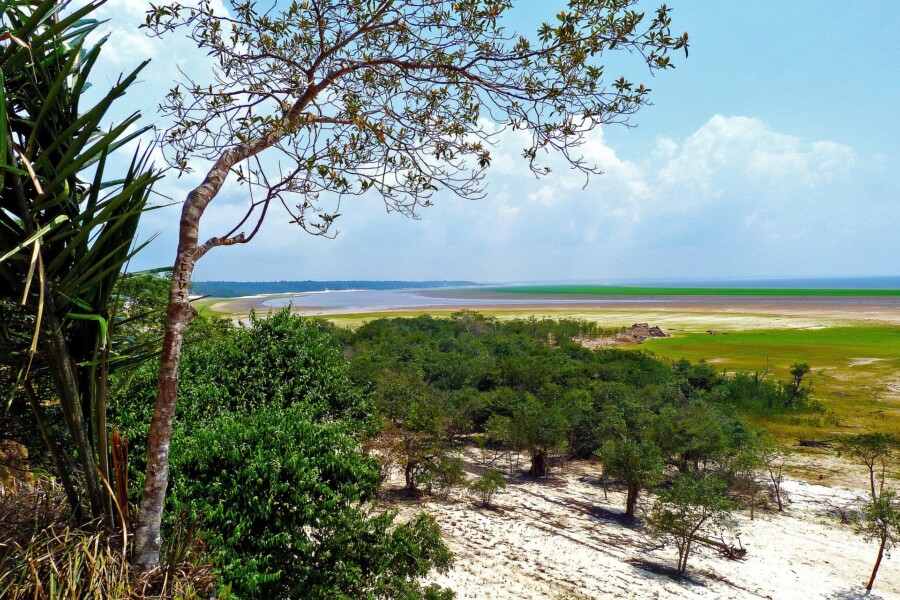

The Arctic World Archive (AWA) is a unique facility located in Longyearbyen, Norway, the world's northernmost town. Situated in the Svalbard archipelago, which lies between mainland Norway and the North Pole, this remote location is characterized by its frozen landscapes and sparse human settlements. The AWA is housed in a decommissioned coal mine, where it serves as an underground vault for preserving important data. Customers can store their information on film, ensuring its survival against technological obsolescence and the passage of time. Founder Rune Bjerkestrand emphasizes the importance of safeguarding memories and heritage through this innovative approach to data preservation.
The AWA has been operational for eight years and has received over 100 deposits from various institutions, companies, and individuals across more than 30 countries. Among the diverse collection of digitized artifacts are 3D scans of the Taj Mahal, ancient manuscripts from the Vatican Library, and Norway's famous painting, "The Scream" by Edvard Munch. The facility operates commercially and utilizes technology from Piql, a Norwegian data preservation company also led by Bjerkestrand. Inspired by the nearby Global Seed Vault, the AWA aims to provide a secure environment for data storage, protecting it from risks such as terrorism, war, and cyberattacks.
The conditions within the vault are ideal for long-term preservation, as it remains dark, dry, and cold year-round. Bjerkestrand believes that even if global warming causes the Arctic permafrost to thaw, the vault's robust structure will still protect its contents. A notable feature of the archive is GitHub's Code Vault, which contains hundreds of reels of open-source code essential for software development. GitHub's chief operating officer, Kyle Daigle, highlights the importance of securing software for future generations, as it has become integral to modern life.
Data at the AWA is encoded onto photosensitive film, which is processed to create images that resemble tiny QR codes. This method ensures that the information cannot be deleted or altered, making it easily retrievable in the future. However, concerns remain about whether future generations will understand how to access this preserved data. To address this, Piql has printed a guide on the film itself, allowing for optical magnification and reading. As the volume of data generated continues to grow, experts warn of a potential "digital Dark Age," where advancements in technology may render current formats obsolete.
The AWA accepts new deposits three times a year, with recent additions including recordings of endangered languages and manuscripts by composer Frédéric Chopin. Photographers and archivists, like Christian Clauwers and Joanne Shortland, are also contributing their work to the vault, recognizing the importance of preserving visual evidence of climate change and historical artifacts. As digital formats become increasingly outdated, the AWA represents a crucial effort to ensure that significant cultural and historical information remains accessible for future generations.
Original news source: Visit the Arctic vault holding back-ups of great works (BBC)
🎧 Listen:
📖 Vocabulary:
Group or Classroom Activities
Warm-up Activities:
– CHARADES
Instructions: Students will work in pairs or small groups to act out key concepts or phrases from the article related to the Arctic World Archive without using words. The rest of the class will guess what they are acting out, encouraging vocabulary recall and comprehension.
– OPINION POLL
Instructions: Students will discuss and vote on their opinions regarding the importance of preserving data and cultural heritage. Each student must provide a reason for their stance, fostering speaking skills and critical thinking.
– HEADLINE CREATION
Instructions: Students will work in groups to create catchy headlines for the article. They should aim to capture the essence of the AWA and its significance in just a few words, promoting creativity and summarization skills.
– SKETCH IT
Instructions: In pairs, one student will describe a scene or a concept from the article without revealing its name while the other sketches it. Afterward, they will compare sketches and discuss how accurately they represent the ideas, enhancing listening and speaking abilities.
– TWO TRUTHS AND A LIE
Instructions: Each student will come up with three statements about the Arctic World Archive—two of which are true and one that is false. The rest of the class will guess which one is the lie, promoting comprehension and critical analysis of the article's content.
🤔 Comprehension Questions:
The primary purpose of the Arctic World Archive (AWA) is to serve as an underground vault for preserving important data, ensuring its survival against technological obsolescence and the passage of time.
The AWA ensures the longevity of the data it stores by encoding it onto photosensitive film, which cannot be deleted or altered, and by preserving it in ideal conditions that protect it from risks such as terrorism, war, and cyberattacks.
Artifacts deposited in the AWA include 3D scans of the Taj Mahal, ancient manuscripts from the Vatican Library, and Edvard Munch's "The Scream." They are significant as they represent important cultural and historical heritage.
The AWA's location in Longyearbyen, Norway, a remote area with frozen landscapes, provides a secure and isolated environment that protects the vault from external threats and ensures stable conditions for data preservation.
The vault's environment is dark, dry, and cold year-round, which are ideal conditions for long-term preservation of data.
The encoding method used by the AWA involves processing data onto photosensitive film that resembles tiny QR codes, making it unalterable and easily retrievable, unlike traditional digital storage methods that may become obsolete.
Experts are concerned that future generations may not understand how to access the preserved data, despite the provision of a printed guide on the film itself for optical magnification and reading.
Contributors to the AWA include photographers and archivists like Christian Clauwers and Joanne Shortland, who are providing visual evidence of climate change, as well as recordings of endangered languages and manuscripts by composer Frédéric Chopin.
🎧✍️ Listen and Fill in the Gaps:
The Arctic World Archive (AWA) is a unique facility located in Longyearbyen, Norway, the world's northernmost town. Situated in the Svalbard archipelago, which lies between Norway and the North Pole, this remote location is characterized by its frozen landscapes and sparse human settlements. The AWA is housed in a decommissioned coal mine, where it serves as an underground vault for preserving data. Customers can store their information on film, ensuring its survival against technological and the passage of time. Founder Rune Bjerkestrand emphasizes the importance of safeguarding memories and heritage through this innovative approach to data preservation. The AWA has been operational for eight years and has received over 100 from various institutions, companies, and individuals across more than 30 countries. Among the diverse collection of digitized artifacts are 3D of the Taj Mahal, manuscripts from the Vatican Library, and Norway's famous painting, "The Scream" by Munch. The facility operates commercially and utilizes technology from Piql, a Norwegian data preservation company also led by Bjerkestrand. Inspired by the nearby Global Seed Vault, the AWA aims to provide a secure for data storage, protecting it from risks such as terrorism, war, and cyberattacks. The conditions within the vault are ideal for long-term preservation, as it remains dark, dry, and cold year-round. Bjerkestrand believes that even if global warming causes the Arctic permafrost to thaw, the vault's robust structure will still protect its contents. A notable feature of the archive is GitHub's Code Vault, which contains hundreds of reels of open-source code essential for software development. GitHub's chief operating officer, Kyle Daigle, highlights the importance of securing software for generations, as it has become integral to modern life. Data at the AWA is encoded onto photosensitive film, which is processed to create images that resemble tiny QR codes. This method ensures that the cannot be or altered, making it easily retrievable in the future. However, concerns remain about whether future generations will understand how to this preserved data. To address this, Piql has printed a guide on the film itself, allowing for optical and reading. As the volume of data generated continues to grow, warn of a potential "digital Dark Age," where advancements in may render current obsolete. The AWA accepts new deposits three times a year, with recent additions including recordings of endangered languages and manuscripts by composer Frédéric Chopin. Photographers and archivists, like Christian Clauwers and Joanne Shortland, are also contributing their work to the vault, recognizing the importance of preserving visual evidence of climate change and historical artifacts. As digital formats become increasingly outdated, the AWA represents a crucial effort to ensure that significant cultural and historical information remains accessible for future generations.
💬 Discussion Questions:
1. What is a memory or piece of information that you think is important to preserve for future generations? Why?
2. How would you feel if you discovered that a significant part of your culture was lost forever?
3. Do you think it is essential to preserve digital information in a physical format? Why or why not?
4. What is a technological advancement that you believe has changed the way we preserve information?
5. How do you feel about the idea of a "digital Dark Age"? Do you think it's a real possibility?
6. Do you like the concept of storing information in remote locations, like the Arctic World Archive? Why or why not?
7. What is a historical artifact you would like to see preserved for future generations?
8. How would you feel if the way we access information today became obsolete in the future?
9. Do you think that future generations will appreciate the importance of preserving data as we do today? Why or why not?
10. What is a personal memory that you wish you could preserve in a unique way?
11. How do you think climate change impacts the preservation of cultural and historical artifacts?
12. Do you think that art, like Edvard Munch's "The Scream," should be preserved in a digital format or a physical format? Why?
13. What is a language or cultural practice that you think should be documented and preserved?
14. How would you feel if you had the opportunity to contribute to a project aimed at preserving important data?
15. Do you think the method of using photosensitive film for data preservation is effective? Why or why not?
Individual Activities
📖💭 Vocabulary Meanings:
Click a dot next to a word, then click the dot next to its meaning to draw a line connecting them.
Words
Meanings
🔡 Multiple Choice Questions:
🕵️ True or False Questions:
📝 Write a Summary:
Write a summary of this news article in two sentences.
Check your writing now with the best free AI for English writing!