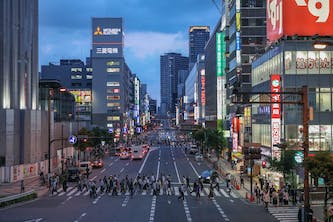
Cars are getting new things to help keep people safe. Some cars can stop by themselves if they see someone walking in front of them. Cars are also being made with softer parts so if they bump into someone, it won't hurt as much. People who make rules for cars are trying to make sure that new cars are safe for everyone, not just the people inside the cars. They want cars to be careful not to hit people who are walking or biking.
Original news source: How to make cars less dangerous for pedestrians (BBC)
📖 Vocabulary:
Group or Classroom Activities
Warm-up Activities:
– Charades
Instructions: Write down actions related to the article on slips of paper, such as 'riding a bike', 'walking', 'stopping a car', 'getting hurt', and 'making rules'. Students take turns acting out these actions without speaking, while the rest of the class tries to guess the action. This will help them associate the verbs with physical actions, aiding in vocabulary retention.
– Sketch It
Instructions: Divide students into pairs and give each pair a piece of paper and pencils. Read out sentences from the article one at a time, and have the students draw what they understand. For example, "A little girl was riding her bike", students would draw a girl on a bike. This activity supports comprehension and encourages students to visualize what they are learning.
– Vocabulary Pictionary
Instructions: Write key vocabulary words from the article on cards, such as 'bike', 'safe', 'car', 'streets', and 'hurt'. Divide the class into two teams. One member from each team will draw the word on the board without speaking or writing letters or numbers, while their team tries to guess the word. This reinforces vocabulary learning in a fun and interactive way.
– Think-Pair-Share
Instructions: Ask students to think individually about the question "Why is it important for cars to be safe for people walking or biking?" After a minute, have them pair up with a classmate to discuss their thoughts. Finally, bring the class back together and have a few pairs share their opinions with the group. This encourages personal connection to the content and gives practice in forming and expressing opinions in English.
– Future Predictions
Instructions: After discussing the article, ask students to write down one sentence predicting what they think will happen in the future regarding car and street safety. For example, "In the future, all cars will be able to stop by themselves." Then have the students share their sentences with the class, and discuss how these changes could impact people's lives. This activity promotes the use of future tense and critical thinking about the topic.
🤔 Comprehension Questions:
The little girl was riding her bike when she got hurt.
The little girl's mom wants to make streets and cars safer.
When people buy cars, they should think about how safe the cars are for people walking or biking.
The mom is working hard to make cars and places for walking better and safer.
Some new cars can stop by themselves if they see someone walking in front of them.
Cars are being made with softer parts so if they bump into someone, it won't hurt as much.
People who make rules for cars are trying to make sure new cars are safe for everyone.
🎧✍️ Listen and Fill in the Gaps:
A little was riding her bike and got hurt very badly. Her mom wants to make sure that and cars are safer for everyone. She says that when people buy cars, they should think about how safe they are for people or . The mom is working hard to make sure that cars and places for walking are better. Cars are getting new things to help keep people safe. Some cars can stop by themselves if they see someone walking in front of them. are also being made with softer parts so if they bump into someone, it won't hurt as . People who make for cars are trying to make sure that new cars are safe for everyone, not just the people inside the cars. They cars to be careful not to hit people who are walking or biking.
💬 Discussion Questions:
1. What is a bike?
2. Have you ever fallen off a bike? How did it feel?
3. Do you like riding a bike? Why or why not?
4. What is a car?
5. How would you feel if a car almost hit you?
6. Do you think cars should stop by themselves to keep people safe?
7. Have you seen a car that can stop by itself? What did you think?
8. Do you like to walk on the street? Why or why not?
9. Do you think it is important for cars to be soft? Why?
10. What do you do to be safe when you walk or bike?
11. Do you think people should make rules for cars? Why or why not?
12. Do you think streets are safe for little kids? Why or why not?
Individual Activities
📖💭 Vocabulary Meanings:
Click a dot next to a word, then click the dot next to its meaning to draw a line connecting them.
Words
Meanings
🔡 Multiple Choice Questions:
🕵️ True or False Questions:
📝 Write a Summary:
Write a summary of this news article in two sentences.
Check your writing now with the best free AI for English writing!