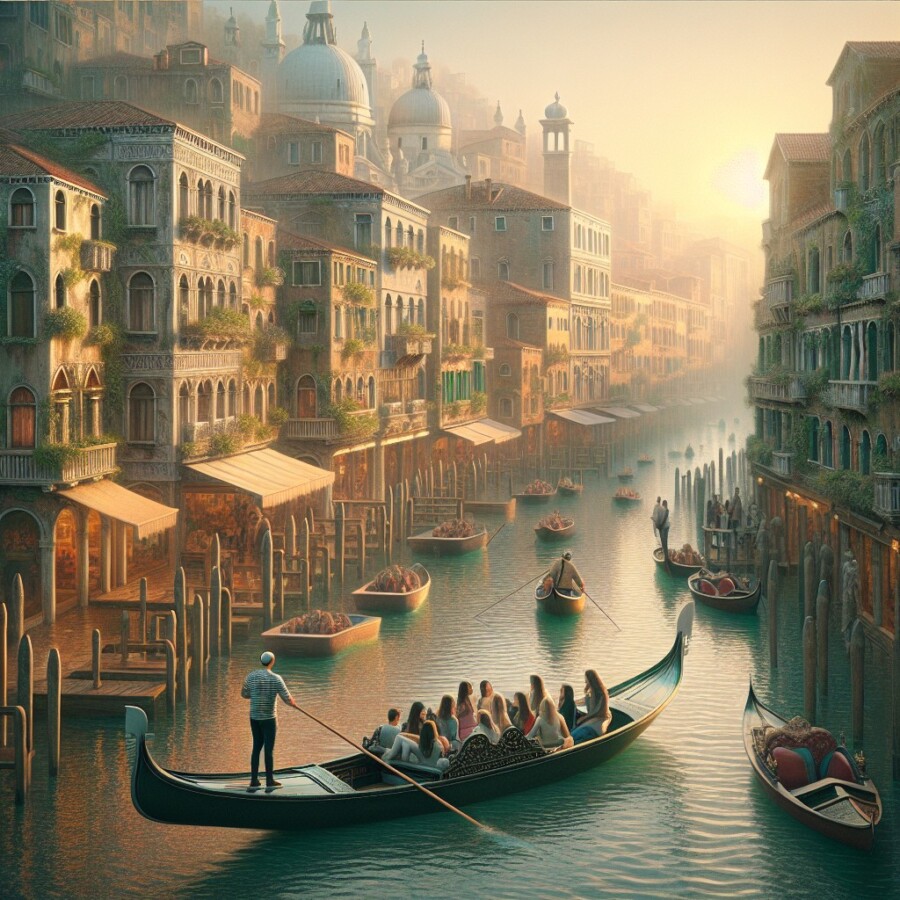
Venice is a very old and beautiful city with lots of water and boats. Many people come to visit, but there are too many visitors, and it's causing problems. So, the city has made new rules. Starting in June, loud speakers are not allowed, and groups of people visiting cannot be bigger than 25. The city is small, but in one year, almost 13 million people came to see it.
The city also wants people who visit just for the day to pay money. This is because there are so many visitors that the people who live in Venice are leaving. They are also worried about the city getting hurt because there are too many visitors and the weather is changing. Big ships cannot come into the city anymore. Other cities in Europe are also making rules to help with too many visitors.
Original news source: Venice to ban large tourist groups and loudspeakers (BBC)
🎧 Listen:
📖 Vocabulary:
Group or Classroom Activities
Warm-up Activities:
– Charades
Instructions: Divide the class into small groups. Give each group a slip of paper with a word related to the article (e.g. Venice, visitors, rules, boats). One person from each group will act out the word without speaking, while the others in the group guess what it is. The group that guesses correctly gets a point.
– News Summary
Instructions: In pairs, students take turns summarizing the main points of the article to their partner. They should try to include key details such as the new rules in Venice and the reasons behind them. Encourage students to use their own words and keep their summaries brief.
– Opinion Poll
Instructions: Create a list of statements related to the article (e.g. "Venice should limit the number of visitors," "Big ships should be allowed in the city"). In pairs or small groups, students discuss each statement and indicate whether they agree or disagree by raising their hand. Encourage students to share their reasons for their opinions.
– Vocabulary Pictionary
Instructions: Write down key vocabulary words from the article on separate slips of paper (e.g. visitors, rules, boats). Divide the class into two teams. One person from each team picks a slip of paper and has to draw the word without using any letters or numbers. Their team members then have to guess what the word is. The team that guesses correctly gets a point.
– Pros and Cons
Instructions: In small groups, students discuss the pros and cons of Venice's new rules for visitors. They should consider the positive and negative effects of the rules on both tourists and residents. After the discussion, each group shares their thoughts with the class.
🤔 Comprehension Questions:
Venice is a very old and beautiful city with lots of water and boats.
There are problems in Venice because there are too many visitors.
The new rules in Venice are that loud speakers are not allowed, and groups of people visiting cannot be bigger than 25.
Almost 13 million people came to visit Venice in one year.
The city wants people to pay money because there are so many visitors that the people who live in Venice are leaving.
The people who live in Venice are leaving because there are too many visitors and the weather is changing.
Yes, other cities in Europe are making rules to help with too many visitors.
🎧✍️ Listen and Fill in the Gaps:
Venice is a very old and city with lots of water and boats. Many people come to visit, but there are too many , and it's causing problems. So, the city has made new rules. Starting in June, loud speakers are not allowed, and groups of people visiting cannot be than 25. The city is small, but in one , almost 13 million people came to see it. The city also wants people who visit just for the day to pay . This is because there are so many visitors that the people who live in Venice are . They are also worried about the city getting because there are too many visitors and the weather is changing. Big ships cannot come into the city anymore. Other cities in are also making rules to help with too many visitors.
💬 Discussion Questions:
1. What is Venice like?
2. How would you feel if you lived in Venice and there were too many visitors?
3. Do you like boats? Why or why not?
4. What do you think about the new rules in Venice?
5. How would you feel if you had to pay money to visit a city for just one day?
6. Do you think it's fair that big ships cannot come into Venice anymore? Why or why not?
7. Have you ever visited a city with lots of visitors? How did you feel?
8. What do you think about other cities in Europe making rules to help with too many visitors?
9. How would you feel if your city had too many visitors and people were leaving?
10. Do you like the idea of visiting Venice? Why or why not?
11. What do you think about the city of Venice getting hurt because of too many visitors and the changing weather?
12. Have you ever been on a loud speaker? How did it make you feel?
Individual Activities
📖💭 Vocabulary Meanings:
Click a dot next to a word, then click the dot next to its meaning to draw a line connecting them.
Words
Meanings
🔡 Multiple Choice Questions:
🕵️ True or False Questions:
📝 Write a Summary:
Write a summary of this news article in two sentences.
Check your writing now with the best free AI for English writing!