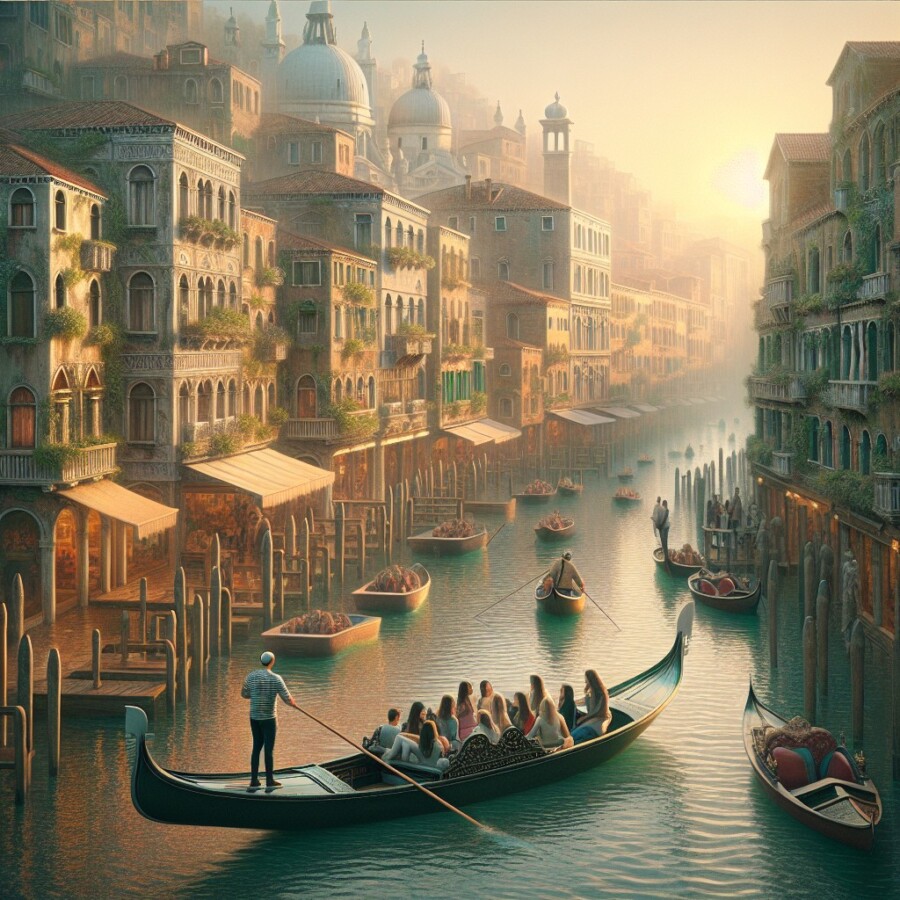
Venice, one of the most popular tourist destinations in Europe, has announced new measures to address the issue of mass tourism. Starting from June, the city will ban the use of loudspeakers and restrict tourist groups to a maximum of 25 people. The decision comes as Venice grapples with the negative impact of over-tourism on its historic center. The city, which is only 7.6 square kilometers in size, welcomed nearly 13 million visitors in 2019, and the numbers are expected to rise in the coming years.
The ban on loudspeakers is aimed at reducing confusion and disturbances caused by amplified tour guides. The excessive noise generated by large tourist groups has been a major concern for residents and authorities alike. By limiting the size of tourist groups, the city hopes to improve the management of visitors in the historic center. These measures are part of a broader effort to strike a balance between tourism and the preservation of Venice's cultural heritage.
The impact of mass tourism on Venice has led to a decline in the number of residents, as many fear being overwhelmed by tourists. Citizen associations have conducted studies to monitor the availability of accommodation for both tourists and locals. The results show that there are now more than 50,000 beds for tourists, surpassing the number available to residents. This disparity has raised concerns about the sustainability of tourism in the city.
Venice's struggle with over-tourism has also attracted international attention. In July, experts from UNESCO suggested that the city should be added to the list of world heritage sites in danger due to the impact of climate change and mass tourism. While Venice was not ultimately added to the list, the incident highlighted the need for a strategic vision to address the challenges faced by the city.
Venice is not the only destination grappling with over-tourism. Other popular European cities, such as Florence and Rome, have implemented measures to manage the influx of tourists. These include banning new vacation rentals in historic areas and imposing fines for inappropriate behavior. Similarly, other iconic destinations like Portofino in Italy and Athens in Greece have introduced restrictions to protect their cultural heritage and manage visitor numbers.
In conclusion, Venice's decision to ban loudspeakers and limit the size of tourist groups is a step towards addressing the issue of over-tourism. The city is taking measures to strike a balance between tourism and the preservation of its cultural heritage. These actions are part of a broader trend among popular tourist destinations to manage the negative impacts of mass tourism.
Original news source: Venice to ban large tourist groups and loudspeakers (BBC)
🎧 Listen:
📖 Vocabulary:
Group or Classroom Activities
Warm-up Activities:
– News Summary
Instructions: Divide the class into pairs or small groups. Give each group a copy of the article. Instruct them to read the article and then summarize the main points in a news report format. They should include the key details, such as the new measures implemented in Venice, the impact of mass tourism, and the broader trend among popular tourist destinations. After they have finished, ask each group to share their news report with the rest of the class.
– Opinion Poll
Instructions: Divide the class into pairs or small groups. Give each group a list of questions related to the article, such as "Do you think the new measures in Venice will effectively address the issue of over-tourism?" or "Should other popular tourist destinations implement similar measures? Why or why not?" Instruct the groups to discuss and debate their opinions on each question, and then record their answers. After they have finished, ask each group to share their opinions with the rest of the class.
– Pros and Cons
Instructions: Divide the class into two teams. Instruct each team to make a list of the pros and cons of mass tourism in Venice. They should consider both the positive and negative impacts on the city and its residents. After they have finished, ask each team to take turns sharing their lists with the rest of the class. Encourage a class discussion about the pros and cons of mass tourism and the measures implemented in Venice.
– Think-Pair-Share
Instructions: Ask the class to think about the following question: "What are some possible solutions to address the issue of over-tourism in popular tourist destinations?" Give the students a few minutes to think individually, and then pair them up to share their ideas with a partner. After they have finished, ask each pair to share their ideas with the rest of the class. Encourage a class discussion about the different solutions and their feasibility.
– Future Predictions
Instructions: Instruct the students to imagine themselves as residents of popular tourist destinations, such as Venice, Florence, or Rome. Ask them to write a short paragraph predicting what the future will be like in their city if the issue of over-tourism is not effectively addressed. They should consider the potential consequences of continued mass tourism on the city and its residents. After they have finished, ask a few students to share their predictions with the rest of the class. Encourage a class discussion about the potential future scenarios and the importance of addressing over-tourism.
🤔 Comprehension Questions:
Venice has announced that it will ban the use of loudspeakers and restrict tourist groups to a maximum of 25 people.
The use of loudspeakers is being banned in Venice to reduce confusion and disturbances caused by amplified tour guides.
Venice welcomed nearly 13 million visitors in 2019.
The purpose of limiting the size of tourist groups in Venice is to improve the management of visitors in the historic center.
Concerns have been raised about the availability of accommodation in Venice as there are now more than 50,000 beds for tourists, surpassing the number available to residents.
Experts from UNESCO suggested that Venice should be added to the list of world heritage sites in danger.
Other European cities have implemented measures such as banning new vacation rentals in historic areas and imposing fines for inappropriate behavior.
The goal of Venice's decision to ban loudspeakers and limit the size of tourist groups is to strike a balance between tourism and the preservation of its cultural heritage.
🎧✍️ Listen and Fill in the Gaps:
Venice, one of the most popular tourist in Europe, has announced new measures to address the issue of mass tourism. Starting from June, the city will ban the use of and restrict tourist groups to a maximum of 25 people. The comes as Venice grapples with the negative impact of over-tourism on its historic center. The city, which is only 7.6 square kilometers in size, welcomed nearly 13 million visitors in 2019, and the numbers are expected to rise in the coming years. The ban on loudspeakers is aimed at confusion and disturbances caused by amplified tour guides. The excessive noise generated by large tourist groups has been a major concern for residents and authorities alike. By limiting the size of tourist groups, the city hopes to improve the management of visitors in the center. These measures are part of a broader effort to strike a between tourism and the preservation of Venice's cultural heritage. The impact of mass tourism on Venice has led to a decline in the number of residents, as many fear being overwhelmed by tourists. Citizen have conducted studies to monitor the availability of accommodation for both tourists and locals. The results show that there are now more than 50,000 beds for tourists, the number available to residents. This disparity has raised concerns about the sustainability of tourism in the city. Venice's struggle with over-tourism has also attracted international . In July, experts from UNESCO suggested that the city should be added to the list of world heritage sites in danger due to the impact of climate change and mass tourism. While Venice was not ultimately added to the list, the incident highlighted the need for a strategic vision to address the challenges faced by the city. Venice is not the only destination grappling with over-tourism. popular cities, such as Florence and Rome, have measures to manage the influx of tourists. These include banning new vacation rentals in historic and imposing fines for inappropriate behavior. Similarly, other iconic destinations like in Italy and Athens in Greece have introduced restrictions to protect their cultural heritage and manage visitor numbers. In conclusion, Venice's decision to ban loudspeakers and limit the size of tourist is a step towards addressing the issue of over-tourism. The city is taking measures to strike a balance between tourism and the preservation of its cultural heritage. These actions are part of a broader trend among popular tourist destinations to manage the negative of mass tourism.
💬 Discussion Questions:
1. What is your opinion on the new measures implemented by Venice to address mass tourism?
2. How would you feel if you lived in a city that was overwhelmed by tourists?
3. Do you think limiting the size of tourist groups is an effective way to manage visitor numbers? Why or why not?
4. What do you think are the negative impacts of over-tourism on a city?
5. How would you feel if your city was added to the list of world heritage sites in danger due to mass tourism?
6. Do you think it is important for popular tourist destinations to protect their cultural heritage? Why or why not?
7. What measures do you think your city could implement to manage the influx of tourists?
8. How do you think the decline in the number of residents in Venice due to over-tourism affects the city?
9. Do you think it is fair that there are more beds available for tourists than for residents in Venice? Why or why not?
10. How do you think climate change impacts the city of Venice?
11. Do you think other popular tourist destinations should follow Venice's example and implement measures to manage mass tourism? Why or why not?
12. What do you think are the benefits of tourism for a city?
13. How do you think over-tourism can be balanced with the preservation of cultural heritage?
14. Do you think it is the responsibility of tourists to respect the cultural heritage of the places they visit? Why or why not?
15. How do you think the COVID-19 pandemic has affected tourism in cities like Venice?
Individual Activities
📖💭 Vocabulary Meanings:
Click a dot next to a word, then click the dot next to its meaning to draw a line connecting them.
Words
Meanings
🔡 Multiple Choice Questions:
🕵️ True or False Questions:
📝 Write a Summary:
Write a summary of this news article in two sentences.
Check your writing now with the best free AI for English writing!