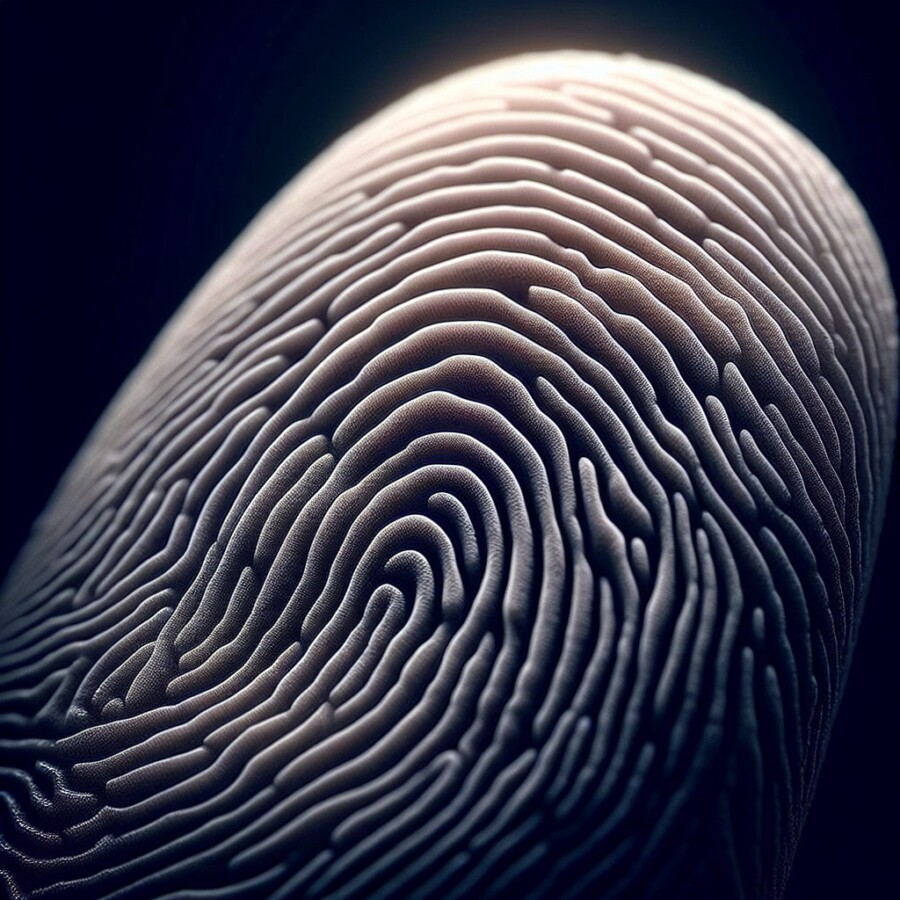
Some smart people at a big school used a computer to look at many fingerprints. They found that the computer could guess if different finger marks were from the same person. The computer looked at the lines in the middle of the finger. The smart people don't know how the computer does this. They think the computer can help find out who was at a place where something bad happened.
Some other smart people are not sure if the study is right. They wonder if the lines on fingers change when we touch things or as we get older. The smart people who did the study also have questions. But they wrote about their work, and other smart people said it was good. Their writing will be in a book with many studies.
Original news source: Our fingerprints may not be unique, claims AI (BBC)
🎧 Listen:
📖 Vocabulary:
Group or Classroom Activities
Warm-up Activities:
– Charades
Instructions: Divide the class into small groups. Give each group a set of vocabulary words related to the article (e.g. fingerprints, computer, lines, study, etc.). One student from each group will act out a word without speaking, while the rest of the group tries to guess the word. The group that guesses the most words correctly wins.
– Word Association
Instructions: Write the word "fingerprint" on the board. Ask the students to brainstorm as many words as they can that they associate with fingerprints. Encourage them to think of related words such as "police," "crime," "identification," etc. After a few minutes, have the students share their words with the class and create a word web on the board.
– Vocabulary Pictionary
Instructions: Divide the class into pairs. Give each pair a set of vocabulary words from the article. One student will choose a word and draw a picture to represent it, while their partner tries to guess the word. The pair that guesses the most words correctly wins.
– Speed Summarizing
Instructions: Give each student a copy of the article. Set a timer for 2 minutes. In pairs, the students take turns summarizing the article to each other within the time limit. After each round, the students switch partners and summarize again. Encourage students to use their own words and focus on the main ideas of the article.
– Two Truths and a Lie
Instructions: Instruct each student to write down two true statements and one false statement related to the article. They should not reveal which statement is false. In pairs or small groups, students take turns sharing their statements. The other students must guess which statement is the lie. This activity helps students practice speaking and listening skills, as well as reinforce the vocabulary and content of the article.
🤔 Comprehension Questions:
They used a computer to look at fingerprints.
The computer looked at the lines in the middle of the finger.
No, the smart people don't know how the computer does this.
The smart people think the computer can help find out who was at a place where something bad happened.
No, some smart people are not sure if the study is right.
They wonder if the lines on fingers change when we touch things or as we get older.
Their writing will be in a book with many studies.
🎧✍️ Listen and Fill in the Gaps:
Some smart people at a big school used a computer to look at many fingerprints. They that the computer could guess if different finger were from the same person. The computer looked at the lines in the middle of the finger. The smart people don't how the computer this. They think the computer can help find out who was at a place where something bad . Some other smart people are not sure if the study is right. They wonder if the on fingers change when we touch things or as we get older. The smart people who did the study also have questions. But they wrote about their work, and other smart people said it was . Their will be in a book with many studies.
💬 Discussion Questions:
1. What is a fingerprint?
2. How would you feel if a computer could guess if two fingerprints were from the same person?
3. Do you like using computers? Why or why not?
4. Do you think fingerprints change as we touch things or get older? Why or why not?
5. What do you think about the smart people who did the study?
6. How would you feel if your fingerprint could help find out who was at a place where something bad happened?
7. Do you think it's important to study fingerprints? Why or why not?
8. What do you think about the idea of a book with many studies?
9. How would you feel if your fingerprint was in a book?
10. Do you think it's good that the smart people wrote about their work? Why or why not?
11. What questions do you have about fingerprints?
12. How would you feel if you could use a computer to guess if two fingerprints were from the same person?
Individual Activities
📖💭 Vocabulary Meanings:
Click a dot next to a word, then click the dot next to its meaning to draw a line connecting them.
Words
Meanings
🔡 Multiple Choice Questions:
🕵️ True or False Questions:
📝 Write a Summary:
Write a summary of this news article in two sentences.
Check your writing now with the best free AI for English writing!