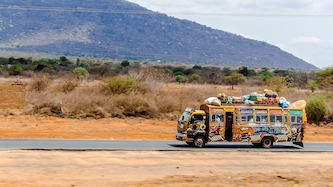
When money is not worth much, it is hard for everyone. People who make things have to spend more money to get what they need. This means that when we go to the store, we have to pay more money too. Some people who want to give money to help these places can't get their money back. But the people in charge are trying to make things better by trading more with other places in Africa.
Original news source: Weak currencies force up cost of living in Sub-Saharan Africa (BBC)
📖 Vocabulary:
Group or Classroom Activities
Warm-up Activities:
– Vocabulary Pictionary
Instructions: Draw a picture on the board representing a word or concept from the article, such as "money," "cost," "transportation," or "trade." Students must guess the word in English. This can be played in teams, and each correct guess earns a point.
– News Summary
Instructions: Divide students into small groups. Each group must summarize a part of the article in their own words, focusing on the key points: money value, the cost of goods, and efforts to improve the situation. They then share their summaries with the class.
– Opinion Poll
Instructions: Conduct a simple opinion poll in the classroom by asking students whether they think the situation with money in Africa will improve. Give them options like 'Yes', 'No', and 'Not sure'. Students can raise their hands to vote for their choice, and then discuss their reasons in small groups or with a partner.
– Synonym Challenge
Instructions: Write down several keywords from the article such as "hard," "pay," "more," and "rules." Have students work in pairs to come up with synonyms for these words. This activity will help expand their vocabulary and understanding of the concepts in the article.
– Future Predictions
Instructions: Ask students to think about what might happen in the future based on the article. They can work in pairs or small groups to discuss questions like "What will happen if the money continues to lose value?" or "How can the situation get better?" They can then share their predictions with the class, using simple future tense.
🤔 Comprehension Questions:
The cost goes up. This means you need more money to buy food and rides.
They have to spend more money to get what they need.
It's hard because they need to pay more money to make or buy their stuff to sell.
They are trying to use different rules to make things better.
They have to spend more money on the things they need to make stuff.
You have to pay more money when you go to the store.
They are trying to trade more with other places in Africa to make things better.
🎧✍️ Listen and Fill in the Gaps:
Money in some places in Africa is not worth as much as it used to be. This means things cost more to buy, like food and rides in cars or buses. People there to spend more money to get the things they . This is hard for people who sell things because they have to pay to make or get their stuff. The people who decide what to do with money in these places are trying to help by using different . When money is not much, it is hard for everyone. People who make things have to spend more money to get what they need. This means that when we go to the store, we have to pay more money too. Some people who want to give money to help these can't get their money back. But the people in charge are trying to make things better by trading more with places in Africa.
💬 Discussion Questions:
1. What is money?
2. How do you feel when things at the store cost more money?
3. Do you like to buy things? What do you like to buy?
4. What do you do when you want something but it costs too much money?
5. How do you think people feel when they have to spend more money for food?
6. Have you ever been on a bus or a car? Do you like it?
7. What would you do if a ride in a car or bus cost a lot of money?
8. Do you think it is hard for people who sell things when they have to pay more money?
9. Why do you think it is important for people to help each other?
10. What is something you can do to help someone who does not have enough money?
11. Do you think it is good to trade things with friends? Why or why not?
12. If you were in charge, what would you do to make things better for people who do not have much money?
Individual Activities
📖💭 Vocabulary Meanings:
Click a dot next to a word, then click the dot next to its meaning to draw a line connecting them.
Words
Meanings
🔡 Multiple Choice Questions:
🕵️ True or False Questions:
📝 Write a Summary:
Write a summary of this news article in two sentences.
Check your writing now with the best free AI for English writing!