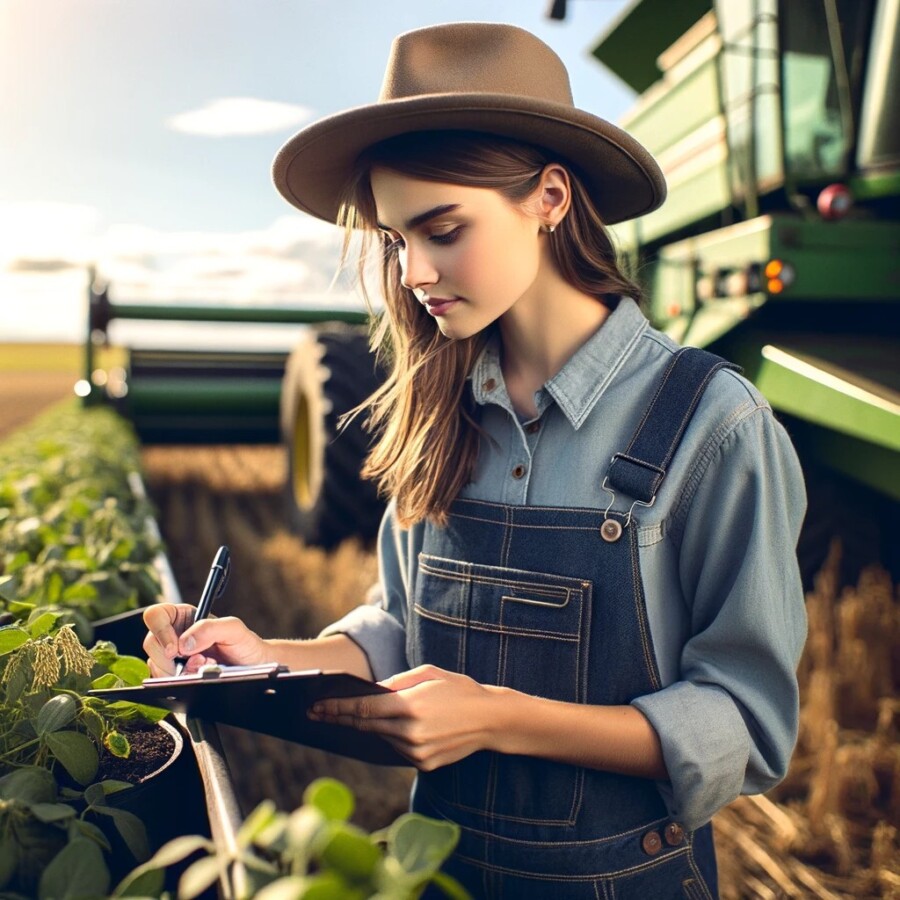
More girls are going to a farming school in Scotland. Stephanie is 16 and she is one of 12 girls in her class. Last year, there were only six girls. Now, almost half of the students in farming schools in Scotland are girls. People think this is good because farms need more workers.
Girls like Stephanie like to work outside and some grew up on farms. They saw other students working with animals and wanted to learn too. The school thinks more kids will want to learn about farming. A big group called NFU Scotland is happy about this. They hope more young people will want to work on farms.
Original news source: Record number of girls on Borders College farming course (BBC)
🎧 Listen:
📖 Vocabulary:
Group or Classroom Activities
Warm-up Activities:
– Charades
Instructions: Divide the class into small groups. Give each group a slip of paper with a word related to farming written on it (e.g. cow, tractor, harvest). One student from each group will act out the word without speaking, while the other group members try to guess what word it is. The group that guesses correctly first gets a point. Play several rounds, giving each student a chance to act out a word.
– Word Association
Instructions: Write the word "farming" on the board. Ask the students to brainstorm and share any words or phrases that they associate with farming. Write their responses on the board as a mind map, connecting related words. Encourage the students to explain their associations and discuss the connections between the words.
– Vocabulary Pictionary
Instructions: Divide the class into pairs. Give each pair a set of flashcards with farming-related vocabulary words (e.g. cow, tractor, harvest). One student from each pair will draw a picture of one of the words, while the other student tries to guess what word it is. Switch roles and continue until all the flashcards have been used.
– Speed Summarizing
Instructions: Write the main points of the article on the board (e.g. more girls going to farming school in Scotland, Stephanie is one of them, farms need more workers). Divide the class into pairs. One student from each pair will have 30 seconds to summarize the article to their partner using only the main points on the board. Then, they will switch roles and the other student will summarize. Encourage the students to use their own words and not read directly from the board.
– Two Truths and a Lie
Instructions: Have each student think of two true statements and one false statement about farming. They should write them down on a piece of paper. Go around the class and have each student share their statements. The rest of the class must guess which statement is the lie. After guessing, the student can explain the true statements and provide more information about farming if desired.
🤔 Comprehension Questions:
There are 12 girls in Stephanie's farming school class.
There were less girls in the class last year.
People think it's good because farms need more workers.
Girls like Stephanie want to learn about farming because they like to work outside and some grew up on farms.
NFU Scotland is happy about more girls going to farming school.
NFU Scotland hopes that more young people will want to work on farms.
Farms need more workers.
🎧✍️ Listen and Fill in the Gaps:
More girls are going to a farming in Scotland. Stephanie is 16 and she is one of 12 girls in her class. Last , there were only six girls. Now, almost half of the students in farming in Scotland are girls. People this is good because farms need more workers. Girls like Stephanie like to work outside and some grew up on farms. They saw other students working with and wanted to learn too. The school more kids will want to learn about farming. A big called NFU is happy about this. They hope more young people will want to work on farms.
💬 Discussion Questions:
1. What is a farming school?
2. How would you feel if you worked on a farm?
3. Do you like working outside? Why or why not?
4. What do you think about more girls going to farming school?
5. Do you know anyone who grew up on a farm?
6. How do you think the animals feel when they are being taken care of on a farm?
7. Do you think more kids will want to learn about farming in the future? Why or why not?
8. Why do you think it is important for farms to have more workers?
9. What do you think NFU Scotland does?
10. Would you like to work on a farm when you grow up? Why or why not?
11. How do you think the girls in Stephanie's class feel about going to farming school?
12. What other jobs do you think are important for farms besides working with animals?
Individual Activities
📖💭 Vocabulary Meanings:
Click a dot next to a word, then click the dot next to its meaning to draw a line connecting them.
Words
Meanings
🔡 Multiple Choice Questions:
🕵️ True or False Questions:
📝 Write a Summary:
Write a summary of this news article in two sentences.
Check your writing now with the best free AI for English writing!