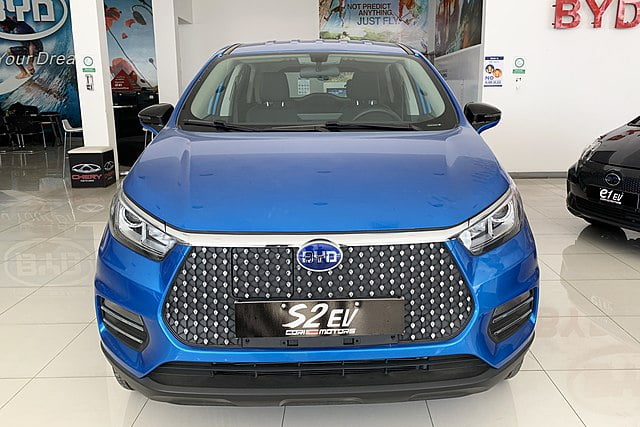
China is a big player in the electric car market. The Chinese government wants to use more clean energy and has given money to people who buy electric cars. Last year, the government gave $72.3 billion in tax breaks to people who bought electric cars. This is the biggest amount of money given out at a time when electric car sales were slowing down. BYD's cheapest car, the Seagull, costs $11,000, while the cheapest Tesla car in China costs almost $36,000. BYD is also doing well in other areas, as it sold more cars than Volkswagen in China earlier this year.
Tesla helped make electric cars popular in China, but it is now selling fewer cars there. In September, Tesla sold 74,073 cars made in China, which is almost 11% less than the year before. In the same month, BYD sold 286,903 cars, which is almost 43% more than the year before. However, Tesla is still popular with young people in China. As the relationship between the US and China gets worse, Tesla is looking at India as another place to sell its cars. Experts think the electric car market will change a lot in the future, with more rules to help fight climate change by 2030.
Original news source: BYD: The top electric car maker that is not Tesla (BBC)
📖 Vocabulary:
Group or Classroom Activities
Warm-up Activities:
– News Summary
Instructions: Divide the class into pairs or small groups. Give each group a copy of the article. Instruct them to read the article together and then summarize the main points in their own words. After a few minutes, have each group share their summary with the class.
– Word Association
Instructions: Write the words "electric cars" on the board. Ask the students to brainstorm as many words or phrases related to electric cars as they can in one minute. Encourage them to think of both positive and negative associations. After one minute, go around the class and have each student share one word or phrase they came up with.
– Sketch It
Instructions: Divide the class into pairs. Give each pair a copy of the article. Instruct one student in each pair to choose a section of the article and sketch a visual representation of it. The other student must guess which part of the article is being represented. After a few minutes, have the pairs switch roles and repeat the activity.
– Vocabulary Pictionary
Instructions: Write a selection of vocabulary words from the article on small slips of paper and put them in a bag or container. Divide the class into teams. One student from each team comes up to the front of the class and picks a slip of paper from the container. They must then draw a picture to represent the word on the slip of paper, while their team tries to guess the word. The team that guesses the most words correctly wins.
– Pros and Cons
Instructions: Divide the class into two groups. Assign one group to list the pros of electric cars based on the article, and assign the other group to list the cons. Give the groups a few minutes to brainstorm and write down their points. Then, have each group share their lists with the class. Encourage discussion and debate among the students.
🤔 Comprehension Questions:
🎧✍️ Listen and Fill in the Gaps:
The Chinese BYD, which makes electric cars, is doing very well. It is now more cars each quarter than Tesla, and is second only to Tesla in how many cars it sells worldwide. BYD used to make batteries, which are one of the most costly parts of an electric car. Because BYD makes its own batteries, it can save a lot of . This is different from Tesla, which buys batteries from other companies. China is a big in the electric car market. The Chinese government wants to use more clean energy and has given money to who buy electric cars. Last year, the government gave $72.3 billion in tax to people who bought electric cars. This is the biggest amount of money given out at a time when electric car sales were slowing down. BYD's cheapest car, the Seagull, costs $11,000, while the cheapest Tesla car in China costs almost $36,000. BYD is also doing well in areas, as it sold more cars than Volkswagen in China earlier this year. Tesla helped make cars in China, but it is now selling fewer cars there. In September, Tesla sold 74,073 cars made in China, which is almost 11% less than the year before. In the same , BYD sold 286,903 cars, which is almost 43% more than the year before. However, Tesla is still popular with young people in China. As the relationship between the US and China gets worse, Tesla is looking at India as another place to sell its cars. think the electric car market will change a lot in the future, with more rules to help fight change by 2030.
💬 Discussion Questions:
1. What is an electric car?
2. How would you feel if you could save a lot of money by making your own batteries?
3. Do you like electric cars? Why or why not?
4. What do you think about the Chinese government giving money to people who buy electric cars?
5. Why do you think BYD is doing well in the electric car market?
6. Do you think it's important for countries to use more clean energy? Why or why not?
7. How would you feel if the government gave you a tax break for buying an electric car?
8. What do you think about Tesla selling fewer cars in China?
9. Why do you think BYD is selling more cars than Volkswagen in China?
10. Do you think Tesla will be successful in India? Why or why not?
11. How do you think the electric car market will change in the future?
12. Do you think it's important to have rules to fight climate change? Why or why not?
Individual Activities
📖💭 Vocabulary Meanings:
Click a dot next to a word, then click the dot next to its meaning to draw a line connecting them.
Words
Meanings
🔡 Multiple Choice Questions:
🕵️ True or False Questions:
📝 Write a Summary:
Write a summary of this news article in two sentences.
Check your writing now with the best free AI for English writing!