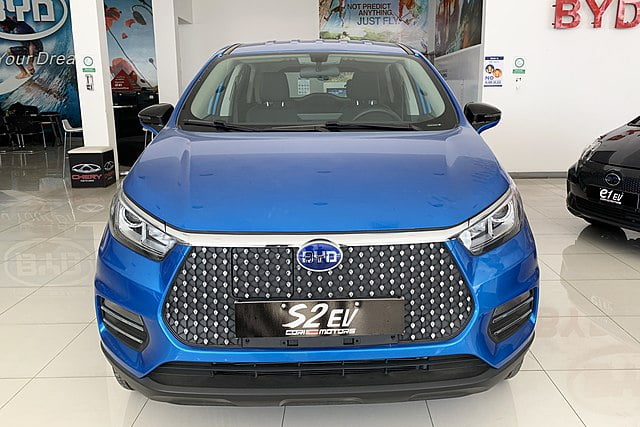
BYD had an advantage from the beginning, as it started as a battery company before expanding into car manufacturing. Its CEO, Wang Chuanfu, grew up in a poor province in China and co-founded BYD in 1995. The company gained recognition for its rechargeable batteries, which competed with expensive Japanese imports. In 2002, BYD became a publicly traded company and later diversified by acquiring a struggling state-owned car manufacturer. The Chinese government introduced subsidies and tax breaks to promote renewable energy production, creating a favorable market for BYD's batteries to power electric vehicles.
BYD's success can be attributed to its in-house battery production, which saves the company money as batteries are one of the most expensive components of an electric vehicle. Competitors like Tesla rely on third-party manufacturers for batteries. According to a UBS report, BYD's entry-level electric vehicle, the Seagull, has a 15% price advantage over Tesla's Chinese-made base Model 3 sedan. This affordability has contributed to BYD's popularity, as it surpassed Germany's Volkswagen to become China's top-selling car brand.
While Tesla is credited with popularizing electric vehicles in China, BYD has outperformed it in terms of sales. Tesla's sales of Chinese-made electric vehicles dropped by almost 11% in September, while BYD experienced a 43% increase in sales during the same period. However, Tesla remains a favorite brand among younger buyers in China. As tensions between the US and China escalate, Tesla is also exploring opportunities in India as an alternative market.
The future of the electric vehicle market looks promising, with analysts predicting a significant shift towards green incentives by 2030. European and UK car manufacturers are struggling to compete, and concerns about China's dominance may lead to regulations that limit the access of Chinese car makers to the European market. The European Commission is currently investigating the possibility of setting tariffs to protect EU manufacturers from cheaper Chinese electric vehicles. Despite these challenges, BYD's affordable and environmentally friendly cars are gaining popularity globally, particularly in Germany, where high inflation and energy costs are driving demand for affordable options.
Original news source: BYD: The top electric car maker that is not Tesla (BBC)
📖 Vocabulary:
Group or Classroom Activities
Warm-up Activities:
– Charades
Instructions: Divide the class into two teams. Each team will take turns acting out words or phrases related to the article. One member from each team will come to the front of the class and act out the word or phrase silently, while their team members try to guess what it is. The team with the most correct guesses wins.
– News Summary
Instructions: In pairs or small groups, students will take turns summarizing the main points of the article. They should focus on the key information and try to condense it into a brief summary. After each summary, the other students can provide feedback and ask questions to clarify any confusion.
– Opinion Poll
Instructions: Students will write down their opinions on a specific question related to the article, such as "Do you think BYD will continue to outperform Tesla in the electric vehicle market?" or "Should the EU set tariffs on Chinese electric vehicles?" They will then walk around the class and ask their classmates for their opinions, noting down their responses. Afterward, they can share the results and discuss the different perspectives.
– Pros and Cons
Instructions: Divide the class into two groups. One group will brainstorm the pros of BYD's success and the growth of China's auto industry, while the other group will brainstorm the cons. Each group will then present their ideas to the class, and the other group can add any additional points they think of. The class can then have a discussion, weighing the pros and cons and considering the potential future implications.
– Future Predictions
Instructions: In pairs or small groups, students will discuss and make predictions about the future of the electric vehicle market. They should consider factors such as government regulations, technological advancements, and consumer preferences. Each group will present their predictions to the class, explaining their reasoning and any evidence they have to support their ideas. The class can then discuss and compare the different predictions.
🤔 Comprehension Questions:
BYD has emerged as a strong competitor to Tesla by producing more cars per quarter than Tesla and being second only to Tesla in global sales.
BYD had the advantage of starting as a battery company before expanding into car manufacturing. Its in-house battery production saves the company money as batteries are one of the most expensive components of an electric vehicle.
The Chinese government introduced subsidies and tax breaks to promote renewable energy production, creating a favorable market for BYD's batteries to power electric vehicles.
One factor that has contributed to BYD's popularity over Tesla in China is the affordability of its electric vehicles. According to a UBS report, BYD's entry-level electric vehicle has a 15% price advantage over Tesla's Chinese-made base Model 3 sedan.
Tesla's sales of Chinese-made electric vehicles dropped by almost 11% in September, while BYD experienced a 43% increase in sales during the same period.
Due to escalating tensions between the US and China, Tesla is exploring opportunities in India as an alternative market.
Analysts are predicting a significant shift towards green incentives in the electric vehicle market by 2030.
BYD's affordable cars are gaining popularity in Germany due to high inflation and energy costs, which are driving demand for affordable options.
🎧✍️ Listen and Fill in the Gaps:
Chinese electric car manufacturer BYD has emerged as a strong competitor to Tesla. The company's shares have surged after it announced that it expects its third-quarter profits to more than double compared to last year. BYD is now producing more cars per quarter than Tesla and is second only to the US car maker in sales. This success highlights the rapid growth of China's auto industry, which has surpassed Japan to become the world's largest exporter. However, tensions between China and other countries, particularly the US and EU, may pose for the export market of Chinese electric . BYD had an advantage from the beginning, as it started as a company before expanding into car manufacturing. Its CEO, Wang Chuanfu, grew up in a poor province in China and co-founded BYD in 1995. The company gained recognition for its batteries, which competed with expensive Japanese imports. In 2002, BYD a publicly traded company and later diversified by acquiring a struggling state-owned car manufacturer. The Chinese introduced subsidies and tax breaks to promote renewable energy production, a favorable market for BYD's batteries to power electric vehicles. BYD's success can be attributed to its in-house battery production, which saves the company money as batteries are one of the most expensive components of an electric vehicle. Competitors like Tesla rely on third-party manufacturers for batteries. to a UBS report, BYD's entry-level electric vehicle, the Seagull, has a 15% price advantage over Tesla's Chinese-made base Model 3 . This affordability has contributed to BYD's popularity, as it surpassed Germany's Volkswagen to China's top-selling car brand. While Tesla is credited with popularizing electric vehicles in China, BYD has outperformed it in terms of sales. Tesla's sales of Chinese-made electric vehicles dropped by almost 11% in September, while BYD experienced a 43% increase in sales during the same period. However, Tesla a favorite brand among younger buyers in China. As tensions between the US and China escalate, Tesla is also exploring opportunities in India as an alternative market. The future of the electric vehicle market looks promising, with analysts predicting a significant shift towards green incentives by 2030. European and UK car manufacturers are to , and concerns about China's dominance may lead to regulations that limit the access of Chinese car makers to the European market. The European Commission is currently the possibility of setting tariffs to protect EU manufacturers from cheaper Chinese electric vehicles. Despite these challenges, BYD's and environmentally friendly cars are gaining popularity globally, particularly in Germany, where high inflation and energy costs are driving demand for affordable options.
💬 Discussion Questions:
1. What is BYD and how has it become a strong competitor to Tesla?
2. How would you feel if you owned a Chinese-made electric vehicle and tensions between China and other countries affected the export market?
3. Do you like the idea of electric vehicles becoming more popular? Why or why not?
4. Do you think BYD's success is mainly due to its in-house battery production? Why or why not?
5. How would you feel if you were a European or UK car manufacturer struggling to compete with Chinese electric vehicles?
6. What is the future of the electric vehicle market predicted to be like? Do you think these predictions will come true? Why or why not?
7. How would you feel if your country implemented green incentives to encourage the use of electric vehicles?
8. Do you think it's fair for the European Commission to consider setting tariffs to protect EU manufacturers from cheaper Chinese electric vehicles? Why or why not?
9. What is the appeal of BYD's affordable and environmentally friendly cars? Why do you think they are gaining popularity globally?
10. How would you feel if you were a younger buyer in China and Tesla's sales dropped while BYD's sales increased?
11. What is your opinion on the rapid growth of China's auto industry surpassing Japan to become the world's largest exporter?
12. How would you feel if you were a car manufacturer relying on third-party manufacturers for batteries, like Tesla?
13. Do you think the tensions between the US and China will have a significant impact on the electric vehicle market? Why or why not?
14. How would you feel if your country implemented regulations to limit the access of Chinese car makers to the market?
15. What is your opinion on the shift towards green incentives by 2030? Do you think it will be successful? Why or why not?
Individual Activities
📖💭 Vocabulary Meanings:
Click a dot next to a word, then click the dot next to its meaning to draw a line connecting them.
Words
Meanings
🔡 Multiple Choice Questions:
🕵️ True or False Questions:
📝 Write a Summary:
Write a summary of this news article in two sentences.
Check your writing now with the best free AI for English writing!