
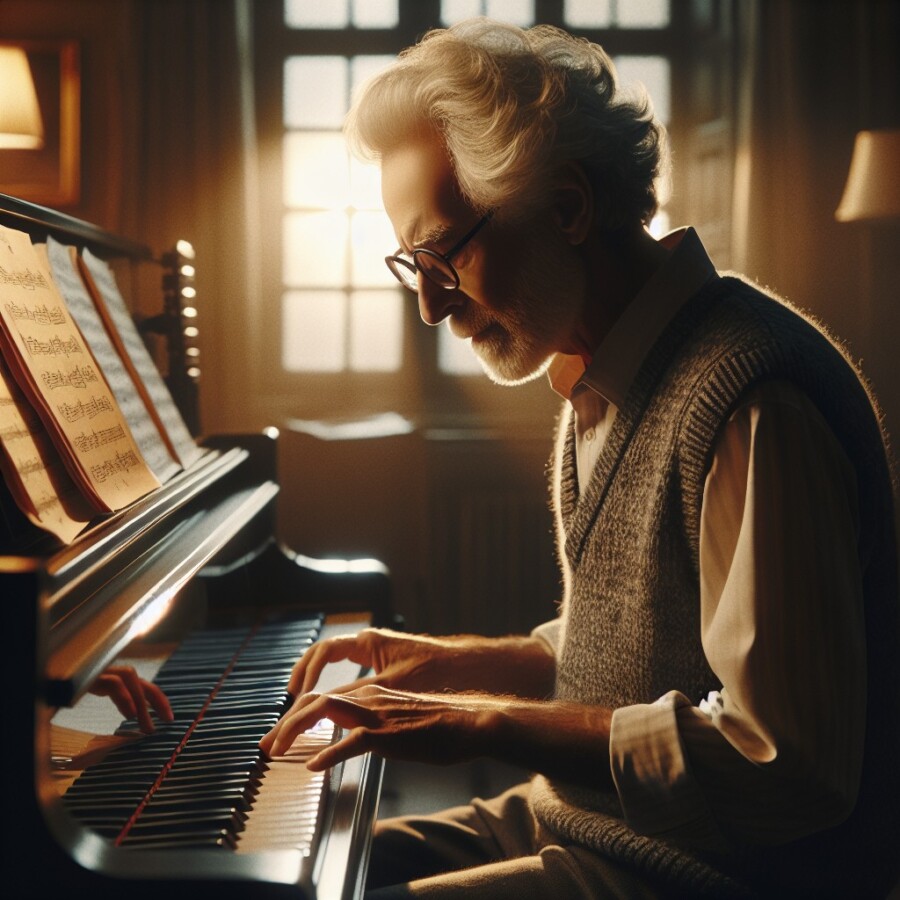
A study from the UK says that playing music or singing is good for the brains of older people. Researchers found that doing things with music, like playing an instrument or reading music notes, can help keep the mind sharp and memory strong as people get older. They looked at more than 1,100 people who were over 40 years old and noticed that those who played instruments were especially good at solving problems and remembering things.
Playing certain instruments, like the piano or flute, seems to be very good for the brain. But just listening to music doesn't help the brain in the same way. The main researcher, Prof Anne Corbett, said learning to read music is like learning a new language for the brain. She thinks starting a musical hobby, even later in life, could be really good for keeping the mind healthy.
However, playing music might not stop all brain problems, like dementia. But a group called Dementia UK thinks music can still help people with dementia feel better. The study shows that making music a part of life might help people stay sharp and healthy in their brains as they get older.
Original news source: Playing a musical instrument good for brain health in later life – study (BBC)
🎧 Listen:
📖 Vocabulary:
Group or Classroom Activities
Warm-up Activities:
– Charades
Instructions: Divide the class into teams. Write down a list of musical instruments on separate pieces of paper. Have one student from each team come up and pick a piece of paper. Without speaking, they must act out playing the instrument and the rest of their team must guess what instrument it is.
– News Summary
Instructions: Have the students read the article individually or in pairs. Then, have them write a summary of the article in their own words. Afterward, have a class discussion where students can share their summaries and compare their understanding of the article.
– Opinion Poll
Instructions: Divide the class into pairs. Have each pair discuss their opinions on the benefits of playing music or singing for older people. Then, have each pair conduct a mini opinion poll, asking other pairs for their opinions. Afterward, have a class discussion where students can share their findings and discuss different perspectives.
– Vocabulary Pictionary
Instructions: Write down a list of vocabulary words from the article on separate pieces of paper. Divide the class into teams. Have one student from each team come up and pick a piece of paper. Without speaking, they must draw a picture to represent the word while their team must guess what the word is.
– Think-Pair-Share
Instructions: Have the students think individually about whether they agree or disagree with the statement "Playing music or singing is good for the brains of older people." Then, have them pair up and discuss their thoughts with a partner. Finally, have a class discussion where students can share their opinions and reasons for their stance.
🤔 Comprehension Questions:
🎧✍️ Listen and Fill in the Gaps:
A study from the UK says that playing or singing is good for the brains of older people. Researchers found that doing with music, like playing an instrument or reading music notes, can help keep the mind and memory strong as people get older. They looked at more than 1,100 people who were over 40 years old and noticed that those who played were especially good at solving problems and remembering things. certain instruments, like the piano or , seems to be very good for the brain. But just listening to music doesn't help the in the same way. The main researcher, Prof Anne Corbett, said to read music is like learning a new language for the brain. She thinks starting a musical hobby, even later in life, could be really good for keeping the mind . However, playing music might not stop all brain problems, like . But a called Dementia UK thinks music can still help people with dementia feel better. The study shows that making music a of life might help people stay sharp and healthy in their brains as they get older.
💬 Discussion Questions:
1. What did the study from the UK say about playing music or singing?
2. How can playing an instrument or reading music notes help older people?
3. Do you think playing certain instruments, like the piano or flute, is good for the brain? Why or why not?
4. What did the main researcher, Prof Anne Corbett, say about learning to read music?
5. Do you think starting a musical hobby later in life can be good for keeping the mind healthy? Why or why not?
6. Can playing music stop all brain problems, like dementia? Why or why not?
7. What does the group Dementia UK think about the benefits of music for people with dementia?
8. How do you think making music a part of life can help people stay sharp and healthy in their brains?
9. Have you ever played a musical instrument? If yes, how did it make you feel?
10. Do you like listening to music? Why or why not?
11. How would you feel if you couldn't remember things as you got older?
12. Do you think it's important to keep the mind sharp and healthy as we get older? Why or why not?
Individual Activities
📖💭 Vocabulary Meanings:
Click a dot next to a word, then click the dot next to its meaning to draw a line connecting them.
Words
Meanings
🔡 Multiple Choice Questions:
🕵️ True or False Questions:
📝 Write a Summary:
Write a summary of this news article in two sentences.
Check your writing now with the best free AI for English writing!