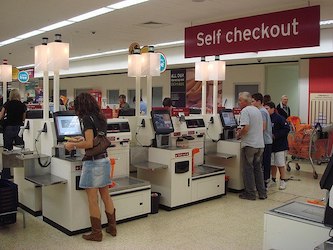
The boss of Booths, a man named Nigel Murray, said that people shopping didn't like using the machines, especially when they had to buy things like apples or bananas that you have to weigh. The store wants to make sure people feel happy and welcome when they shop, so they want real people to help customers instead of using machines that try to think like humans. Some people don't like this change, but many others are happy because they like talking to the workers and think it's better when a person helps them.
Self-service machines, where you scan and pay for your things without a cashier, started in the 1990s. Since then, more and more stores have been using them. Some people want more cashiers to help them, but others like using the machines because it can be faster. Booths getting rid of these machines shows that they think it's really important for people to feel good when they shop and to have someone there to help them.
Original news source: Self-service: Booths supermarket puts staff back behind its tills (BBC)
📖 Vocabulary:
Group or Classroom Activities
Warm-up Activities:
– News Summary
Instructions: Divide students into small groups. Have each group read the article and then work together to write a short summary of the article in their own words. Encourage them to focus on the main points: the decision by Booths supermarket, customer reactions, and the contrast between self-service machines and human cashiers.
– Opinion Poll
Instructions: On the board, write down the statement: "Supermarkets should have more human cashiers than self-service machines." Ask students to move to one side of the room if they agree with the statement, and the other side if they disagree. Give students a chance to share their reasons for their opinions with the class, practicing their speaking skills.
– Vocabulary Pictionary
Instructions: Write down key vocabulary from the article on slips of paper (e.g., supermarket, cashier, self-service, machines, customer, friendly, weigh). Divide the class into two teams. One student from each team will draw a word for their team to guess. The team that guesses the most words correctly wins.
– Role-play: News Reporter
Instructions: Pair up students and assign them roles: one is a news reporter, and the other is either Nigel Murray, a Booths customer, or a Booths store employee. The reporter will interview their partner about the changes at Booths supermarkets. Encourage students to use information from the article and to invent additional details that would make sense in the context.
– Think-Pair-Share
Instructions: Ask a question about the article, such as "Do you prefer using self-service machines or being helped by cashiers when you shop, and why?" Students first think about their answer individually, then pair up with a classmate to discuss their thoughts. Finally, bring the class together and have a few pairs share their discussions with everyone.
🤔 Comprehension Questions:
The supermarket is called Booths.
Booths is in the north of England.
Booths took away the machines because customers didn't like them. They thought the machines were slow, sometimes broken, and made shopping less friendly.
Customers found it hard to buy things like apples or bananas that you need to weigh.
The boss of Booths is Nigel Murray.
Booths wants their customers to feel happy and welcome.
Stores started using self-service machines in the 1990s.
🎧✍️ Listen and Fill in the Gaps:
A supermarket Booths in the north of England is taking away almost all the machines where people can scan and pay for their things by themselves. The store has 28 places where you can , and they think it's better if real people help customers at the checkout. They decided to do this because people shopping there didn't the machines. They said the machines were slow, didn't work right sometimes, and made shopping less friendly. The boss of Booths, a man named Nigel Murray, said that people shopping didn't like using the machines, especially when they had to buy things like apples or that you have to weigh. The wants to make sure people feel happy and welcome when they shop, so they want real people to help customers instead of using machines that try to like humans. Some people don't like this , but many others are happy because they like talking to the workers and think it's better when a person them. Self-service machines, where you scan and pay for your things without a cashier, started in the 1990s. Since then, and more stores been using them. Some people want more cashiers to them, but others like using the machines because it can be faster. Booths getting rid of these machines shows that they think it's really important for people to feel good when they shop and to have someone there to help them.
💬 Discussion Questions:
1. What is a supermarket?
2. How would you feel if a store took away machines and you had to talk to a person to pay?
3. Do you like talking to cashiers when you buy things? Why or why not?
4. Have you ever used a machine to buy things at a store? Was it easy or hard?
5. Do you think it's important for stores to have people help you instead of machines? Why?
6. How do you feel when a machine doesn't work right at the store?
7. What is something you like to buy that you have to weigh, like apples or bananas?
8. Would you like it if a store made shopping feel more friendly? Why or why not?
9. Do you think shopping should be fast or friendly? Why?
10. Have you ever had a problem with a machine when shopping? What happened?
11. Do you think other stores should take away their machines too? Why or why not?
12. What makes you feel happy and welcome when you go shopping?
Individual Activities
📖💭 Vocabulary Meanings:
Click a dot next to a word, then click the dot next to its meaning to draw a line connecting them.
Words
Meanings
🔡 Multiple Choice Questions:
🕵️ True or False Questions:
📝 Write a Summary:
Write a summary of this news article in two sentences.
Check your writing now with the best free AI for English writing!