Free Materials For ESL Teachers and Learners

English Newsroom

Learn English through news articles - complete lesson plans, including articles, listening, classroom activities, quiz questions and more!

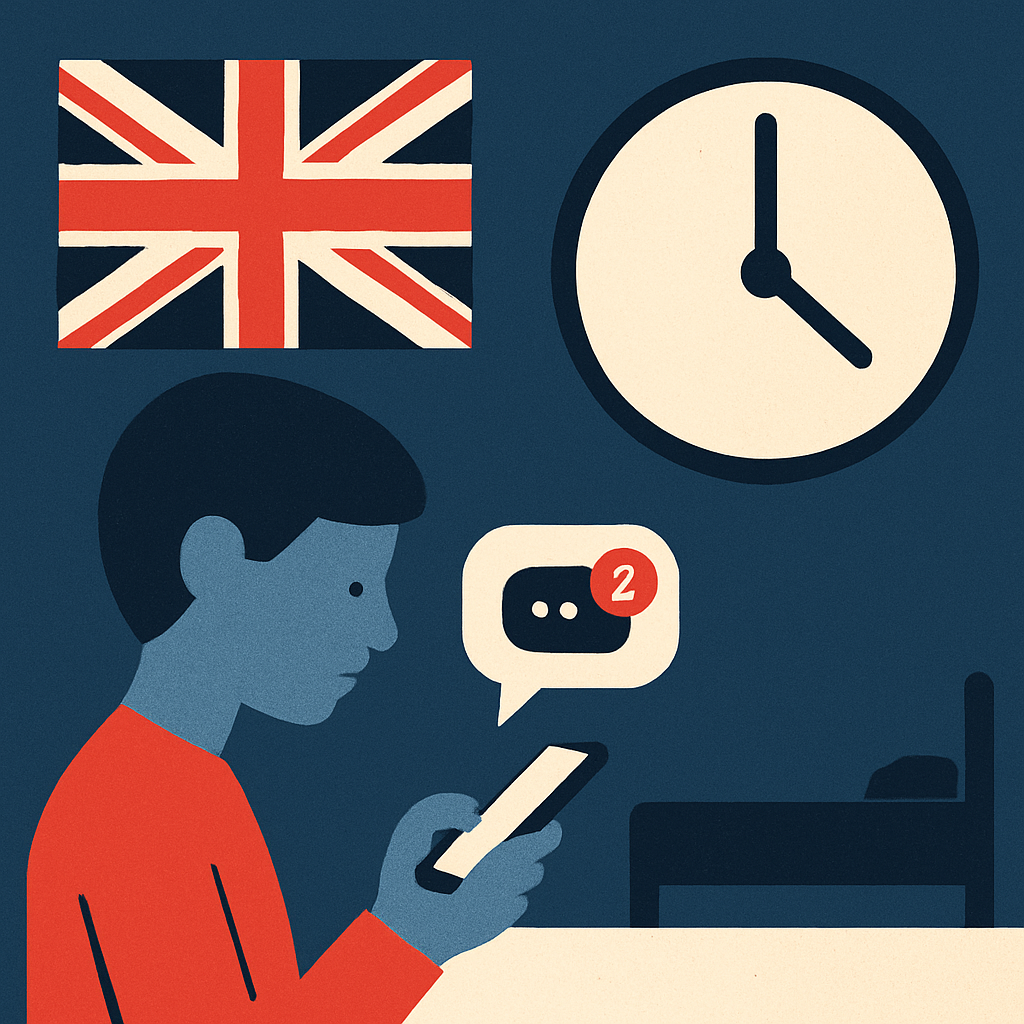
UK Plans Social Media Ban for Teens

UK considers limiting teens' social media usage overnight.
Try this article at a different level?

The UK government has decided to limit social media use for 16 and 17-year-olds during certain hours. From midnight to 6 am, apps like Instagram, TikTok, and YouTube will be unavailable by default. They believe this will help teenagers sleep better and focus more during the day by reducing distractions. However, teens can change the settings if they choose, and some think this curfew won't really help.

Some people say the new rules might not actually keep teenagers safe online. They think the plan doesn't cover all the online risks teenagers face. Experts are also worried that it might stop teens from getting help late at night if they need it. The government, however, believes these steps are important for healthier teen lifestyles.

The government is also planning to create safer ways for kids to use AI chatbots. These ideas will be talked about in Parliament and might be put into place by next spring. People have different opinions about these new rules, and some are unsure how effective they will be. These reactions show that there are mixed feelings about the changes.

Original news source: Midnight social media curfew proposed for older UK teens – BBC News (BBC)

🎧 Listen:

πŸ“– Vocabulary:

1. announced
2. default
3. aim
4. distractions
5. opt out
6. critics
7. incomplete
8. restriction
9. lifestyle
10. proposed
11. reactions
12. regulations

Group or Classroom Activities

Warm-up Activities:

1. What social media apps do you use most often?
2. How long do you usually spend on your phone each day?
3. Why do you think people use social media before bed?
4. Can you name any benefits of taking a break from social media?
5. What would you do if you couldn't use social media at night?

πŸ€” Comprehension Questions:

1. What is the new plan announced by the UK government?

2. Which social media apps are mentioned in the article?

3. What is the goal of the government’s new plan?

4. How can teens access social media during the restricted hours?

5. Why do some critics not agree with the plan?

6. What concern do experts have about the social media curfew?

7. What are the government's future plans besides the social media curfew?

🎧✍️ Listen and Fill in the Gaps:

The UK government has decided to limit social media use for 16 and 17-year-olds during certain hours. From midnight to 6 am, apps like Instagram, , and YouTube will be by default. They believe this will help teenagers sleep and focus more during the day by reducing distractions. However, teens can change the settings if they choose, and some think this curfew won't . Some people say the new rules might not actually keep teenagers safe online. They think the plan doesn't all the online risks teenagers . Experts are also worried that it might teens from getting help late at night if they need it. The government, however, these steps are important for healthier teen lifestyles. The government is also planning to create safer ways for kids to use AI chatbots. These ideas will be talked about in and might be put into place by next spring. People have different opinions about these new rules, and some are unsure how effective they will be. These that there are mixed feelings about the changes.

πŸ’¬ Discussion Questions:

1. Do you think the social media curfew is a good idea? Why or why not?
2. How important is sleep for teenagers? Explain your opinion.
3. What are some other ways to help teenagers focus better?
4. Should 16 and 17-year-olds make their own decisions about social media use?
5. How does social media affect your day-to-day life?
6. What are the biggest online risks for teenagers today?
7. How do you feel about AI chatbots being used by children?
8. In what ways can parents help teens manage their online time?
9. Do you think the government should regulate social media use? Why?
10. What would be the hardest part of not using social media at night?
11. How do you think friends would react to this curfew?
12. What else could the government do to support teen mental health?

Individual Activities

πŸ“–πŸ’­ Vocabulary Meanings:

Click a dot next to a word, then click the dot next to its meaning to draw a line connecting them.

Words

1. announced
2. default
3. aim
4. distractions
5. opt out
6. critics
7. incomplete
8. restriction
9. lifestyle
10. proposed
11. reactions
12. regulations

Meanings

(A) goal or purpose
(B) suggested or planned
(C) declared or made known
(D) not having all necessary parts
(E) responses or feedback
(F) a standard setting or value
(G) way of living
(H) choose not to participate
(I) things that prevent concentration
(J) people who express unfavorable opinions
(K) rules or laws
(L) limitations or controls

πŸ”‘ Multiple Choice Questions:

1. The UK's plan is to limit social media for which age group?
(a) all teenagers
(b) 16 and 17-year-olds
(c) children under 13
(d) adults
2. During what hours will social media apps be unavailable?
(a) 6 am to noon
(b) Noon to 6 pm
(c) Midnight to 6 am
(d) 6 pm to midnight
3. Why does the government want to limit social media at night?
(a) To improve sleep and focus
(b) To increase screen time
(c) To reduce data costs
(d) To punish teenagers
4. What can teens do if they want to use social media during the curfew?
(a) Use a friend's phone
(b) Call a hotline
(c) Wait until morning
(d) Change their settings
5. What do critics say about the new plan?
(a) It will be very popular
(b) It might not keep teens safe online
(c) It protects all teenagers
(d) It solves all problems
6. What risk do experts worry about?
(a) Teens watching too much TV
(b) Teens doing more homework
(c) Teens exercising too much
(d) Teens missing out on support at night
7. What other technology is mentioned for kids' safety?
(a) AI chatbots
(b) Laptops
(c) Video games
(d) Virtual reality
8. When are the social media changes expected to start?
(a) Tomorrow
(b) Next summer
(c) By next spring
(d) Never

πŸ•΅οΈ True or False Questions:

1. The aim is to discourage unhealthy lifestyles for teens.
2. The government plans to expand social media use from midnight to 6 am.
3. Critics say the proposal might not cover all online risks.
4. The changes will be discussed in Parliament.
5. Further regulations for AI chatbots are planned.
6. The restriction targets adults over 18 years old.
7. Teens can opt out by changing settings.
8. Experts worry about teens gaining support at night.

Writing Questions:

1. Describe your typical evening routine with social media.
2. How would you feel if social media was unavailable after midnight?
3. Write about a time when social media helped you in a positive way.
4. Imagine a world without social media; how would it be different?
5. Discuss the benefits and challenges of regulating social media usage.

How about these other Level 2 articles?

Online
Class
Writing
Coach
β˜• 컀피 3μž” &
무료 ν”Όλ“œλ°±! πŸŽ“
β˜• 컀피 3μž” & 무료 ν”Όλ“œλ°±! πŸŽ“

X

[100% 온라인] λž­μ»€μŠ€ν„° λŒ€ν•™κ΅ μ˜μ–΄ 연ꡬ μ°Έμ—¬μž λͺ¨μ§‘
λ³„λ„μ˜ μ°Έκ°€λΉ„ 없이 영ꡭ λŒ€ν•™ 연ꡬ에 도움도 μ£Όμ‹œκ³ , 무료 μ˜μ–΄ μ‹€μ „ μ—°μŠ΅κ³Ό ν”Όλ“œλ°±λ„ λ°›μ•„λ³΄μ„Έμš”!

영ꡭ λž­μ»€μŠ€ν„° λŒ€ν•™κ΅(Lancaster University)μ—μ„œ ν•œκ΅­μΈ μ˜μ–΄ ν•™μŠ΅μžλΆ„λ“€μ„ λŒ€μƒμœΌλ‘œ μƒˆλ‘œμš΄ 연ꡬ ν”„λ‘œμ νŠΈλ₯Ό μ§„ν–‰ν•©λ‹ˆλ‹€. μ „ κ³Όμ • 온라인으둜 μ§„ν–‰λ˜μ–΄ μ–΄λ””μ„œλ“  νŽΈν•˜κ²Œ μ°Έμ—¬ν•˜μ‹€ 수 μžˆμŠ΅λ‹ˆλ‹€. μ—¬λŸ¬λΆ„μ˜ μ†Œμ€‘ν•œ μ°Έμ—¬λ‘œ ν•œκ΅­μΈμ˜ μ˜μ–΄ μ‚¬μš© 방식을 μ•Œμ•„λ³΄λŠ” ν₯미둜운 연ꡬ가 μ™„μ„±λ©λ‹ˆλ‹€.

🎁 μ°Έμ—¬ ν˜œνƒ:
– 원어민 μ—°κ΅¬μ›κ³Όμ˜ 1:1 νšŒν™” μ—°μŠ΅
– μ‹€μ „ μ˜μž‘ μ—°μŠ΅ & λ§žμΆ€ν˜• μ˜μ–΄ ν”Όλ“œλ°± 리포트
– 컀피 κΈ°ν”„ν‹°μ½˜ 총 3μž” μ„ λ¬Ό! (첫 μ„Έμ…˜ ν›„ 1μž”, λ§ˆμ§€λ§‰ μ„Έμ…˜ μ™„λ£Œ ν›„ 2μž” 더 λ“œλ €μš”! β˜•β˜•)

πŸ“… μ°Έμ—¬ 방식: 총 2회의 온라인 μ„Έμ…˜ (Zoom 등을 이용, 각 μ„Έμ…˜λ‹Ή μ•½ 60~80λΆ„ μ†Œμš”) λ§ν•˜κΈ°μ™€ μ“°κΈ° ν™œλ™μ΄ μ„žμ—¬ μžˆμ–΄ λΆ€λ‹΄ 없이 즐겁게 μ°Έμ—¬ν•˜μ‹€ 수 μžˆμŠ΅λ‹ˆλ‹€.

βœ… λŒ€μƒ: μ˜μ–΄ μ‹€λ ₯에 상관없이 μ°Έμ—¬λ₯Ό ν¬λ§ν•˜λŠ” 18μ„Έ 이상 ν•œκ΅­μΈ λˆ„κ΅¬λ‚˜

Feedback