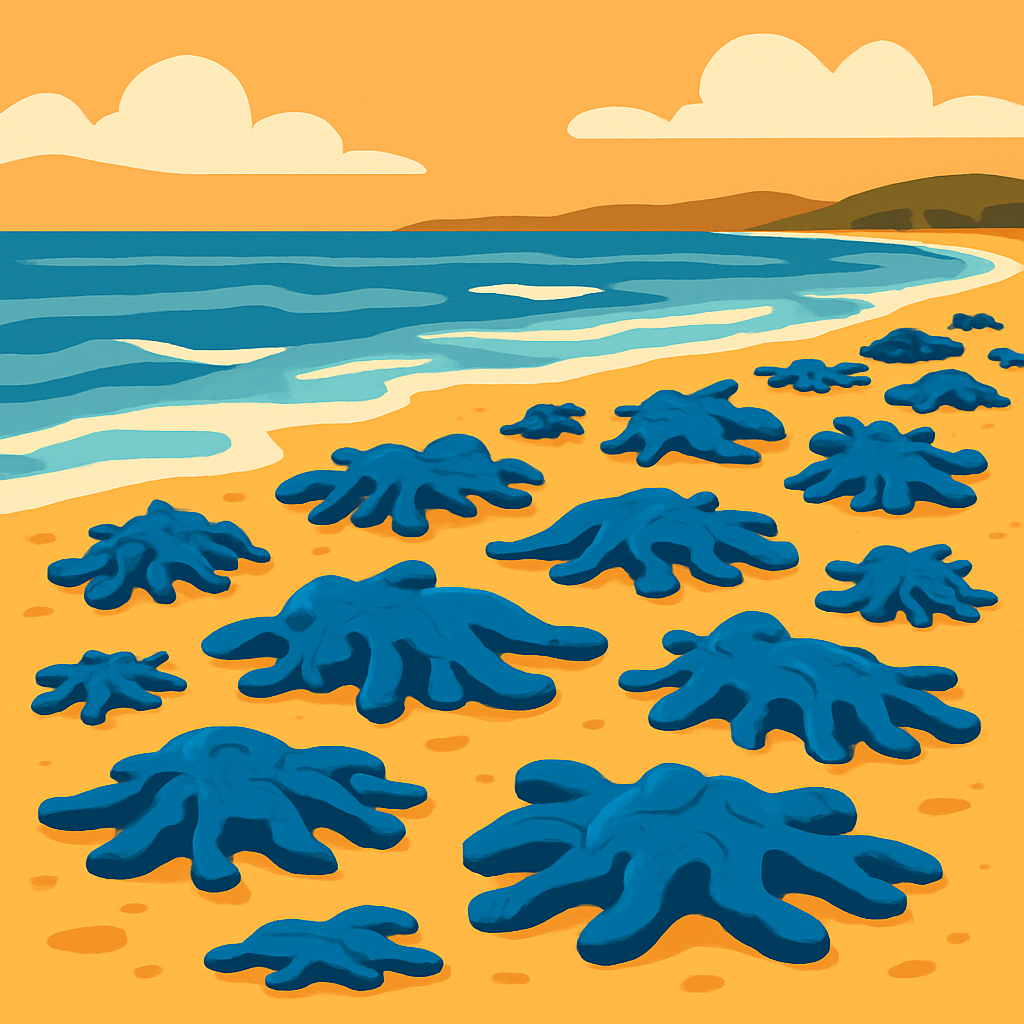
Blue sea creatures called by-the-wind sailors were spotted at St Bees beach in Cumbria. These creatures have sails that help them float on the water and travel with the wind. Although they resemble jellyfish, they are not the same but can still sting. A person named Louise initially thought they were seaweed.
Louise was surprised by how many there were on the beach. She took photos of them and noticed others doing the same. The blue creatures are quite pretty but only about 5 cm in size. It's important not to touch them because they can sting even after they've washed ashore.
A marine expert explained that these creatures drift long distances on the sea's surface. They can end up on beaches when the wind blows in the right direction, like at St Bees. People are advised to admire their beauty but to be careful while observing these interesting sea travelers. They are a unique sight, reminding us of the wonders of the ocean.
Original news source: Hundreds of by-the-wind-sailors wash up on St Bees beach – BBC News (BBC)
🎧 Listen:
📖 Vocabulary:
Group or Classroom Activities
Warm-up Activities:
1. Have you ever seen a creature like a by-the-wind sailor before? What was it like?
2. What do you think it would be like to travel on the ocean's surface like these creatures?
3. Why do you think creatures have bright colors, like the blue of the by-the-wind sailors?
4. Can you think of other sea animals that use the wind or water currents to move?
5. What would you do if you found a by-the-wind sailor on a beach?
🤔 Comprehension Questions:
They were found at St Bees beach in Cumbria.
They use sails to move on the water.
She thought they were seaweed at first.
They are about 5 cm in size.
Because they can still sting even after washing ashore.
A marine expert provided the information.
The right wind direction helps them end up on beaches.
🎧✍️ Listen and Fill in the Gaps:
Blue sea creatures called by-the- sailors were at St Bees beach in . These creatures have sails that help them float on the water and travel with the wind. Although they resemble jellyfish, they are not the same but can still sting. A person named Louise initially thought they were . Louise was by how many there were on the beach. She took photos of them and noticed others the same. The blue creatures are quite pretty but only about 5 cm in . It's important not to touch them because they can sting even after they've washed . A marine expert explained that these creatures drift long distances on the sea's surface. They can end up on when the wind blows in the right direction, like at St . People are advised to admire their beauty but to be careful observing these interesting sea travelers. They are a sight, reminding us of the wonders of the ocean.
💬 Discussion Questions:
1. What interests you most about by-the-wind sailors?
2. Have you ever been to a beach? What did you see there?
3. Why do you think it's important to be careful around sea creatures?
4. How would you feel if you saw many by-the-wind sailors on a beach?
5. Do you think it's important to learn about marine life? Why or why not?
6. What would you do if you found a strange creature in your backyard?
7. How would you explain to a friend why they should avoid touching these creatures?
8. Are there any creatures in your area that people have to be cautious of?
9. How do you think people can protect marine life?
10. Would you like to learn more about by-the-wind sailors or other sea creatures?
11. What do you think is the most fascinating thing about the ocean?
12. How can people safely enjoy observing wild animals?
Individual Activities
📖💭 Vocabulary Meanings:
Click a dot next to a word, then click the dot next to its meaning to draw a line connecting them.