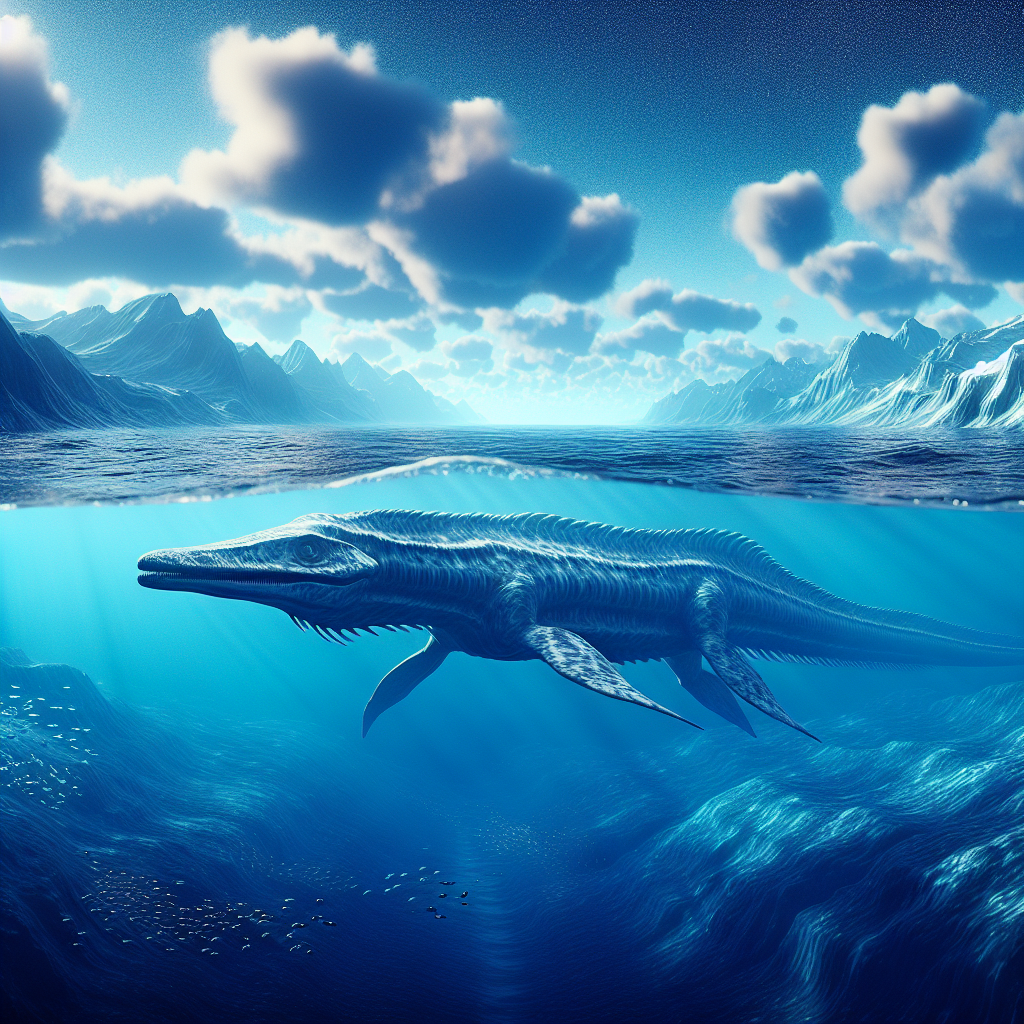
Scientists found the biggest sea reptile ever in the UK. It is called Ichthyotitan severnensis and lived 202 million years ago. It might have been 25 meters long, bigger than a blue whale. They found jawbones in 2016 and 2020, but need more pieces to know its exact size.
Amateur fossil hunters found the bones. Paul de la Salle found the first jawbone and showed it to Dr. Dean Lomax, a paleontologist. Justin and Ruby Reynolds found the second jawbone. These fossils will be shown at the Bristol Museum and Art Gallery.
Dr. Lomax says anyone can find important fossils, not just scientists. You need patience and a good eye to help science. Finding Ichthyotitan severnensis helps us learn about old sea reptiles and why they died out. This discovery shows how big and varied these ancient creatures were.
Original news source: Prehistoric sea reptile 'twice as long as bus' (BBC)
🎧 Listen:
📖 Vocabulary:
Group or Classroom Activities
Warm-up Activities:
– Headline Creation
Instructions: In pairs, students will create a catchy headline for the article about the discovery of Ichthyotitan severnensis. They should try to summarize the main idea of the article in just a few words.
– Vocabulary Pictionary
Instructions: Divide the class into teams. Give each team a list of vocabulary words from the article. One student from each team will come to the front and draw a picture to represent one of the words. The team members must guess the word based on the drawing.
– Opinion Poll
Instructions: Ask the students to raise their hands if they think it would be exciting to discover a new species of sea reptile. Then, ask the students to explain their reasons for their opinions. Encourage a class discussion based on their responses.
– Charades
Instructions: Write different actions or words related to the article on small pieces of paper and put them in a hat. Students take turns picking a piece of paper and acting out the word or action for their classmates to guess. The first student to guess correctly gets a point.
– Two Truths and a Lie
Instructions: Each student writes down two true statements and one false statement related to the article. In small groups, students take turns reading their statements and the other students must guess which statement is false. This activity encourages reading comprehension and critical thinking skills.
🤔 Comprehension Questions:
Scientists found the biggest sea reptile ever in the UK.
The sea reptile lived 202 million years ago.
The sea reptile might have been 25 meters long, bigger than a blue whale.
Amateur fossil hunters found the jawbones.
The fossils will be shown at the Bristol Museum and Art Gallery.
According to Dr. Lomax, anyone can find important fossils, not just scientists.
The discovery of Ichthyotitan severnensis can help us learn about old sea reptiles and why they died out.
🎧✍️ Listen and Fill in the Gaps:
Scientists found the biggest sea reptile ever in the UK. It is called Ichthyotitan severnensis and lived 202 million ago. It might have been 25 long, bigger than a whale. They found jaw in 2016 and 2020, but need more pieces to know its exact size. Amateur fossil hunters the bones. Paul de la Salle found the first jawbone and showed it to Dr. Dean , a paleontologist. Justin and Ruby Reynolds found the second jawbone. These fossils will be at the Bristol and Art Gallery. Dr. Lomax says anyone can find important fossils, not just scientists. You patience and a good eye to help science. Finding Ichthyotitan severnensis us about old sea reptiles and why they died out. This shows how big and varied these ancient creatures were.
💬 Discussion Questions:
1. What is a sea reptile?
2. How would you feel if you found a fossil like the ones in the article?
3. Do you like learning about dinosaurs and ancient creatures?
4. Do you think it's important for everyone to learn about fossils and dinosaurs? Why or why not?
5. What do you think it means when the article says the sea reptiles "died out"?
6. How do you think scientists know how big the Ichthyotitan severnensis was?
7. Why do you think the article says anyone can find important fossils, not just scientists?
8. Have you ever found something interesting or unusual outside? What was it?
9. Do you think it's exciting to learn about creatures that lived millions of years ago? Why or why not?
10. How do you think the Ichthyotitan severnensis might have looked like?
11. Why do you think the fossils will be shown at the Bristol Museum and Art Gallery?
12. What other ancient creatures do you want to learn more about?
Individual Activities
📖💭 Vocabulary Meanings:
Click a dot next to a word, then click the dot next to its meaning to draw a line connecting them.
Words
Meanings
🔡 Multiple Choice Questions:
🕵️ True or False Questions:
📝 Write a Summary:
Write a summary of this news article in two sentences.
Check your writing now with the best free AI for English writing!