

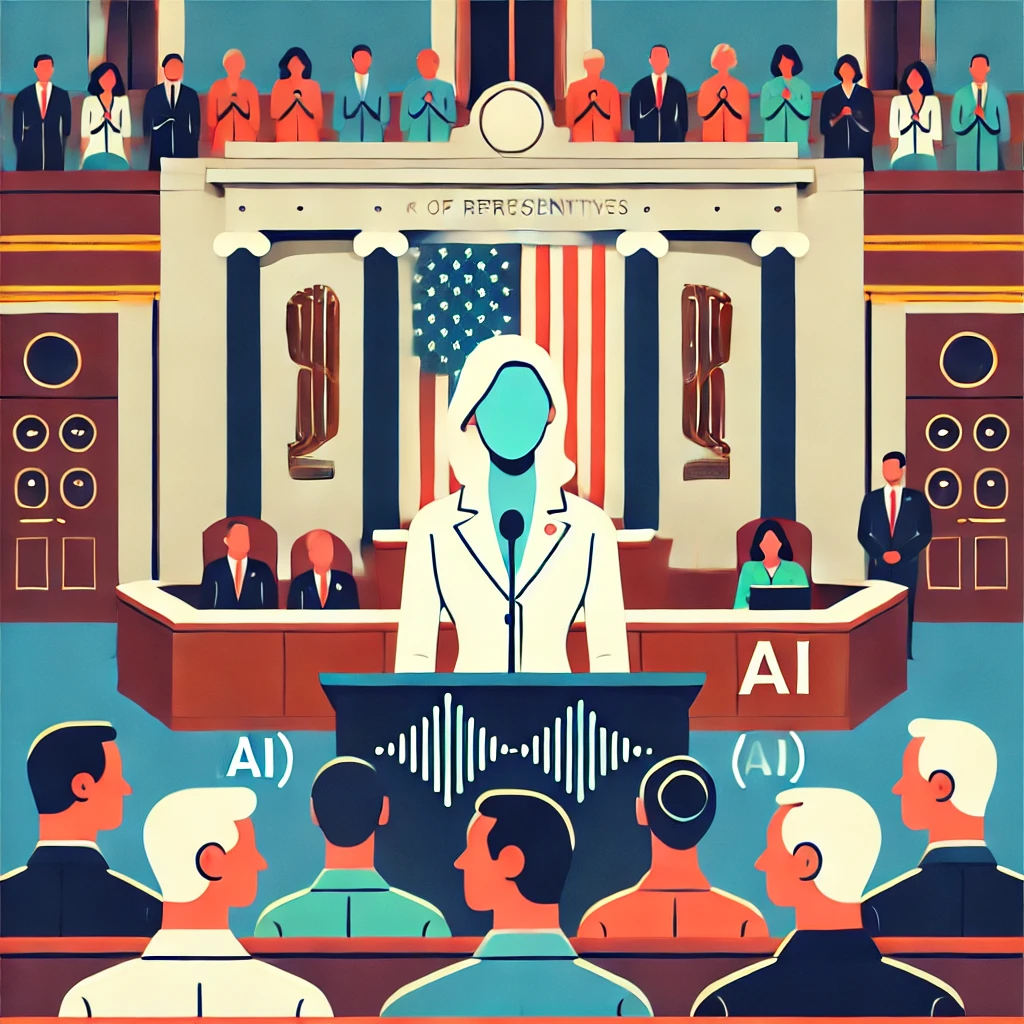
Jennifer Wexton, a Congresswoman from Virginia, did something new and special. She used a computer program called artificial intelligence (AI) to speak to the House of Representatives. This was important because she has a health problem that makes it hard for her to talk. The AI helped her by using recordings of her old speeches to make a voice that sounds like her.
This was the first time someone used AI to give a speech in Congress. It shows how technology can help people who have trouble speaking. This could change how people communicate in politics and other important places. Using AI to copy a person's voice might help more people join in and share their ideas.
Jennifer Wexton's speech was a big step forward and gives hope to others with similar challenges. It shows that technology can help people be part of important conversations. Her story might inspire more people to look into how AI can help those with disabilities. This could lead to new ways for everyone to communicate better.
Original news source: Lawmaker uses AI voice clone to address Congress (BBC)
🎧 Listen:
📖 Vocabulary:
Group or Classroom Activities
Warm-up Activities:
– CHARADES
Instructions: Divide the class into small groups. Each group will take turns acting out key terms from the article (e.g., "Congress," "AI," "speech") without speaking, while the other groups guess the words. This will help them reinforce vocabulary in a fun way.
– OPINION POLL
Instructions: Ask students to discuss and vote on the question: "Do you think AI can help people with disabilities?" Students will raise their hands to vote for "Yes" or "No." After voting, have a few students share their reasons for their choice. This encourages speaking and listening skills.
– MIND MAP
Instructions: On the board, write "AI in Communication" in the center. Have students come up one by one to add words or phrases related to the article (like "Jennifer Wexton," "Congress," "technology," "speech") to the mind map. This visual activity helps students organize their thoughts and vocabulary.
– VOCABULARY PICTIONARY
Instructions: Choose key vocabulary words from the article (like "artificial intelligence," "voice," "disabilities") and write them on slips of paper. One student will draw a word from the pile and illustrate it on the board while their classmates guess the word. This reinforces vocabulary through creativity.
– THINK-PAIR-SHARE
Instructions: Have students think about how technology has changed communication in their lives. After a minute of thinking, they will pair up to discuss their thoughts with a partner. Finally, invite a few pairs to share their ideas with the class. This promotes speaking and critical thinking skills.
🤔 Comprehension Questions:
Jennifer Wexton is a Congresswoman from Virginia.
She used a computer program called artificial intelligence (AI).
She has a health problem that makes it hard for her to talk.
The AI helped her by using recordings of her old speeches to make a voice that sounds like her.
This event is important because it shows how technology can help people who have trouble speaking.
More people might join in and share their ideas, and it could change how people communicate in politics.
Her story might inspire others to look into how AI can help those with disabilities.
🎧✍️ Listen and Fill in the Gaps:
Jennifer Wexton, a Congresswoman from Virginia, did something new and . She used a computer program called intelligence (AI) to speak to the House of Representatives. This was important because she has a problem that makes it hard for her to talk. The AI her by using recordings of her old speeches to a that sounds like her. This was the first time someone used AI to give a speech in Congress. It shows how technology can help people who have trouble speaking. This could how people communicate in politics and other important places. Using AI to copy a person's voice might help more people join in and share their ideas. Jennifer Wexton's speech was a big step forward and gives to with similar . It shows that technology can help be of important conversations. Her story might inspire more people to look into how AI can help those with disabilities. This could lead to new ways for everyone to communicate better.
💬 Discussion Questions:
1. What is your opinion about using technology to help people speak?
2. How would you feel if you could not talk and needed help to speak?
3. Do you like the idea of using AI to copy someone's voice? Why or why not?
4. What is a challenge you have faced when trying to communicate with others?
5. Do you think more people should use technology to help with disabilities? Why?
6. How would you feel if you could not share your ideas with others?
7. Do you think it is important for everyone to be able to speak in important places like Congress? Why?
8. What is a way you think technology can help people with disabilities?
9. Do you like talking in front of a group? Why or why not?
10. How would you feel if you had to use a computer to speak for you?
11. Do you think it is fair for some people to have help when speaking while others do not? Why?
12. What is your favorite way to communicate with your friends?
Individual Activities
📖💭 Vocabulary Meanings:
Click a dot next to a word, then click the dot next to its meaning to draw a line connecting them.
Words
Meanings
🔡 Multiple Choice Questions:
🕵️ True or False Questions:
📝 Write a Summary:
Write a summary of this news article in two sentences.
Check your writing now with the best free AI for English writing!