
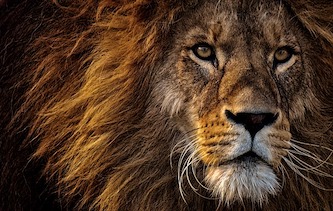
People in the town were excited and a little scared to see Kimba walking around. They called for help to catch the lion. The man who takes care of Kimba at the circus said the lion is okay. He also said they will make sure Kimba cannot get out again.
Sometimes, animals get out and walk around places where people live. This has happened in other parts of the world with different animals. When this happens, it shows that people need to be careful to keep animals safe in their homes. This is important for the safety of everyone, including the animals.
Original news source: Escaped circus lion roams around Italian town before capture (BBC)
📖 Vocabulary:
Group or Classroom Activities
Warm-up Activities:
– News Reporter Role-play
Instructions: Students will be divided into pairs. One student plays the role of a news reporter, and the other is a witness who saw Kimba. The reporter will ask the witness questions about what they saw and how they felt during the event. Encourage the use of past tense and descriptive vocabulary. After a few minutes, have the pairs switch roles.
– Vocabulary Pictionary
Instructions: Write down key vocabulary from the article (e.g., circus, lion, surprised, caught, excited, scared, safety) on individual slips of paper. Students will take turns picking a word and drawing it on the board while the rest of the class guesses the word in English. This will help reinforce new vocabulary and prompt recall.
– Opinion Poll
Instructions: Pose a question to the class related to the article: "Do you think wild animals should be kept in circuses?" Have students move to different parts of the room based on their opinion (e.g., one side for 'yes', one side for 'no', and one for 'not sure'). Each group will discuss their reasons and then share with the entire class, practicing expressing opinions and reasons.
– Headline Creation
Instructions: Ask students to create an exciting newspaper headline for the article. Encourage them to think of attention-grabbing words and phrases that summarize the main event (e.g., "Lion on the Loose!", "Big Cat's Great Escape!"). Share the headlines and discuss which words help create a sense of excitement or urgency.
– Future Predictions
Instructions: Discuss the sentence from the article, "He also said they will make sure Kimba cannot get out again." Ask students to write or discuss their predictions about the future for Kimba and the circus. Will they really be able to prevent him from escaping again? What changes might they make? This activity encourages the use of future tense and critical thinking skills.
🤔 Comprehension Questions:
Kimba is a big cat, a lion.
Kimba escaped from the circus.
People felt excited and a little scared.
Kimba was out for more than five hours before he was caught.
The man said they will make sure Kimba cannot get out again.
It is important to keep animals like Kimba in their homes for the safety of everyone, including the animals.
When people see an animal like Kimba, they call for help to catch the animal.
🎧✍️ Listen and Fill in the Gaps:
A big cat named Kimba got out of his home at the circus and walked around a place where people . saw Kimba and were very to see a lion near their houses. They took videos and shared them on the internet. After more than five , caught Kimba and took him back to the circus. People in the town were excited and a scared to see Kimba walking around. They called for help to catch the lion. The man who takes care of at the circus the lion is okay. He also said they will make Kimba cannot get out again. Sometimes, animals get out and walk around places where people live. This has happened in other parts of the world with animals. When this happens, it shows that people need to be to keep animals safe in their homes. This is important for the safety of everyone, the animals.
💬 Discussion Questions:
1. What is a circus?
2. How would you feel if you saw a big cat like a lion walking near your house?
3. Do you like going to the circus? Why or why not?
4. Do you think it's okay for big cats to live at the circus?
5. Have you ever seen a big animal that is not usually in your town? What was it?
6. What would you do if you found a lion walking on your street?
7. Do you think animals like being in a circus? Why or why not?
8. What kind of home do you think is best for a big cat?
9. How do you think the people caught the lion to take him back?
10. Do you think it's important to keep animals safe? Why?
11. If you could have any animal as a pet, what would it be and why?
12. Do you think the circus should have different kinds of animals? Why or why not?
Individual Activities
📖💭 Vocabulary Meanings:
Click a dot next to a word, then click the dot next to its meaning to draw a line connecting them.
Words
Meanings
🔡 Multiple Choice Questions:
🕵️ True or False Questions:
📝 Write a Summary:
Write a summary of this news article in two sentences.
Check your writing now with the best free AI for English writing!