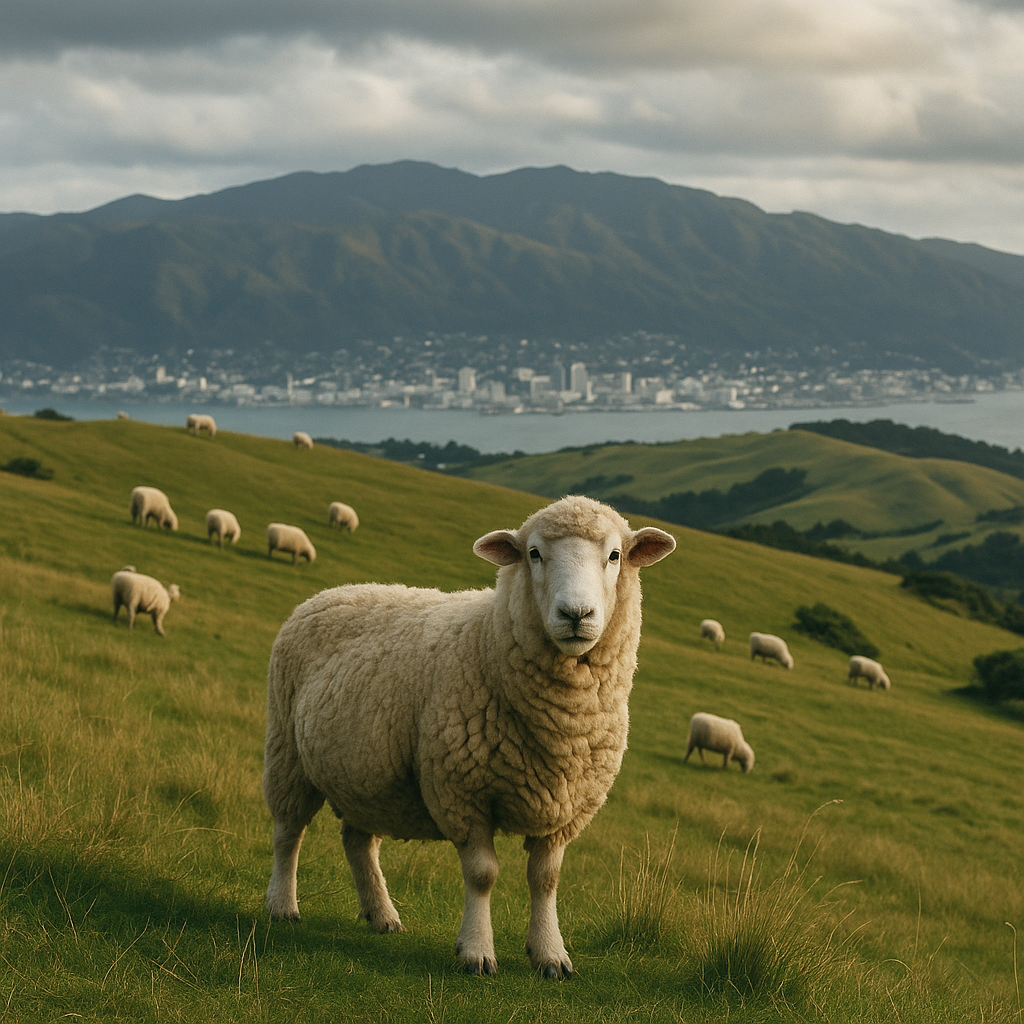
New Zealand has lots of sheep, more than people. There are about 23.6 million sheep and only 5.3 million people. This means there are about 4.5 sheep for every person. In 1982, there were 22 sheep for each person, so the number has gone down a lot.
Sheep farming used to be very important for New Zealand's economy. In the 1980s, there were over 70 million sheep. But now, dairy farming is more popular, and the wool market is not doing well. In 2023, there were less than five sheep for every person, showing that farmers are changing what they do with their land.
The New Zealand government is trying to help the wool industry. They are stopping some land from being used for other things and want to use more wool in building projects. Still, some people think the wool industry might not get better. In Australia, sheep numbers are also going down, but they still have more sheep per person than New Zealand.
Original news source: Yes, New Zealand still has more sheep than people. But humans are catching up (AP News)
🎧 Listen:
📖 Vocabulary:
Group or Classroom Activities
Warm-up Activities:
– CHARADES
Instructions: Divide the students into small groups. Each group will take turns acting out different words or phrases related to sheep farming, such as "sheep," "wool," "shepherd," or "dairy farming." The other groups will guess what they are acting out.
– VOCABULARY PICTIONARY
Instructions: Write key vocabulary words from the article (like "sheep," "farming," "wool," "dairy") on the board. Students will take turns drawing one word while their classmates guess what it is. This will help reinforce vocabulary comprehension.
– OPINION POLL
Instructions: Create questions based on the article, such as "Do you think sheep farming is important?" or "Should the government help the wool industry?" Students will walk around and ask their classmates these questions, tallying the responses to discuss the results afterward.
– HEADLINE CREATION
Instructions: Students will work in pairs to create a catchy headline for the article. They can use phrases like "New Zealand's Sheep Decline" or "The Changing Face of Farming." Afterward, each pair will share their headlines with the class.
– MIND MAP
Instructions: On the board, write "Sheep Farming in New Zealand" in the center. Students will then brainstorm and add related ideas or information from the article, such as "number of sheep," "dairy farming," and "wool market," creating a visual map of the topic.
🤔 Comprehension Questions:
There are about 23.6 million sheep in New Zealand.
There are about 5.3 million people living in New Zealand.
In 1982, there were 22 sheep for each person.
Sheep farming is not as important today because dairy farming is more popular and the wool market is not doing well.
Dairy farming is more popular now than sheep farming.
The New Zealand government is stopping some land from being used for other things and wants to use more wool in building projects.
In Australia, sheep numbers are also going down, but they still have more sheep per person than New Zealand.
🎧✍️ Listen and Fill in the Gaps:
New Zealand has lots of , more than people. There are about 23.6 million sheep and only 5.3 million people. This there are about 4.5 sheep for every person. In 1982, there 22 sheep for each person, so the number has gone down a lot. Sheep used to be very important for New Zealand's . In the 1980s, there were over 70 million sheep. But now, dairy farming is more popular, and the wool market is not well. In 2023, there were less than five sheep for every person, that farmers are what they do with their land. The New Zealand government is trying to the wool industry. They are stopping some land from being used for other things and want to use more wool in building . Still, some people the wool industry might not get better. In Australia, sheep numbers are also going down, but they still have more sheep per than New Zealand.
💬 Discussion Questions:
1. What is your favorite animal? Why do you like it?
2. How would you feel if there were more sheep than people in your country?
3. Do you think sheep are cute? Why or why not?
4. What is a farm? Have you ever visited one?
5. How would you feel if you had to take care of sheep every day?
6. Do you like wool clothes? Why or why not?
7. What is your favorite type of food? Do you think it comes from farming?
8. How would you feel if you had to change your job like the farmers in New Zealand?
9. Do you think it is important to help farmers? Why?
10. What is a building project? Have you seen any cool buildings?
11. How would you feel if there were no more sheep in the world?
12. Do you think people should use more wool in their clothes? Why or why not?
Individual Activities
📖💭 Vocabulary Meanings:
Click a dot next to a word, then click the dot next to its meaning to draw a line connecting them.
Words
Meanings
🔡 Multiple Choice Questions:
🕵️ True or False Questions:
📝 Write a Summary:
Write a summary of this news article in two sentences.
Check your writing now with the best free AI for English writing!