

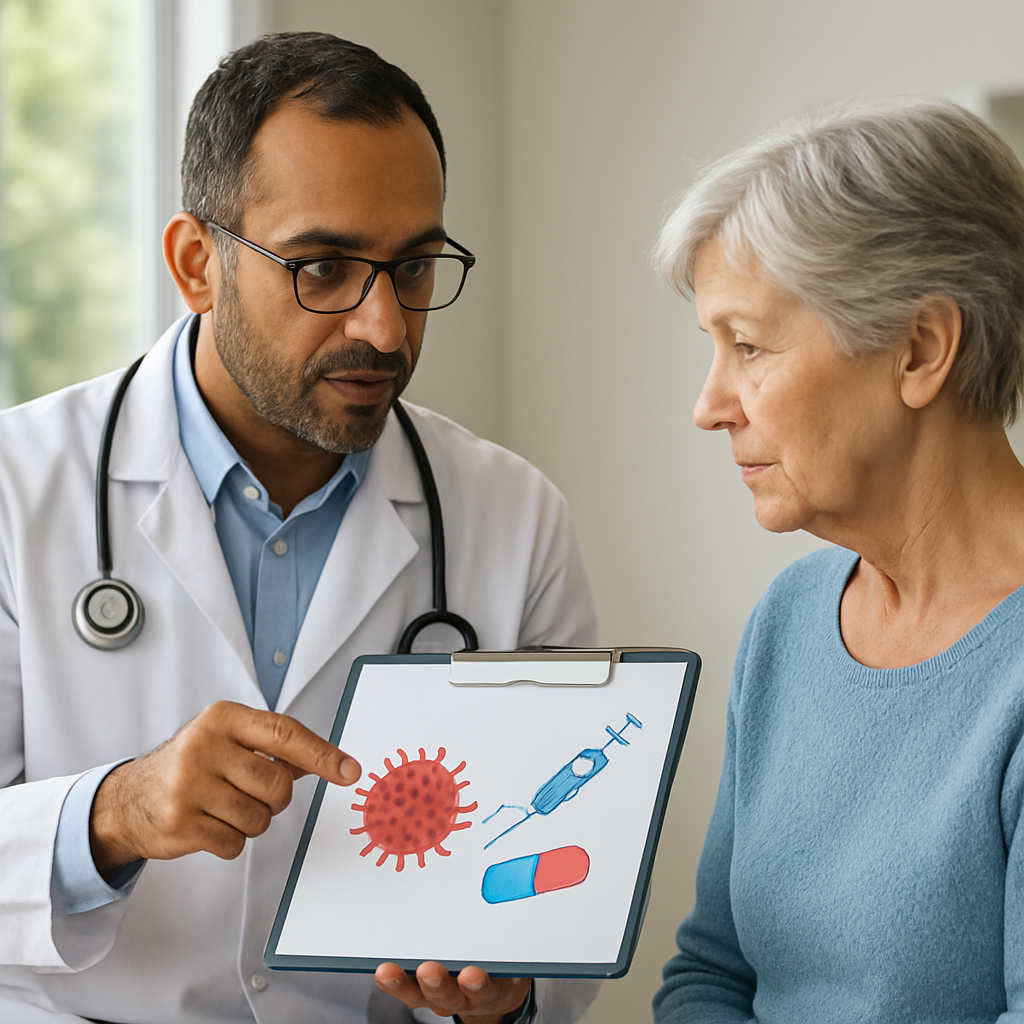
A new cancer vaccine has been developed. It is tailored specifically for each patient. This vaccine reduced the chance of cancer coming back by 42%. The effectiveness was observed in a large study conducted recently.
The vaccine works together with another medicine called an immunotherapy drug. It helps the body attack and destroy cancer cells. One patient named Tony joined the study when his cancer came back. After receiving the vaccine, he is now free of cancer.
The vaccine uses a technology called mRNA, similar to some Covid vaccines. Scientists believe this method could help treat other types of cancer, like lung cancer. However, more research is needed to understand the long-term effects. These findings have given hope to many patients and doctors.
Original news source: First personalised cancer vaccine cuts risk of disease returning in major trial – BBC News (BBC)
🎧 Listen:
📖 Vocabulary:
Group or Classroom Activities
Warm-up Activities:
1. What is a vaccine, and why do people get them?
2. Have you ever participated in a medical study or known someone who did?
3. What do you know about cancer?
4. How do scientists create new medicines and treatments?
5. Why is it important to study the long-term effects of medical treatments?
🤔 Comprehension Questions:
The article discusses a new cancer vaccine.
The vaccine is tailored specifically for each patient.
The vaccine reduced the risk of cancer returning by 42%.
A patient named Tony participated in the study and is now cancer-free.
It is similar to some Covid vaccines.
The vaccine might help treat lung cancer.
Researchers need to conduct more studies to confirm long-term effects.
🎧✍️ Listen and Fill in the Gaps:
A new cancer vaccine has been developed. It is specifically for each patient. This vaccine the chance of cancer coming by 42%. The effectiveness was observed in a large study conducted recently. The vaccine together with another medicine called an immunotherapy drug. It helps the body attack and cancer cells. One patient Tony joined the study when his cancer came back. After receiving the vaccine, he is now free of cancer. The vaccine a technology mRNA, to some Covid vaccines. Scientists believe this method could treat other types of cancer, like lung cancer. However, more research is needed to understand the effects. These have given hope to many patients and doctors.
💬 Discussion Questions:
1. What are your thoughts on vaccines as a way to prevent diseases?
2. How do you feel about the idea of personalized medicine?
3. Have you or anyone you know been affected by cancer?
4. What do you think about using new technologies in medicine?
5. Should everyone participate in medical studies if they can?
6. Do you trust doctors and scientists when it comes to new treatments?
7. How important is it to find a treatment for cancer?
8. Would you be willing to try experimental treatments if you were sick?
9. What other diseases do you think need new treatments?
10. How do you think medical research can be encouraged?
11. What role do you think technology plays in modern medicine?
12. Why might some people be hesitant about new medical treatments?
Individual Activities
📖💭 Vocabulary Meanings:
Click a dot next to a word, then click the dot next to its meaning to draw a line connecting them.