

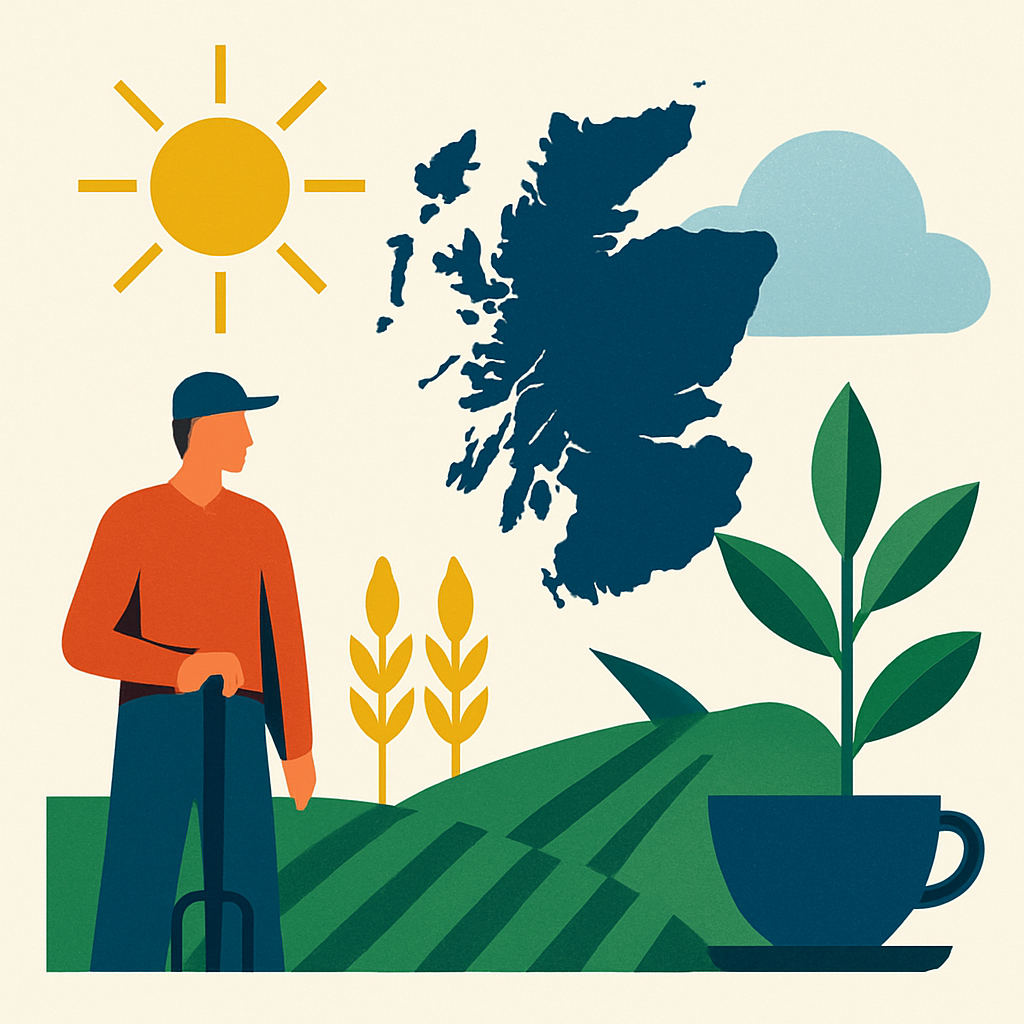
In Scotland, Susie Walker-Munro is growing tea on her family farm. The special soil there is perfect for making high-quality tea. Her tea packets are very expensive, costing around £40 each. Climate changes, like more rain or dryness, are hard for tea farmers all over the world. But Scotland's stable weather might be an advantage.
As the season ends, Susie picks the last tea leaves for her special Kinnettles Gold tea. She believes Scotland's location might stop them from growing all year like other countries. But more rain can help produce more tea, so she thinks Scotland might be a good place to grow tea after all. Other people say greenhouses can grow more plants like vegetables.
The James Hutton Institute in Scotland is using greenhouses to test different crops. They are experimenting with beans that can handle different weather conditions. These scientists are also focusing on how climate change will affect Scottish farming. They want to help farmers choose crops that can survive these challenges.
Original news source: More tea? How Scotland's crops of the future could be set to change – BBC News (BBC)
🎧 Listen:
📖 Vocabulary:
Group or Classroom Activities
Warm-up Activities:
1. Describe the weather today in your city.
2. Name three things that are grown on farms.
3. What is your favorite drink?
4. Have you ever visited a farm?
5. What do you know about Scotland?
🤔 Comprehension Questions:
She is a tea farmer in Scotland.
The soil is perfect for high-quality tea.
They cost around £40 each.
Because it causes more rain or dryness, which is hard for tea farming.
Scotland's stable weather conditions might help.
They are using greenhouses to test different crops.
They focus on how climate change will affect Scottish farming.
🎧✍️ Listen and Fill in the Gaps:
In , Susie Walker-Munro is growing tea on her family farm. The special soil there is perfect for making high-quality tea. Her tea are very , costing around £40 each. Climate changes, like more rain or dryness, are hard for tea farmers all over the world. But Scotland's stable weather might be an advantage. As the season ends, Susie picks the last tea leaves for her special Kinnettles tea. She believes Scotland's location might stop them from growing all other countries. But more rain can help more tea, so she thinks Scotland might be a place to grow tea all. Other people say greenhouses can grow more plants like vegetables. The James Hutton Institute in Scotland is using greenhouses to test different crops. They are experimenting with that can handle different weather conditions. These scientists are also focusing on how climate change will affect Scottish farming. They to help farmers choose crops that can survive these .
💬 Discussion Questions:
1. Why do you think climate change is a problem for farmers?
2. Would you be willing to pay more for high-quality tea? Why or why not?
3. Do you think stable weather is important for farming? Why?
4. Have you ever seen a greenhouse? What did it look like?
5. Why do you think greenhouses are useful for farming?
6. How might climate change affect the place where you live?
7. Why do you think scientists are focusing on weather-resistant crops?
8. How would you feel about living on a farm? Why?
9. Do you think farming is an easy or hard job? Why?
10. What other crops could people try to grow in a greenhouse?
11. How could farming change in the future?
12. What do you think is the best place to grow tea? Why?
Individual Activities
📖💭 Vocabulary Meanings:
Click a dot next to a word, then click the dot next to its meaning to draw a line connecting them.