

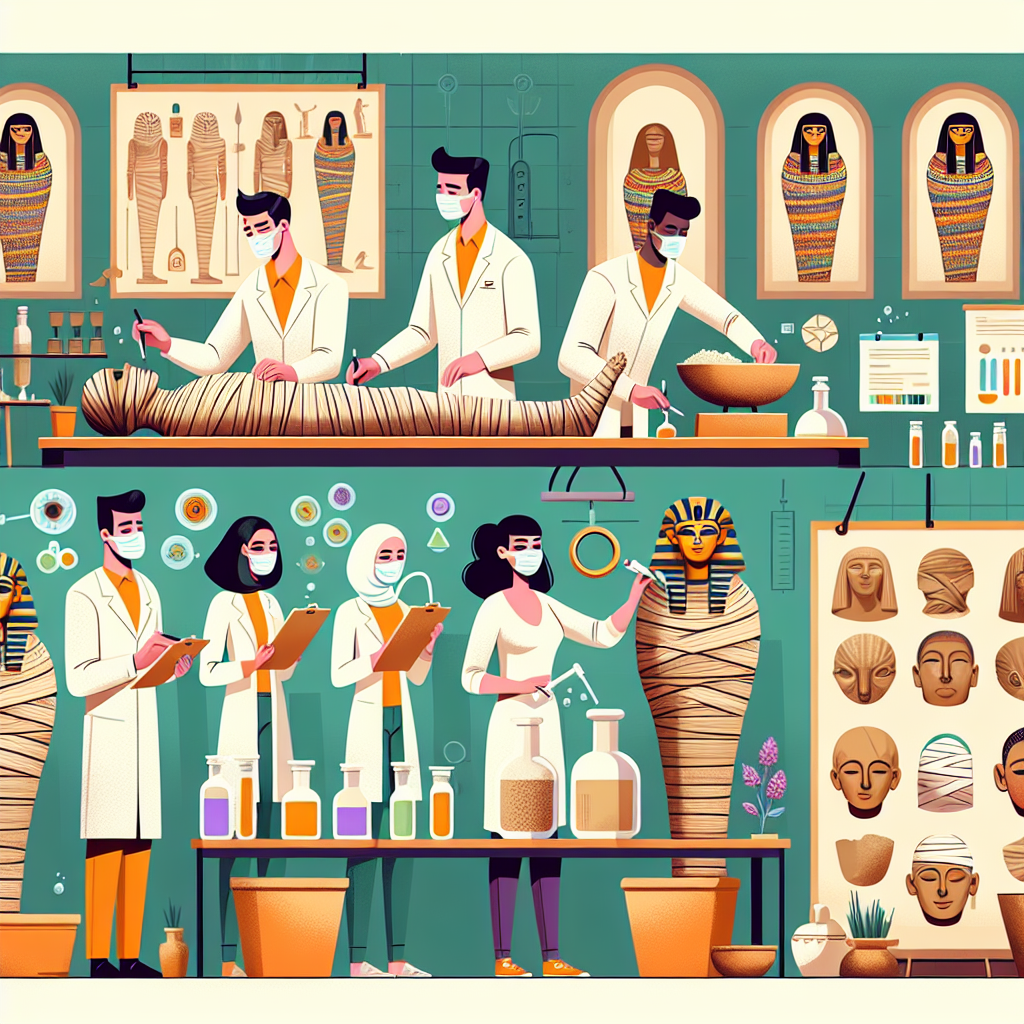
Researchers have recently done an interesting study on the smells coming from nine mummified bodies. They found that ancient Egyptian mummies give off scents that are described as "woody," "spicy," and "sweet." To carry out this study, they used both "trained human sniffers" and special equipment that works like an electronic nose. This research shows that smell played an important role in the mummification process. The ancient Egyptians likely used different resins and oils, like pine, cedar, and juniper, to create nice smells that have lasted for over 5,000 years.
The results of this study were published in the Journal of the American Chemical Society. The researchers believe that analyzing scents can be a non-invasive way to study preserved bodies. They hope to recreate these ancient smells in museums, which would make visits more enjoyable and help people understand mummified artifacts better. This new method not only gives us insights into how ancient Egyptians mummified their dead but also highlights how important smells are in understanding cultural history.
This study involved teams from University College London (UCL) and the University of Ljubljana in Slovenia, along with experts from the Egyptian Museum in Cairo. The lead author, Professor Matija Strlic, mentioned that the idea of smelling mummified bodies has always intrigued both scientists and the public. However, this research is the first detailed study of its kind, providing important information about how mummies are preserved and what materials were used in ancient embalming.
Co-author Professor Ali Abdelhalim, who is also the director of the Egyptian Museum in Cairo, stressed how important mummification was in ancient Egyptian culture. He explained that this careful process aimed to keep both the body and soul safe for the afterlife by using various oils, waxes, and balms. By figuring out the different methods and materials used in mummification, researchers can learn more about the history, location, and social status of the people who were mummified. The team used various scientific methods to analyze the chemicals from the mummies, and they plan to create "smellscapes" in museums to help visitors experience this important part of ancient Egyptian culture.
Original news source: Ancient Egyptian mummies smell 'sweet' and 'spicy', researchers say (Sky News)
🎧 Listen:
📖 Vocabulary:
Group or Classroom Activities
Warm-up Activities:
– CHARADES
Instructions: Divide the class into small groups. Each group will take turns acting out words or phrases related to the article, such as "mummification," "ancient Egypt," or "scents." The other groups will guess the word or phrase being acted out. This activity will help students engage with vocabulary in a fun way.
– HEADLINE CREATION
Instructions: Have students read a brief summary of the article. Then, ask them to create a catchy headline that captures the essence of the study on mummified bodies and their scents. After they come up with their headlines, students can share them with the class for discussion.
– OPINION POLL
Instructions: Pose a question related to the article, such as, "Do you think that smells can affect our understanding of history?" Have students form small groups to discuss their opinions and then conduct a poll in the class to see how many agree or disagree. This activity encourages critical thinking and speaking skills.
– WORD ASSOCIATION
Instructions: Write the word "mummy" on the board. Students will take turns saying a word that is related to "mummy" or the content of the article (e.g., "Egypt," "preservation," "scents"). This continues until students run out of ideas. This activity helps reinforce vocabulary and associations.
– MIND MAP
Instructions: On a large piece of paper or a whiteboard, have students create a mind map based on the article. They should start with the central idea of "ancient Egyptian mummies" and branch out with related concepts such as "scents," "mummification," "cultural history," and names of the researchers. This visual representation aids in comprehension and retention of information.
🤔 Comprehension Questions:
Researchers identified scents described as "woody," "spicy," and "sweet" coming from the ancient Egyptian mummies.
The researchers used both "trained human sniffers" and special equipment that works like an electronic nose to analyze the smells of the mummified bodies.
The researchers believe that analyzing scents can be a non-invasive way to study preserved bodies, providing insights into the mummification process and the materials used.
The ancient Egyptians likely used different resins and oils, such as pine, cedar, and juniper, to create the pleasant smells associated with mummies.
The publication in the Journal of the American Chemical Society signifies that the study is recognized within the scientific community and contributes important findings to the field of chemistry and archaeology.
The main contributors were teams from University College London (UCL) and the University of Ljubljana in Slovenia, along with experts from the Egyptian Museum in Cairo. Professor Matija Strlic was the lead author, while Professor Ali Abdelhalim was a co-author and the director of the Egyptian Museum.
The mummification process reflects the ancient Egyptians' belief that it was important to keep both the body and soul safe for the afterlife, using various oils, waxes, and balms to preserve the deceased.
The researchers plan to create "smellscapes" in museums to help visitors experience the ancient smells associated with mummies, making visits more enjoyable and informative.
🎧✍️ Listen and Fill in the Gaps:
Researchers have recently done an interesting study on the smells from nine mummified bodies. They found that ancient Egyptian mummies give off that are described as "woody," "spicy," and "sweet." To carry out this study, they used both "trained human sniffers" and special equipment that works like an electronic nose. This research that smell played an important role in the mummification . The ancient Egyptians likely used different resins and oils, like pine, cedar, and juniper, to create nice smells that have lasted for over 5,000 years. The results of this study were published in the Journal of the American Chemical Society. The researchers believe that analyzing scents can be a non-invasive way to study preserved bodies. They hope to recreate these ancient in , which would make visits more enjoyable and help understand mummified artifacts better. This new method not only gives us insights into how ancient Egyptians mummified their dead but also highlights how important smells are in understanding history. This study involved teams from University College London (UCL) and the University of Ljubljana in Slovenia, along with experts from the Egyptian Museum in Cairo. The lead author, Matija Strlic, mentioned that the idea of smelling mummified bodies has always intrigued both scientists and the . However, this research is the first detailed study of its kind, providing important information about how mummies are preserved and what materials were used in ancient . Co-author Professor Ali Abdelhalim, who is also the of the Egyptian Museum in Cairo, stressed how important mummification was in ancient Egyptian culture. He explained that this careful process aimed to keep both the body and soul safe for the afterlife by using various oils, , and balms. By out the different methods and materials used in mummification, researchers can learn more about the history, location, and social status of the people who were mummified. The team used various scientific methods to the chemicals from the mummies, and they plan to create "smellscapes" in museums to help visitors this important part of ancient Egyptian culture.
💬 Discussion Questions:
1. What is your favorite smell and why do you like it?
2. How would you feel if you could smell something from thousands of years ago?
3. Do you think smells can bring back memories? Why or why not?
4. What is a scent that reminds you of a special moment in your life?
5. How do you think ancient Egyptians felt about the smells used in mummification?
6. Do you think museums should create "smellscapes"? Why or why not?
7. What is a cultural practice from your country that involves scents or smells?
8. How would you feel if you visited a museum and could smell ancient artifacts?
9. Do you think understanding smells can help us learn more about history? Why?
10. What is a smell that you dislike, and why do you feel that way about it?
11. How would you react if you discovered a new smell that no one had ever experienced before?
12. Do you think scientists should study smells more often? Why or why not?
13. What is a smell that you think is unique to your culture?
14. How do you think the use of scents in ancient times compares to today?
15. Do you like the idea of using scents to enhance storytelling or experiences? Why?
Individual Activities
📖💭 Vocabulary Meanings:
Click a dot next to a word, then click the dot next to its meaning to draw a line connecting them.
Words
Meanings
🔡 Multiple Choice Questions:
🕵️ True or False Questions:
📝 Write a Summary:
Write a summary of this news article in two sentences.
Check your writing now with the best free AI for English writing!