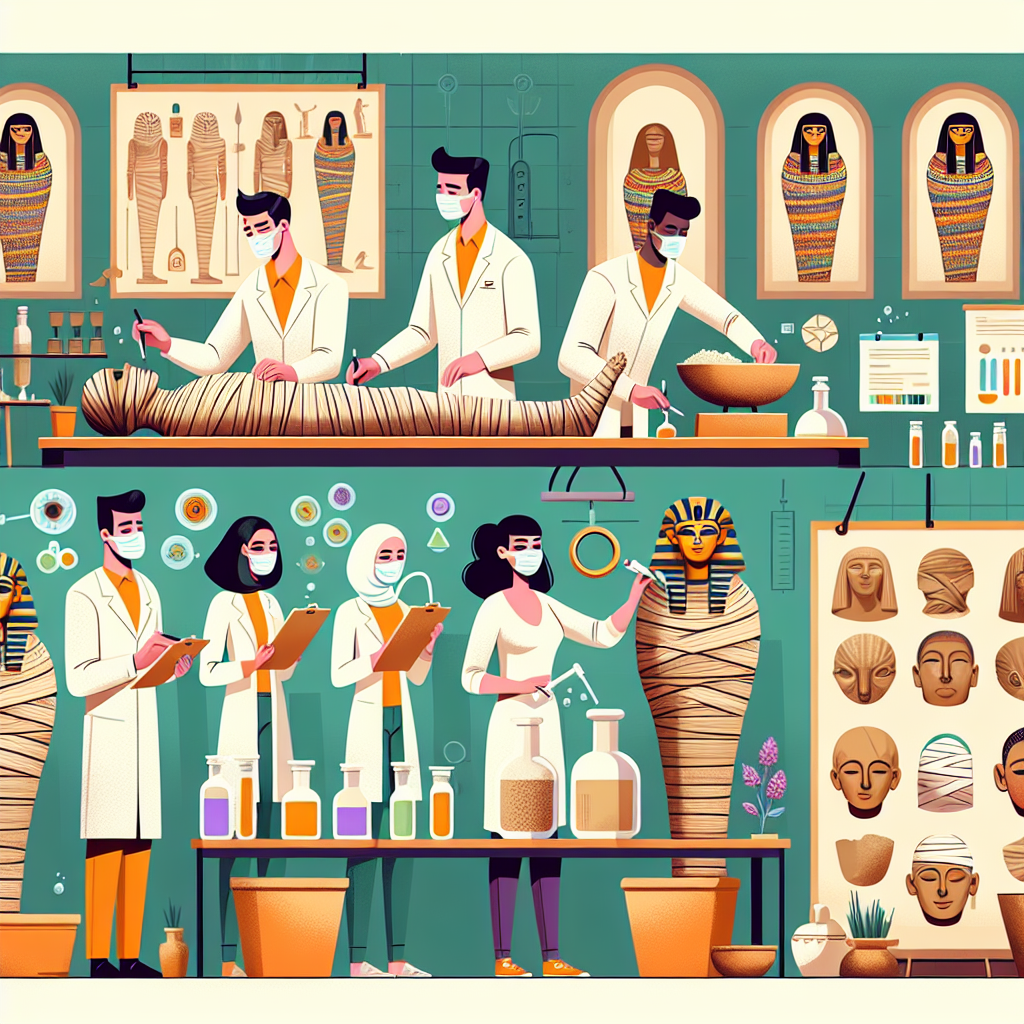
Scientists from two universities studied the smells of ancient Egyptian mummies. They found that the mummies have scents like "woody," "spicy," and "sweet." They used special tools and people with good noses to smell nine mummies. The study shows that the nice smells come from resins and oils used in mummification.
The study is special because it mixes science with how we experience smells. It helps us learn more about how Egyptians preserved bodies long ago. This research can also help museums make their displays more interesting by adding smells. Visitors can then feel more connected to ancient Egyptian history.
Another scientist, Professor Ali Abdelhalim, explained why mummification was important. It was a way to keep the body and soul safe for the afterlife. By studying the materials used, scientists learn about the people and their lives. The next plan is to let people smell these ancient scents in museums to better understand Egyptian culture.
Original news source: Ancient Egyptian mummies smell 'sweet' and 'spicy', researchers say (Sky News)
🎧 Listen:
📖 Vocabulary:
Group or Classroom Activities
Warm-up Activities:
– CHARADES
Instructions: Divide the class into small groups. Each group will take turns acting out words or phrases related to the article (e.g., "mummy," "smell," "ancient Egypt") without speaking. The other groups will guess the word or phrase being acted out. This activity helps students practice vocabulary in a fun way.
– OPINION POLL
Instructions: Create a simple survey with questions related to scents and mummification (e.g., "Do you think smells are important in museums?" or "Have you ever smelled something that reminded you of a memory?"). Students will walk around the class asking each other these questions and then report back their findings to the group.
– HEADLINE CREATION
Instructions: Ask students to come up with creative headlines for the article. They can work in pairs to brainstorm ideas and then share their best headlines with the class. This will help them practice summarizing the main ideas and using catchy phrases.
– VOCABULARY PICTIONARY
Instructions: Write key vocabulary words from the article (e.g., "mummy," "resin," "scent") on slips of paper. Students will take turns drawing a slip and then drawing the word on the board while their classmates guess what it is. This reinforces vocabulary comprehension and encourages teamwork.
– THINK-PAIR-SHARE
Instructions: Pose a question related to the article, such as "Why do you think ancient Egyptians used scents in mummification?" Students will first think about their answer individually, then pair up to discuss their thoughts, and finally share their conclusions with the class. This fosters critical thinking and speaking skills.
🤔 Comprehension Questions:
Scientists studied the smells of ancient Egyptian mummies.
The mummies had smells like "woody," "spicy," and "sweet."
The scientists smelled nine mummies during their study.
The nice smells came from resins and oils used in mummification.
This study is important for museums because it can make their displays more interesting by adding smells.
Professor Ali Abdelhalim says that mummification was important to keep the body and soul safe for the afterlife.
Museums will let people smell these ancient scents to help them understand Egyptian culture better.
🎧✍️ Listen and Fill in the Gaps:
Scientists from two universities the smells of ancient Egyptian . They found that the mummies have scents like "woody," "spicy," and "sweet." They special tools and people with good noses to smell nine mummies. The study shows that the smells from and oils used in mummification. The study is special because it mixes science with how we experience smells. It helps us learn more about how Egyptians preserved bodies long ago. This research can also help make their displays more interesting by adding smells. can then feel more connected to ancient history. Another scientist, Professor Ali Abdelhalim, explained why mummification was important. It was a way to keep the body and soul safe for the afterlife. By the materials used, scientists learn about the and their . The next plan is to let people smell these ancient scents in museums to better understand Egyptian culture.
💬 Discussion Questions:
1. What is your favorite smell? Why do you like it?
2. How would you feel if you could smell something from a long time ago?
3. Do you think it would be fun to visit a museum that has interesting smells? Why or why not?
4. What is a smell that reminds you of a special memory? Can you share it?
5. How would you feel if you learned that mummies smell nice?
6. Do you like to cook? What is your favorite smell when you cook?
7. What is a smell that you do not like? Why don’t you like it?
8. Do you think smells can change how we feel? Why or why not?
9. How would you feel if you could smell flowers from ancient times?
10. What is a smell that you think is special? Why is it special to you?
11. Do you think learning about smells can help us understand history better? Why?
12. How would you feel if you could smell a mummy in a museum? Would you want to? Why or why not?
Individual Activities
📖💭 Vocabulary Meanings:
Click a dot next to a word, then click the dot next to its meaning to draw a line connecting them.
Words
Meanings
🔡 Multiple Choice Questions:
🕵️ True or False Questions:
📝 Write a Summary:
Write a summary of this news article in two sentences.
Check your writing now with the best free AI for English writing!