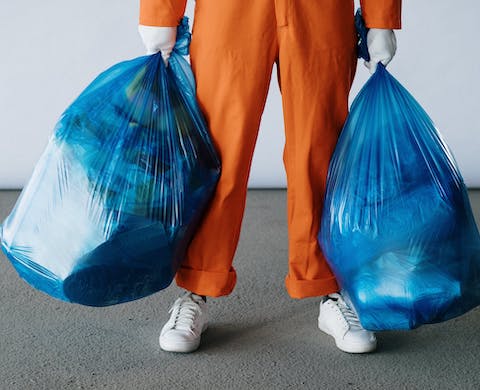
"Fast fashion" is a term for cheap clothes that get made and thrown away really quickly. Only 1% of these clothes actually get recycled into new ones. This is bad because it creates a lot of pollution and hurts animals and plants. Lycra, a company that makes stretchy fabric, wants to use a new material called Qira instead of the usual stuff made from oil. This could make their products much better for the environment.
Some other companies are also trying to find new ways to make clothes without making so much waste. MycoWorks makes a material that looks like leather from mushrooms. Faber Futures is studying a bacteria that lives in soil to use for dyeing clothes. Spinnova turns wood into fabric and wants to make a lot of it without hurting the environment. But for all of these ideas to work, people need to start recycling their old clothes instead of throwing them away.
Even though people are trying to fix the problem of clothing waste, there are still some challenges. Some stores have programs where you can bring back old clothes, but a lot of the time those clothes just get destroyed or sent to other countries. To really solve the problem, we need to change the way we think about clothes and how we make them.
Original news source: The hunt for a new way to tackle clothing waste (BBC)
📖 Vocabulary:
Group or Classroom Activities
Warm-up Activities:
– News Summary
Instructions: Divide the class into small groups. Assign each group a specific aspect of the article to focus on (e.g. the fashion industry's impact on the environment, innovative solutions to clothing waste, challenges in recycling clothes). Each group should then create a brief news summary, highlighting the key points of their assigned aspect. After a designated amount of time, have each group share their news summary with the class.
– Opinion Poll
Instructions: Have the class form pairs or small groups. Give each group a list of statements related to the article (e.g. "Recycling old clothes is an effective solution to the problem of clothing waste," "Fast fashion is a necessary evil in today's society"). Each group should discuss each statement and rate their level of agreement or disagreement on a scale of 1-5. After the discussion, ask each group to share their opinions and the reasons behind their ratings.
– Sketch It
Instructions: Divide the class into pairs. Give each pair a specific aspect of the article to illustrate (e.g. the process of breaking down materials using natural enzymes, the impact of fast fashion on the environment). Each pair should create a sketch or diagram to visually represent their assigned aspect. After a designated amount of time, have each pair present their sketches to the class, explaining their choices and the main ideas behind their illustrations.
– Vocabulary Pictionary
Instructions: Write down a list of vocabulary words from the article (e.g. biomimicry, polyester, recycling). Divide the class into two teams. One member from each team takes turns coming to the front of the class and drawing a word from the list without speaking. The rest of their team members must guess the word within a time limit. The team that guesses the most words correctly wins.
– Future Predictions
Instructions: Have the class form pairs or small groups. Ask each group to discuss and make predictions about the future of the fashion industry and its impact on the environment based on the information in the article. Each group should come up with at least three predictions, supported by their reasoning. After the discussion, have each group share their predictions with the class and facilitate a class discussion on the topic.
🤔 Comprehension Questions:
The problem is that a lot of clothes get thrown away, which creates waste and pollution.
These materials are made from synthetic fibers that don't break down easily like natural fibers do.
They are trying to find ways to break down these materials using natural things like enzymes or bacteria.
"Fast fashion" refers to cheap clothes that are made quickly and then thrown away.
It's bad because it creates a lot of pollution and harms animals and plants.
Qira is a new material made by Lycra that could replace the usual fabric made from oil. It could make stretchy fabric more environmentally friendly.
One company mentioned is MycoWorks, which makes a material that looks like leather from mushrooms.
People need to start recycling their old clothes instead of throwing them away.
🎧✍️ Listen and Fill in the Gaps:
The fashion industry is causing a big problem with all the that get thrown away. Some , like cotton and wool, can break down naturally over time. But others, like and nylon, can't. The Institute is trying to find a way to break down these materials using natural things like enzymes or bacteria. They want to make it easier to get rid of old clothes and maybe even make new materials. "Fast fashion" is a term for cheap clothes that get made and thrown away really quickly. Only 1% of these clothes actually get into new ones. This is bad because it creates a lot of pollution and hurts animals and plants. Lycra, a company that stretchy fabric, to use a new material called Qira instead of the usual made from oil. This could make their products much better for the environment. Some companies are also trying to find new ways to make clothes without making so much waste. makes a material that looks like leather from mushrooms. Faber Futures is a bacteria that lives in soil to use for dyeing clothes. Spinnova wood into fabric and wants to make a lot of it without hurting the environment. But for all of these ideas to work, people need to start recycling their old clothes instead of them away. Even though people are trying to fix the problem of clothing waste, there are still some . Some stores have programs where you can bring back old clothes, but a lot of the time those clothes just get or sent to other countries. To really solve the problem, we need to change the way we about clothes and how we make them.
💬 Discussion Questions:
1. What is "fast fashion" and why is it a problem?
2. How would you feel if your old clothes could be broken down and turned into new materials?
3. Do you like the idea of using mushrooms to make fabric? Why or why not?
4. What do you think about the idea of using bacteria from soil to dye clothes?
5. How would you feel if all clothes were made from wood instead of cotton or polyester?
6. Do you think people should recycle their old clothes? Why or why not?
7. What challenges do you think companies face when trying to find solutions for clothing waste?
8. How would you feel if your old clothes were destroyed or sent to another country instead of being recycled?
9. Do you think changing the way we think about clothes is important? Why or why not?
10. How would you feel if you had to buy clothes that were made from recycled materials only?
11. What are some other ways you can think of to reduce clothing waste?
12. How would you feel if you had to pay extra for clothes that were environmentally friendly?
13. Do you think it's important for companies to take responsibility for the waste they create? Why or why not?
14. How would you feel if all clothes were made from natural materials that could easily break down?
15. What do you think is the biggest challenge in solving the problem of clothing waste? Why?
Individual Activities
📖💭 Vocabulary Meanings:
Click a dot next to a word, then click the dot next to its meaning to draw a line connecting them.
Words
Meanings
🔡 Multiple Choice Questions:
🕵️ True or False Questions:
📝 Write a Summary:
Write a summary of this news article in two sentences.
Check your writing now with the best free AI for English writing!