

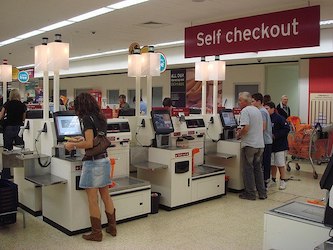
The managing director of Booths, Nigel Murray, said that customers have not been happy with the self-scan machines. They have had problems with how fast they work, how reliable they are, and the lack of personal interaction. Also, checking loose items and verifying the age of customers buying alcohol has been a hassle. Booths wants to focus on giving customers a warm, personal experience by having people help them instead of relying on machines.
Booths, often called a northern Waitrose, has always believed in offering the best products in nice stores with great staff. The company is known for giving a friendly welcome and is committed to training its employees to keep up high standards of service. While two stores in the Lake District will keep self-checkouts for busy times, most stores will switch to staffed checkouts.
Self-service checkouts started in the 1990s and have become more common over time. Some shoppers don't like them because they miss talking to a person. Others like how quick and easy they are. Booths' decision has gotten mixed reactions from customers. Some are sad to see the self-service tills go, while others are happy to have human interaction back when they shop.
Original news source: Self-service: Booths supermarket puts staff back behind its tills (BBC)
📖 Vocabulary:
Group or Classroom Activities
Warm-up Activities:
– News Summary
Instructions: Students will be divided into small groups. Each group will read the article and summarize the key points of the story in their own words. They should aim to create a concise summary within a set time limit (e.g., 5 minutes). Afterward, each group will present their summary to the class, and the class will discuss the various ways the information was interpreted and summarized.
– Opinion Poll
Instructions: The teacher will create a series of statements based on the article's content (e.g., "Self-service tills are more efficient than staffed checkouts," "Human interaction is essential in customer service") and students will move to different areas of the room to show their agreement or disagreement. Students will then pair up with someone of the opposite opinion and discuss their reasons. After the discussion, students can choose to change their position or stay where they are. This will encourage students to use persuasive language and to consider different viewpoints.
– Word Association
Instructions: The teacher writes the word "supermarket" on the board. Students are then asked to call out words they associate with the article's theme. As students shout out their words, the teacher writes them on the board, creating a web of vocabulary related to the article. Students can then be asked to use some of these words in sentences or a short paragraph to describe their own shopping preferences or experiences with self-service tills.
– Sketch It
Instructions: Provide students with a piece of paper and ask them to draw a scene or concept from the article without using words. For example, they might sketch a self-service till, a staffed checkout, or the Booths supermarket. After a few minutes, have students explain their drawings to a partner and discuss how it relates to the article. This encourages students to conceptualize and communicate ideas visually.
– Future Predictions
Instructions: After discussing the article, ask students to imagine the future of shopping and write down their predictions. Will self-service checkouts become more or less popular? How will supermarkets change in the next 20 years? Students can work in pairs or small groups to brainstorm ideas, which they then share with the class. This activity encourages the use of future tenses and speculative language.
🤔 Comprehension Questions:
Booths is getting rid of self-service tills because their customers prefer having real people at the checkouts instead of using machines.
Nigel Murray says customers have been unhappy with the self-scan machines, finding them too slow, unreliable, and missing the personal touch.
Customers struggle with the speed of the machines, their reliability, the difficulty of checking loose items, and verifying the age for alcohol purchases.
Booths wants to give customers a friendly and personal shopping experience by having staff help them at the checkouts.
Booths is often called a northern Waitrose, and they're known for their high-quality products, nice stores, and great, friendly staff.
Yes, two stores in the Lake District will keep self-service checkouts for use during busy times.
Self-service checkouts started appearing in the 1990s.
Some customers are disappointed to see the self-service tills go because they find them quick and convenient, while others are pleased to have more human interaction when they shop.
🎧✍️ Listen and Fill in the Gaps:
Booths, a supermarket chain in England, has decided to get rid of self-service tills in almost all of its stores. This decision comes after hearing from customers who said they prefer having at the checkouts. Booths is the first UK supermarket to make this change, as self-service tills have become more common in years. The managing of Booths, Nigel Murray, said that customers have not been happy with the self-scan machines. They have had problems with how fast they work, how reliable they are, and the lack of interaction. Also, checking loose items and the age of customers buying alcohol has been a . Booths wants to focus on giving customers a warm, personal experience by having help them instead of relying on machines. Booths, often called a northern , has always believed in the best products in nice stores with great staff. The company is known for giving a welcome and is committed to training its employees to keep up high standards of service. While two stores in the Lake District will keep self-checkouts for busy times, most stores will to staffed checkouts. Self-service checkouts in the 1990s and have more common over time. Some shoppers don't like them because they miss talking to a person. Others like how quick and easy they are. Booths' decision has gotten reactions from customers. Some are sad to see the self-service tills go, while are happy to have human interaction back when they shop.
💬 Discussion Questions:
1. What is your favorite way to check out at a supermarket and why?
2. How would you feel if your local supermarket removed self-service tills?
3. Do you like talking to cashiers when you're shopping, or do you prefer to avoid conversation?
4. Do you think having human cashiers is better for customer service? Why or why not?
5. Have you ever had a problem using a self-service till? What happened?
6. What do you think are the benefits of using self-service checkouts?
7. If you were in charge of a supermarket, would you keep self-service tills or get rid of them? Explain your choice.
8. How important is personal interaction to you when you are shopping?
9. Do you think supermarkets should focus more on technology or customer service? Why?
10. Have you ever been to a store where they only had self-service checkouts? What was that like?
11. Do you think self-service tills are faster than human cashiers? Why or why not?
12. Have you ever needed help while using a self-service till? What did you need help with?
13. Would you be willing to pay a little more for your groceries if it meant getting better service from human cashiers?
14. Do you think other stores should follow Booths' example and remove self-service tills? Why or why not?
15. How do you feel about the argument that self-service tills take away jobs from people?
Individual Activities
📖💭 Vocabulary Meanings:
Click a dot next to a word, then click the dot next to its meaning to draw a line connecting them.
Words
Meanings
🔡 Multiple Choice Questions:
🕵️ True or False Questions:
📝 Write a Summary:
Write a summary of this news article in two sentences.
Check your writing now with the best free AI for English writing!