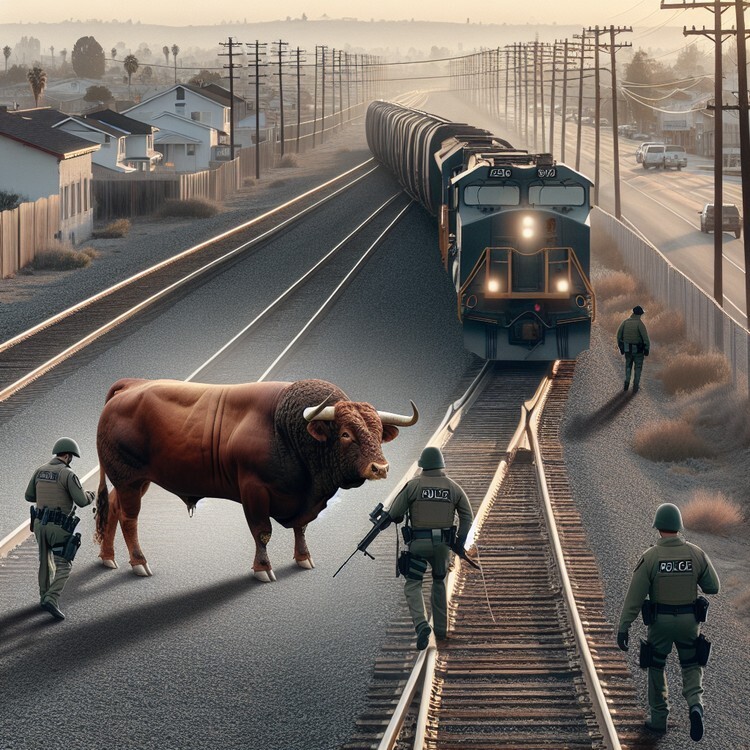
A bull was running on train tracks in New Jersey, which made people late for work. We don't know how the bull got there, but some news reports say it might have escaped from a slaughterhouse nearby. The police and other agencies worked together to catch the bull, calm it down, and take it to a safe place. Luckily, nobody got hurt.
This happened on a Thursday morning and caused problems for people who take the train. The bull showing up on the tracks was a surprise and made the trains run late. But the police acted fast and got the bull off the tracks without anyone getting hurt.
We don't know exactly how the bull ended up on the tracks, but some people think it got away from a slaughterhouse close by. A local news station said this might be true. The bull being on the tracks made both the people on the train and the police worried.
The police and other agencies worked together to catch the bull and make sure everyone was safe. They were able to calm the bull down and take it to a place where it will be taken care of. This stopped anyone from getting hurt and made the trains go back to normal.
Original news source: Bull spotted galloping down New Jersey train tracks (BBC)
🎧 Listen:
📖 Vocabulary:
Group or Classroom Activities
Warm-up Activities:
– News Summary
Instructions: In pairs, read the article silently. Then, take turns summarizing the main points of the article to your partner. Try to include the key details and events in your summary.
– Opinion Poll
Instructions: In small groups, discuss your opinions on the situation described in the article. Do you think the bull escaped from a slaughterhouse? Should there be stricter regulations to prevent animals from escaping? Take turns sharing your opinions and try to find common ground or areas of disagreement within your group.
– Vocabulary Pictionary
Instructions: Divide the class into teams. Give each team a set of vocabulary words related to the article (e.g. bull, tracks, slaughterhouse, agencies). One member from each team will choose a word and draw it on the board while their team tries to guess the word. The team that guesses correctly earns a point. Continue until all the words have been guessed.
– Pros and Cons
Instructions: In pairs, create a list of the pros and cons of having a slaughterhouse near a residential area. Discuss and debate the advantages and disadvantages of such a situation. Share your lists with the class and try to find common themes or perspectives.
– Think-Pair-Share
Instructions: Read the article individually and think about the main idea or message. Pair up with a partner and share your thoughts. Discuss any questions or reflections you have about the article. Finally, share your partner's ideas with the rest of the class, highlighting any interesting points or insights.
🤔 Comprehension Questions:
A bull was running on the train tracks, causing delays for the trains and making people late for work.
It is not known exactly how the bull ended up on the train tracks, but some news reports suggest it may have escaped from a nearby slaughterhouse.
The police and other agencies were worried because having a bull on the train tracks posed a danger to both the people on the trains and the bull itself.
The police and other agencies worked together to catch the bull, calm it down, and take it to a safe place. Their main goal was to make sure nobody got hurt.
The bull being on the tracks caused delays and disruptions to the train schedule, making people late for their destinations.
The police acted quickly to address the situation with the bull. They worked together with other agencies to safely remove the bull from the train tracks and ensure the safety of everyone involved.
Some people think the bull may have escaped from a slaughterhouse because it was found near one. Additionally, a local news station reported that this could be a possibility.
The situation with the bull was resolved when the police and other agencies successfully caught the bull, calmed it down, and took it to a safe place. This ensured the safety of everyone and allowed the train schedule to return to normal.
🎧✍️ Listen and Fill in the Gaps:
A bull was running on train in New Jersey, which made people late for work. We don't know how the bull got there, but some news reports say it might have from a slaughterhouse nearby. The police and other worked together to the bull, calm it down, and take it to a safe place. Luckily, nobody got hurt. This on a Thursday and problems for people who take the train. The bull showing up on the tracks was a surprise and made the run late. But the police acted fast and got the bull off the tracks without anyone getting hurt. We don't know exactly how the bull ended up on the tracks, but some people think it got away from a slaughterhouse close by. A local news station said this might be true. The bull being on the tracks made both the people on the train and the police worried. The police and other agencies worked together to catch the bull and make sure everyone was safe. They were able to calm the bull down and take it to a place where it will be taken care of. This stopped anyone from getting hurt and made the trains go back to normal.
💬 Discussion Questions:
1. What do you think might have happened to the bull before it ended up on the train tracks?
2. How do you think the people on the train felt when they found out there was a bull on the tracks?
3. Have you ever been late for something important because of an unexpected event? How did you feel?
4. Do you think the police and other agencies did a good job in handling the situation? Why or why not?
5. How would you feel if you were on the train when the bull appeared on the tracks?
6. Do you think it's possible for animals to escape from places like slaughterhouses? Why or why not?
7. Have you ever seen an animal in an unexpected place? What was it and how did you react?
8. What do you think the police and other agencies did to calm the bull down?
9. How do you think the bull felt when it was finally taken to a safe place?
10. Do you think it's important for people to work together in situations like this? Why or why not?
11. What would you do if you saw a bull running on train tracks?
12. Do you think the police should have used any special techniques to catch the bull? Why or why not?
13. How do you think the people who take the train felt when they found out the bull was caught and the trains could go back to normal?
14. Do you think the bull should be returned to the slaughterhouse or should it be taken care of somewhere else? Why or why not?
15. If you were in charge, what would you have done to prevent this situation from happening?
Individual Activities
📖💭 Vocabulary Meanings:
Click a dot next to a word, then click the dot next to its meaning to draw a line connecting them.
Words
Meanings
🔡 Multiple Choice Questions:
🕵️ True or False Questions:
📝 Write a Summary:
Write a summary of this news article in two sentences.
Check your writing now with the best free AI for English writing!