

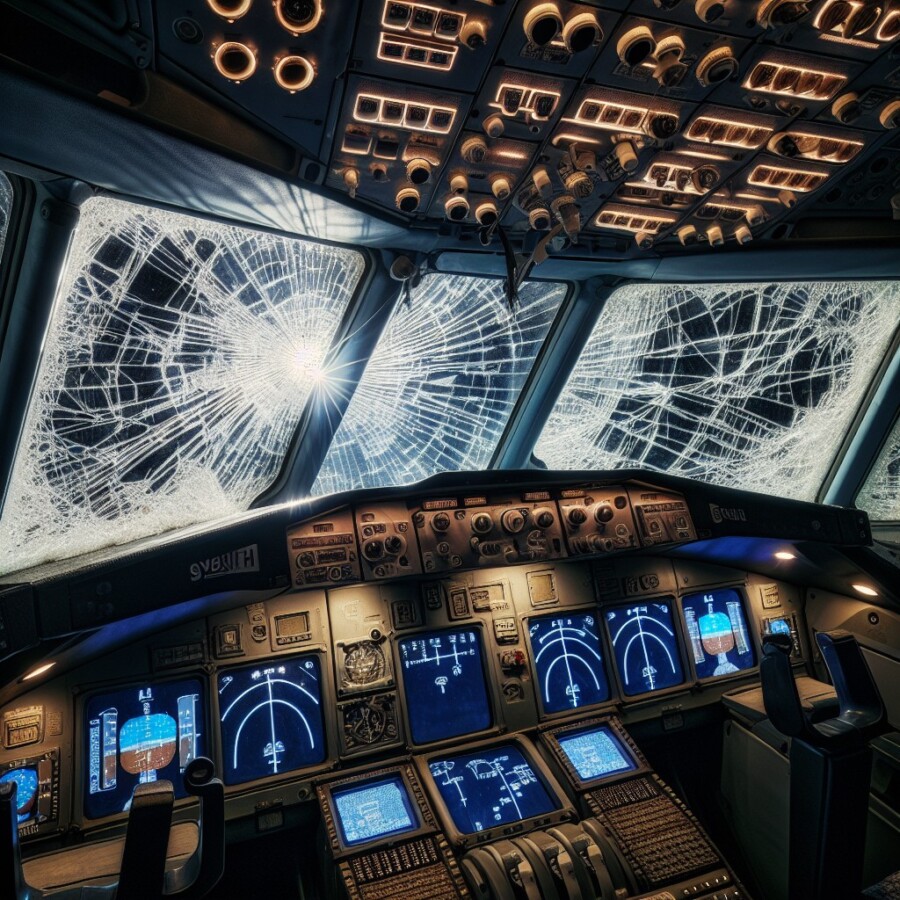
A flight in Japan had to turn back because there was a crack in the window of the cockpit. The crack was on the outside layer of the window and didn't cause any problems with controlling the plane or keeping the air pressure right. The plane was going from Sapporo to Toyama when they found the crack. Thankfully, nobody got hurt and all 59 passengers and six crew members were safe. The airline, All Nippon Airways (ANA), doesn't know what caused the crack yet.
Sometimes things like this happen in aviation. It could be because a bird hit the window or a piece of hailstone hit it. It's also possible that the window got worn out and cracked. To make sure the plane is safe, they will probably need to replace the whole window, not just the cracked part. ANA made sure the passengers got on other flights to their destinations.
It's important to know that this incident is not connected to the recent grounding of Boeing 737 MAX 9 planes. The ANA flight was using an older version of the Boeing 737 and wasn't part of the MAX 9 fleet. The grounding of the MAX 9 planes happened because the US aviation regulator, the FAA, found a different problem. An Alaska Airlines plane had a blowout and a panel fell off while it was flying. The FAA has stopped the MAX 9 planes from flying until they can check them more and make sure they're safe.
In summary, a crack in the cockpit window made a plane in Japan go back to where it started. They don't know why the crack happened, but it didn't cause any problems with flying the plane or keeping the air pressure right. All the passengers were safe and ANA made sure they got on other flights. This incident is different from the grounding of Boeing 737 MAX 9 planes, which happened because of a different safety issue.
Original news source: Cockpit window crack forces ANA Boeing flight in Japan to turn back (BBC)
🎧 Listen:
📖 Vocabulary:
Group or Classroom Activities
Warm-up Activities:
– News Summary
Instructions: In pairs, students will read the article and create a one-paragraph summary of the main points. They can then take turns sharing their summaries with the class.
– Opinion Poll
Instructions: In groups of three or four, students will discuss their opinions on the incident and any concerns they may have about flying. They will then conduct a poll within their group, asking each member a series of questions to gather their opinions. Finally, they will share their findings with the class.
– Vocabulary Pictionary
Instructions: In pairs, students will take turns selecting a vocabulary word from the article and drawing a picture to represent it. Their partner must guess the word based on the drawing. They can then switch roles and continue with a new word.
– Synonym Challenge
Instructions: In pairs, students will create a list of five words or phrases from the article and then challenge their partner to come up with a synonym for each one. They can take turns giving and guessing synonyms, and then discuss any possible differences in meaning.
– Pros and Cons
Instructions: In small groups, students will discuss the pros and cons of the actions taken by the airline in response to the incident. They will list their ideas on a sheet of paper and then share their group's thoughts with the class.
🤔 Comprehension Questions:
The plane in Japan turned back because there was a crack in the cockpit window.
No, the crack in the cockpit window did not affect the plane's ability to fly or maintain air pressure.
The plane was going from Sapporo to Toyama when they discovered the crack.
No, there were no injuries to the passengers or crew members. All 59 passengers and six crew members were safe.
The airline might need to replace the entire window instead of just the cracked part to ensure the plane's safety.
ANA made sure the passengers got on other flights to their destinations.
No, the incident with the cracked window is not related to the grounding of the Boeing 737 MAX 9 planes.
The MAX 9 planes were grounded by the FAA because they found a different safety issue after an Alaska Airlines plane experienced a blowout and a panel fell off while flying.
🎧✍️ Listen and Fill in the Gaps:
A flight in Japan had to turn back because there was a in the window of the . The crack was on the outside layer of the window and didn't cause any problems with controlling the plane or keeping the air pressure right. The plane was going from Sapporo to when they found the crack. Thankfully, nobody got hurt and all 59 passengers and six crew members were safe. The , All Nippon Airways (ANA), doesn't know what caused the crack yet. Sometimes things like this happen in aviation. It could be because a bird hit the window or a piece of hailstone hit it. It's also that the window got worn out and cracked. To make sure the is safe, they will probably need to replace the whole window, not just the cracked part. ANA made sure the passengers got on other to their destinations. It's to know that this incident is not connected to the recent grounding of Boeing 737 MAX 9 planes. The ANA flight was an older version of the Boeing 737 and wasn't part of the MAX 9 . The grounding of the MAX 9 planes happened because the US aviation , the FAA, found a different problem. An Alaska Airlines plane had a blowout and a panel fell off while it was flying. The FAA has stopped the MAX 9 planes from flying until they can them more and make sure they're safe. In summary, a crack in the cockpit made a plane in Japan go back to where it started. They don't know why the crack happened, but it didn't cause any with flying the plane or the air pressure right. All the passengers were safe and ANA made sure they got on other flights. This incident is from the grounding of Boeing 737 MAX 9 planes, which happened because of a different safety issue.
💬 Discussion Questions:
1. Have you ever been on an airplane? How did you feel during the flight?
2. How do you think the passengers felt when they found out about the crack in the cockpit window?
3. What do you think could have caused the crack in the window?
4. How important do you think it is for the airline to prioritize passenger safety?
5. Do you think the airline handled the situation well by getting the passengers on other flights? Why or why not?
6. How would you feel if you were on a plane and there was a crack in the cockpit window?
7. Have you ever experienced any safety issues while traveling? What happened?
8. Do you think incidents like this affect people's trust in flying? Why or why not?
9. What safety measures do you think should be in place to prevent incidents like this from happening?
10. Why do you think the airline needs to replace the whole window instead of just the cracked part?
11. How do you think the pilots reacted when they discovered the crack in the window?
12. Do you think incidents like this happen often in aviation? Why or why not?
13. How do you think the passengers felt when they found out they had to turn back to the starting point?
14. What do you think the airline can do to prevent similar incidents in the future?
15. Do you think incidents like this affect the reputation of the airline? Why or why not?
Individual Activities
📖💭 Vocabulary Meanings:
Click a dot next to a word, then click the dot next to its meaning to draw a line connecting them.
Words
Meanings
🔡 Multiple Choice Questions:
🕵️ True or False Questions:
📝 Write a Summary:
Write a summary of this news article in two sentences.
Check your writing now with the best free AI for English writing!