Shark spotters in Cape Town, South Africa, are back in action because great white sharks have returned after being gone for four years. In the past, these sharks were responsible for deadly attacks on swimmers. Some places use nets and baited hooks to kill sharks, but this hurts other marine life. The International Union for Conservation of Nature says we should use non-lethal methods to deal with the risk from sharks. In Cape Town, the goal is to keep sharks and people apart to protect both. A team of professional shark spotters has been working in the area for over 15 years. They want to prevent bad interactions between people and sharks and make sure people can swim safely while also protecting the sharks.
Conservationists are actually happy that the great white sharks are back because their disappearance was a problem for the waters off Cape Town. The shark spotters watch five beaches from the mountains, and those higher up talk to the people on the beaches using radios. If they see a shark that could be dangerous, they tell everyone to get out of the water. They use a flag system to show the current situation, and a white flag means people should leave the sea right away. The team also puts up a net each morning off Fish Hoek beach to make a safe area for swimming. The net goes down to the bottom of the sea and across the bay, and they take it out each evening to avoid hurting sea life. This system is different from normal shark barriers because it doesn't hurt the environment.
Shark bites are really bad events that have a big impact on communities socially, economically, and environmentally. In Plettenberg Bay, where two people died from shark attacks last year, shark spotters now watch five beaches and have seen over 70 great white sharks in a year. They started using shark spotters after Kimon "Kiki" Bisogno, a person who helped the community, was killed by a shark. Her partner, Diego Milesi, thinks that if they had put up a "beware of sharks" sign after the first attack, Kiki might not have gone swimming. He says it's important for people to know about the risks in the water.
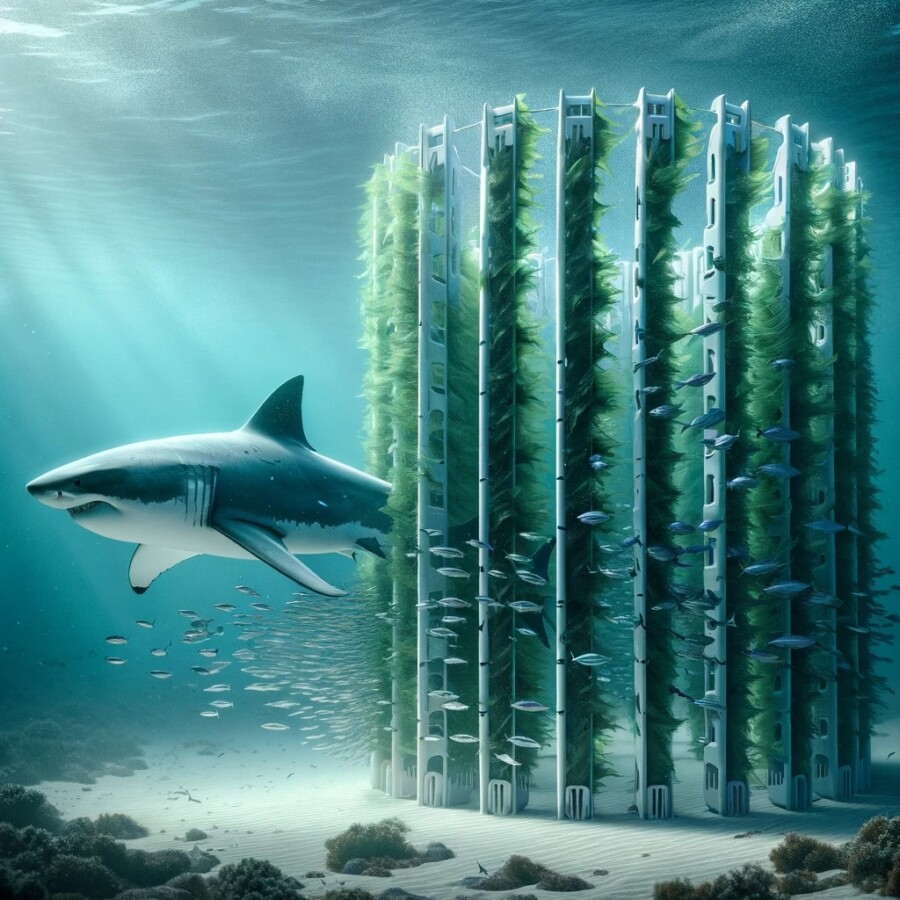
Besides shark spotters, they're also trying other ways to deal with sharks that don't hurt them. A local marine biologist is making a shark barrier that looks like an underwater forest of kelp, which sharks don't like. The barrier has magnets that push sharks away because they're sensitive to electric and magnetic fields. This idea is new and hard for people to accept, but it worked on a private island in the Bahamas. The marine biologist says it's really important to keep sharks in the ecosystem because they're top predators and help keep everything balanced. They warn against killing sharks on purpose or targeting them.
Overall, the people in Cape Town are trying to protect both sharks and people by finding ways to keep them separate. They want people to
Original news source: South Africa's shark spotters back in action as great whites return (BBC)
🎧 Listen:
📖 Vocabulary:
Group or Classroom Activities
Warm-up Activities:
– News Summary
Instructions: Divide the class into pairs. Give each pair a few minutes to read the article. Then, one student from each pair will summarize the article to their partner in their own words. After both students have shared their summaries, they can discuss any differences or similarities in their understanding of the article.
– Opinion Poll
Instructions: Divide the class into small groups. Each group will come up with a question related to the article, such as "Do you think using non-lethal methods to deal with the risk from sharks is effective?" Each student in the group will take turns asking the question to the rest of the group and recording their responses. After everyone has answered the question, the group can discuss their opinions and any differences they may have.
– Keyword Taboo
Instructions: Write down a list of keywords from the article on separate pieces of paper. Divide the class into two teams. One student from each team will come up to the front of the class. The teacher will show them a keyword, and they must describe the keyword to their team without using the word itself. Their team members must guess the keyword based on the description. The team with the most correct guesses wins.
– Vocabulary Pictionary
Instructions: Divide the class into pairs. Give each pair a list of vocabulary words from the article. One student from each pair will choose a word and draw a picture to represent it, while the other student guesses the word. They can switch roles after a few rounds. Afterward, the pairs can share their drawings and discuss the meanings of the words.
– Future Predictions
Instructions: In small groups, students will discuss and make predictions about the future of shark conservation in Cape Town. They can consider questions like "What other non-lethal methods could be used to protect both sharks and people?" or "How might the role of shark spotters evolve in the future?" Each group will then present their predictions to the class and explain their reasoning.
🤔 Comprehension Questions:
The great white sharks have returned after being gone for four years.
They use radios to talk to the people on the beaches.
A white flag means people should leave the sea right away.
The net used by the shark spotters doesn't hurt the environment and is taken out each evening to avoid hurting sea life.
Shark bites have a big impact on communities socially, economically, and environmentally.
Plettenberg Bay started using shark spotters after two people died from shark attacks last year.
The purpose of the shark barrier is to keep sharks away by using magnets that push them away.
The people in Cape Town want to keep sharks in the ecosystem because they are top predators and help keep everything balanced.
🎧✍️ Listen and Fill in the Gaps:
Shark spotters in Cape Town, South Africa, are back in action because white have returned after being gone for four years. In the past, these sharks were responsible for deadly attacks on swimmers. Some places use nets and baited hooks to kill sharks, but this hurts other marine life. The International Union for Conservation of says we should use non-lethal to deal with the risk from sharks. In Cape Town, the goal is to keep sharks and people apart to protect both. A team of professional shark spotters has been working in the area for over 15 years. They want to prevent bad interactions between people and sharks and make sure people can swim safely while also protecting the sharks. Conservationists are actually happy that the great white sharks are back because their disappearance was a problem for the waters off Cape Town. The shark spotters watch five beaches from the mountains, and those up talk to the people on the beaches using . If they see a shark that could be dangerous, they tell everyone to get out of the water. They use a flag system to show the current situation, and a white flag means people should leave the sea right away. The team also puts up a net each morning off Fish Hoek beach to make a safe area for swimming. The net goes down to the bottom of the sea and across the bay, and they take it out each to hurting sea life. This system is different from normal shark barriers because it doesn't hurt the environment. Shark bites are really bad events that have a big impact on socially, economically, and environmentally. In Plettenberg Bay, where two people died from shark attacks last year, shark now watch five beaches and have seen over 70 great white sharks in a year. They started using shark spotters after "Kiki" Bisogno, a person who helped the community, was by a shark. Her partner, Diego Milesi, thinks that if they had put up a "beware of sharks" sign after the first attack, Kiki might not have gone swimming. He says it's important for people to know about the risks in the water. Besides shark spotters, they're also trying other ways to deal with s that don't hurt them. A local biologist is making a shark barrier that looks like an underwater forest of kelp, which sharks don't like. The barrier has magnets that push sharks away because they're sensitive to electric and magnetic fields. This idea is new and hard for to accept, but it worked on a private island in the Bahamas. The marine biologist says it's really important to keep sharks in the because they're top predators and help keep everything balanced. They warn against killing sharks on purpose or targeting them. Overall, the people in Cape Town are trying to protect both sharks and people by finding ways to keep them separate. They want people to
💬 Discussion Questions:
1. What is the goal of the shark spotters in Cape Town?
2. How do the shark spotters communicate with people on the beaches?
3. How do the shark spotters determine if a shark could be dangerous?
4. Do you think it's a good idea to use non-lethal methods to deal with the risk from sharks? Why or why not?
5. How do the shark spotters make a safe area for swimming off Fish Hoek beach?
6. Why do conservationists in Cape Town want the great white sharks to return?
7. How do shark bites affect communities socially, economically, and environmentally?
8. Why does Diego Milesi think it's important for people to know about the risks in the water?
9. What other ways are being tried to deal with sharks that don't hurt them?
10. What is the purpose of the shark barrier that looks like an underwater forest of kelp?
11. Why do sharks play an important role in the ecosystem?
12. Do you think it's important to keep sharks in the ecosystem? Why or why not?
13. How do the people in Cape Town want to protect both sharks and people?
14. How would you feel if you saw a shark while swimming in the ocean? Why?
15. Do you like swimming in the ocean? Why or why not?
Individual Activities
📖💭 Vocabulary Meanings:
Click a dot next to a word, then click the dot next to its meaning to draw a line connecting them.
Words
Meanings
🔡 Multiple Choice Questions:
🕵️ True or False Questions:
📝 Write a Summary:
Write a summary of this news article in two sentences.
Check your writing now with the best free AI for English writing!