


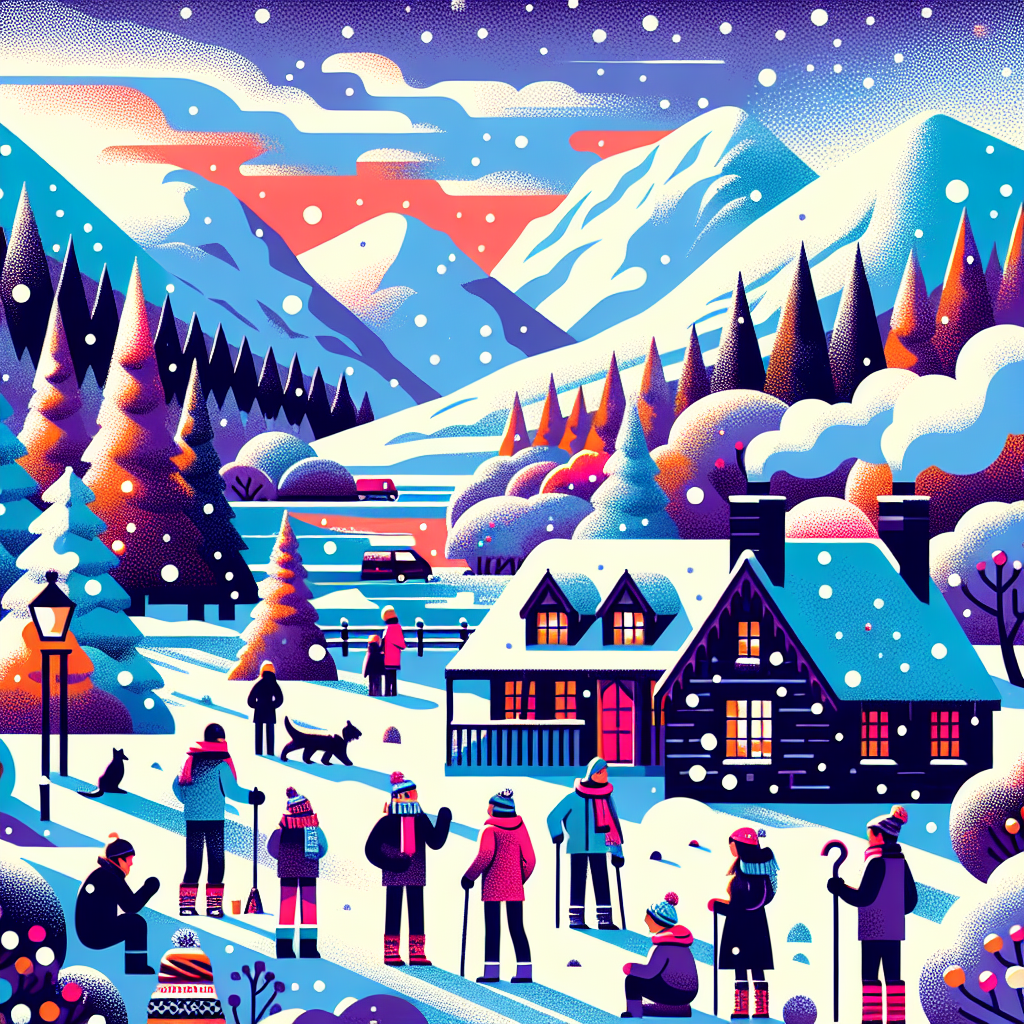
Recently, the UK has experienced a big drop in temperatures due to a blast of cold air from the Arctic. This has caused frost and snow, especially in Scotland. The cold weather has made temperatures fall significantly overnight, and it looks like the weekend will be very chilly, with a chance of heavy snow and blizzard-like conditions. Health officials in England have issued amber alerts, warning that there could be health risks, especially for vulnerable people. They are advising everyone to stay indoors during the coldest parts of the day, especially in the early mornings when the frost is at its worst.
Weather warnings are in place for most of England, Wales, and Scotland from Saturday to Monday, with specific alerts for snow and ice. Northern Scotland has already seen some snowfall, creating beautiful winter scenes in the Highlands. This cold weather is a big change from the mild temperatures we had during the Christmas season, when it was between 11°C and 13°C. Now, temperatures are expected to be around 5°C lower than usual for January, and the wind chill will make it feel even colder.
The UK Health Security Agency (UKHSA) has sent out health alerts to warn healthcare providers about how the cold could affect people's health. These alerts focus on protecting older people and those with existing health problems. Local NHS services are sharing tips on how to stay safe in this cold weather, urging everyone to avoid going outside during the early morning and late evening when conditions are most dangerous.
As this cold weather system moves in, rain is expected to change to snow, especially in southern England, before turning back to rain later in the evening. Areas like Wales and northern England could see significant snowfall, with up to 30 cm possible in higher places. This weather could cause travel problems and power outages, especially in rural areas that might get cut off due to heavy snow. The recent cold snap comes after a series of severe weather events, including heavy rain and flooding in places like Greater Manchester.
Original news source: Temperatures drop across UK as arctic blast brings more snow (BBC)
🎧 Listen:
📖 Vocabulary:
Group or Classroom Activities
Warm-up Activities:
– CHARADES
Instructions: Divide the class into small groups. Each group will take turns acting out different weather-related terms from the article (e.g., "blizzard," "frost," "amber alert") without speaking, while the other groups guess the words. This will help reinforce vocabulary in a fun, interactive way.
– HEADLINE CREATION
Instructions: Ask students to create catchy headlines for the article. They can work in pairs and come up with three different headlines. Afterward, each pair shares their headlines with the class, and the class votes on the most engaging one. This activity encourages creativity and summarizing skills.
– MIND MAP
Instructions: On a whiteboard or large paper, write "UK Cold Weather" in the center. In small groups, students will brainstorm and add related concepts, effects, and responses mentioned in the article, such as "health risks," "snowfall," and "travel problems." This visual activity helps them organize their thoughts and make connections.
– SPEED SUMMARIZING
Instructions: Students will pair up and take turns summarizing the article to each other in 1 minute. One partner speaks while the other listens, then they switch roles. Afterward, they can discuss any points they found surprising or interesting. This activity fosters concise speaking and active listening skills.
– OPINION SPECTRUM
Instructions: Create a line in the classroom labeled "Strongly Agree" to "Strongly Disagree." Present statements related to the article, such as "Cold weather is more enjoyable than warm weather." Students will position themselves along the line based on their opinions and then discuss their placements in small groups. This encourages critical thinking and speaking practice.
🤔 Comprehension Questions:
The recent drop in temperatures in the UK has been caused by a blast of cold air from the Arctic.
Most of England, Wales, and Scotland are expected to experience heavy snow and blizzard-like conditions.
Health officials have issued amber alerts due to potential health risks from the cold weather, particularly for vulnerable people, including the elderly and those with existing health problems.
The expected temperatures are around 5°C lower than usual for January.
People are being advised to stay indoors during the coldest parts of the day, especially in the early mornings and late evenings when conditions are most dangerous.
The cold weather could cause travel problems and power outages in rural areas, especially if heavy snow cuts them off.
In southern England, rain is expected to change to snow before turning back to rain later in the evening.
Before this recent cold snap, there were severe weather events including heavy rain and flooding, particularly in Greater Manchester.
🎧✍️ Listen and Fill in the Gaps:
Recently, the UK has experienced a big drop in temperatures due to a blast of cold air from the Arctic. This has caused frost and snow, especially in Scotland. The cold weather has made temperatures fall significantly overnight, and it looks like the weekend will be very chilly, with a chance of heavy snow and blizzard-like . officials in England have issued amber alerts, warning that there could be health risks, especially for vulnerable . They are advising everyone to stay during the coldest parts of the day, especially in the early when the frost is at its worst. warnings are in place for most of England, Wales, and from Saturday to Monday, with alerts for snow and ice. Northern Scotland has already seen some snowfall, creating beautiful winter scenes in the Highlands. This cold weather is a big change from the mild temperatures we had during the Christmas season, when it was between 11°C and 13°C. Now, temperatures are expected to be around 5°C lower than usual for , and the wind chill will make it feel even colder. The UK Health Security Agency (UKHSA) has sent out health to warn healthcare providers about how the cold could people's health. These alerts focus on protecting older people and those with existing health problems. Local NHS services are sharing tips on how to stay safe in this cold weather, urging everyone to avoid going outside during the early and late evening when conditions are most dangerous. As this cold weather system moves in, rain is expected to change to snow, especially in southern England, before turning back to rain later in the evening. Areas like Wales and northern England could see significant snowfall, with up to 30 cm in higher places. This weather could cause travel problems and power outages, especially in rural areas that might get cut off due to heavy snow. The recent cold snap comes after a series of severe weather , heavy rain and in places like Greater Manchester.
💬 Discussion Questions:
1. What is your favorite type of weather, and why do you like it?
2. How would you feel if you had to stay indoors for an entire weekend because of bad weather?
3. Do you think people should take weather warnings seriously? Why or why not?
4. What is a memorable experience you have had in the snow?
5. How do you usually prepare for cold weather?
6. Do you like to play in the snow? Why or why not?
7. What is your opinion on how cold weather affects people's health?
8. How would you feel if you lost power during a snowstorm?
9. Do you think schools should close during severe weather? Why or why not?
10. What is a common activity you enjoy doing in winter?
11. How do you feel about the idea of climate change affecting weather patterns?
12. Do you think it’s important for communities to have plans for extreme weather? Why?
13. What is a typical winter tradition in your culture?
14. How would you react if you were caught outside during a blizzard?
15. Do you prefer warm weather or cold weather? Why?
Individual Activities
📖💭 Vocabulary Meanings:
Click a dot next to a word, then click the dot next to its meaning to draw a line connecting them.
Words
Meanings
🔡 Multiple Choice Questions:
🕵️ True or False Questions:
📝 Write a Summary:
Write a summary of this news article in two sentences.
Check your writing now with the best free AI for English writing!