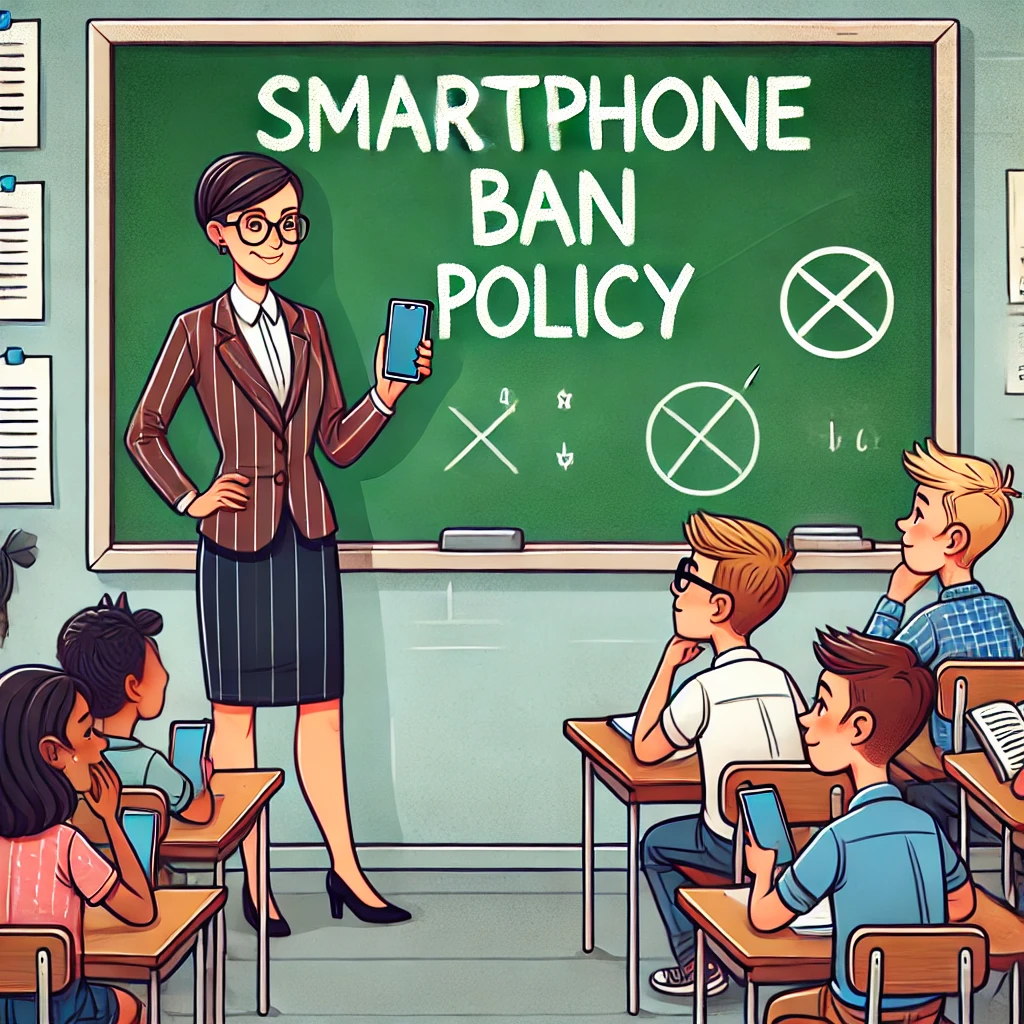
Some US states are thinking about stopping kids from using smartphones in school because they're worried that kids are getting too dependent on them. California and New York, which are two big states, are talking about making rules for the whole state. This isn't a new worry – schools have been talking about whether or not to let kids use phones for a long time. But now, they want to make the rules even stricter. Right now, about 76% of schools already have rules that say kids can't use their phones for non-school stuff during the school year.
People have been arguing about whether or not phones should be allowed in schools for a long time. At first, people were worried that phones would be distracting and that they were connected to drugs. But after a shooting happened at Columbine High School in 1999, people started to see phones as an important way for kids to get help in an emergency. Some states changed their rules and let kids use their phones, like California did in 2002. But then the debate started again because schools realized that phones were causing problems – they were distracting kids, being used for bullying, and even for cheating. In New York City, they had a strict rule against phones at first, but then they let each school make their own rules.
The reason why people want to ban phones in schools now is because they're worried about kids' mental health and how much time they spend on social media. The Surgeon General, who is a really important doctor, wants social media sites to have warning labels, like cigarettes do. That's because research has shown that using social media too much can make kids have more mental health problems. Experts say that having phones in schools makes it hard for kids to focus, make friends, and learn well.
It's not easy to make these rules and make sure everyone follows them. Schools need to have a lot of people agree with the rules and make sure they're always being followed. The president of the National School Safety and Security Services, Ken Trump, says that it's a really complicated problem. In Los Angeles, the school board voted to ban phones, but they're still not sure how they're going to make it happen. Some kids say that it's impossible to watch thousands of students on big school campuses.
In the end, US states are thinking about banning smartphones in schools because they're worried that kids are getting too dependent on them. People have been arguing about this for a long time, but now they're worried about kids' mental health and social media use. It's not easy to make these rules and make sure everyone follows them, but schools are trying to find a balance between keeping kids safe and stopping them from getting distracted.
Original news source: US states want to ban phones in schools. It might be a challenge (BBC)
🎧 Listen:
📖 Vocabulary:
Group or Classroom Activities
Warm-up Activities:
– News Summary
Instructions: Have students read the article and then summarize the main points in their own words. They can do this individually or in pairs. Afterward, have a class discussion to compare and discuss the different summaries.
– Opinion Poll
Instructions: Divide the class into groups and have each group discuss whether or not they think smartphones should be banned in schools. Then, have each group create a poll with questions related to the topic. Afterward, have groups share their polls with the class and conduct a class-wide opinion poll by having students vote on the different questions.
– Pros and Cons
Instructions: Divide the class into pairs and have each pair discuss the pros and cons of allowing smartphones in schools. They should write down their ideas and then share them with the class. Afterward, have a class discussion to compare and contrast the different perspectives.
– Think-Pair-Share
Instructions: Have students individually read the article and think about their own opinions on the topic. Then, pair them up and have them discuss their thoughts with their partner. Finally, have pairs share their opinions with the whole class and facilitate a class discussion on the topic.
– Future Predictions
Instructions: Have students work individually or in pairs to make predictions about the future of smartphones in schools. They should consider the arguments presented in the article and any additional thoughts they have. Afterward, have students present their predictions to the class and discuss the likelihood and potential impact of each prediction.
🤔 Comprehension Questions:
Some US states are considering banning smartphones in schools because they are worried that kids are becoming too dependent on them.
Some concerns people have about kids using smartphones in school are that they can be distracting, used for bullying, and even for cheating.
Schools' rules about smartphones have changed over time. Some states initially allowed kids to use their phones after the shooting at Columbine High School in 1999, but then realized that phones were causing problems and became stricter with their rules.
Some schools changed their rules to allow kids to use phones after the shooting at Columbine High School because they saw phones as an important way for kids to get help in an emergency.
The debate about phones in schools started again after California allowed kids to use them because schools realized that phones were causing problems such as distractions, bullying, and cheating.
Some reasons why people want to ban phones in schools now are concerns about kids' mental health and how much time they spend on social media. Research has shown that using social media too much can lead to more mental health problems.
It is difficult to make and enforce rules about smartphones in schools because it requires a lot of people to agree with the rules and ensure that they are always being followed. Additionally, it can be challenging to monitor thousands of students on large school campuses.
The goal of schools when it comes to smartphones is to find a balance between keeping kids safe and preventing distractions. They want to ensure that students can focus, make friends, and learn well while also addressing concerns about mental health and social media use.
🎧✍️ Listen and Fill in the Gaps:
Some US states are about stopping kids from using smartphones in school because they're that kids are too dependent on them. California and New York, which are two big states, are about making rules for the whole state. This isn't a new worry – schools have been talking about whether or not to let kids use phones for a long time. But now, they want to make the rules even stricter. Right now, about 76% of schools already have rules that say kids can't use their phones for non-school stuff during the school year. People have been arguing about whether or not phones should be allowed in schools for a long time. At first, people were worried that phones would be distracting and that they were connected to drugs. But after a shooting happened at Columbine High School in 1999, people to see phones as an way for kids to get help in an emergency. Some states changed their rules and let kids use their phones, like did in 2002. But then the debate started again because schools realized that phones were causing problems – they were distracting kids, being used for , and even for cheating. In New York City, they had a strict rule against phones at first, but then they let each school make their own rules. The reason why people want to ban phones in schools now is because they're worried about kids' health and how much time they spend on social media. The Surgeon General, who is a really important , social media sites to have warning labels, like cigarettes do. That's because research has shown that using social media too much can make kids have more mental health problems. Experts say that having phones in schools makes it hard for kids to focus, make friends, and learn well. It's not easy to make these rules and make sure everyone follows them. Schools need to have a lot of people with the rules and make sure they're always being followed. The president of the National School Safety and Security Services, Ken Trump, says that it's a really complicated problem. In Los Angeles, the school board to ban phones, but they're still not sure how they're going to make it happen. Some kids say that it's impossible to watch thousands of students on big school campuses. In the end, US states are thinking about banning smartphones in because they're worried that kids are getting too dependent on them. have been arguing about this for a long time, but now they're worried about kids' mental health and social media use. It's not easy to make these rules and make sure everyone follows them, but schools are to find a balance between keeping kids safe and stopping them from getting distracted.
💬 Discussion Questions:
1. What do you think about the idea of banning smartphones in schools?
2. How would you feel if you were not allowed to use your phone at school?
3. Do you think smartphones are distracting for students? Why or why not?
4. What is your opinion on using phones for non-school stuff during the school year?
5. How do you think banning smartphones in schools would affect students' mental health?
6. Do you think social media has a negative impact on students' mental health? Why or why not?
7. What are some benefits of having smartphones in schools?
8. How do you think banning smartphones in schools would affect students' ability to make friends?
9. Do you think it's possible for schools to effectively enforce a ban on smartphones? Why or why not?
10. How do you think banning smartphones in schools would affect students' learning?
11. What are some alternatives to using smartphones in schools for educational purposes?
12. How do you think banning smartphones in schools would affect students' overall safety?
13. Do you think it's fair for schools to make rules about students' phone use? Why or why not?
14. How do you think banning smartphones in schools would affect students' ability to stay connected with their families?
15. What are some potential challenges schools might face if they ban smartphones?
Individual Activities
📖💭 Vocabulary Meanings:
Click a dot next to a word, then click the dot next to its meaning to draw a line connecting them.
Words
Meanings
🔡 Multiple Choice Questions:
🕵️ True or False Questions:
📝 Write a Summary:
Write a summary of this news article in two sentences.
Check your writing now with the best free AI for English writing!