
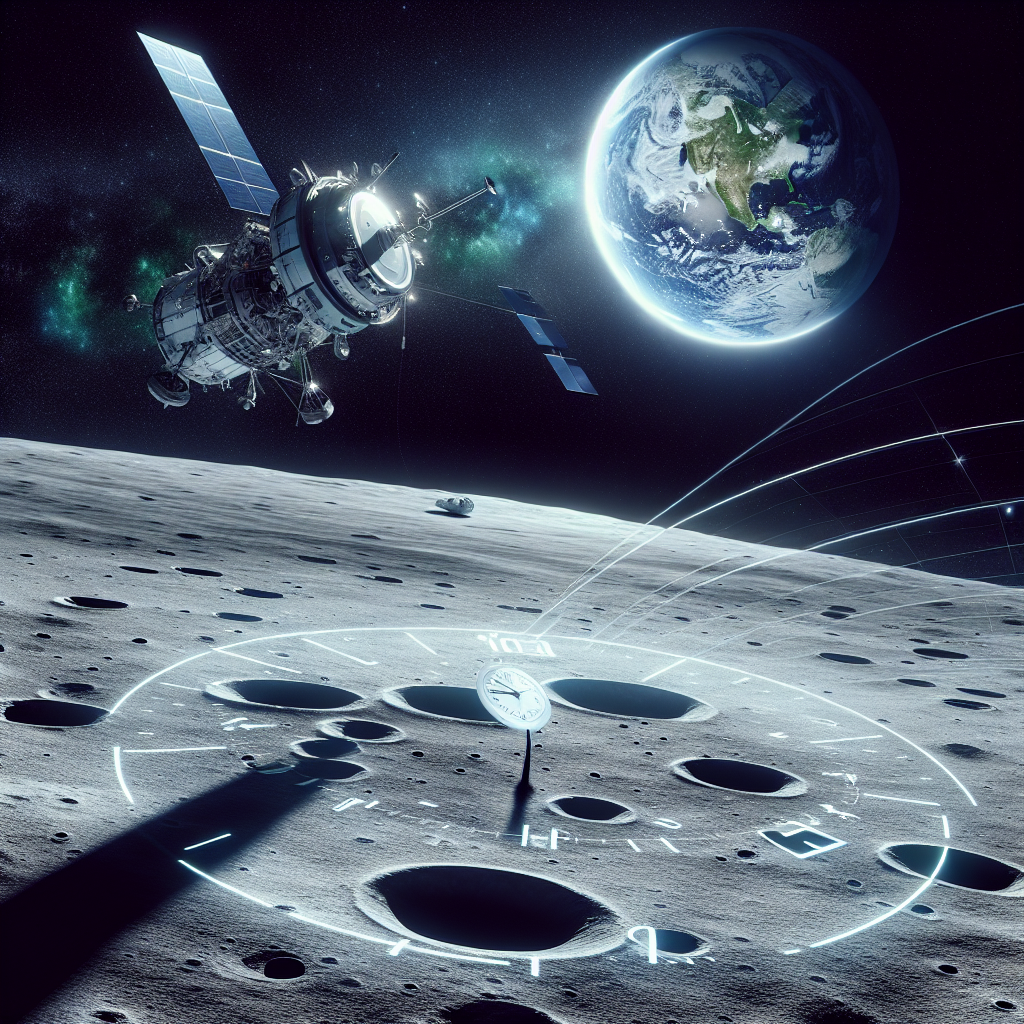
The White House wants NASA to make a new time zone for the Moon called Coordinated Lunar Time (LTC). The Moon's gravity makes time go faster there, about 58.7 microseconds per day. This might not seem like a big deal, but it can affect how spacecraft work together. The US government hopes that having a new time zone will help everyone work together to reach the Moon.
According to Professor Catherine Heymans, who studies space in Scotland, gravity affects time in different places. The Moon has weaker gravity, so clocks run differently there. On Earth, we use atomic clocks to measure time really precisely. These clocks measure the energy of atoms to keep track of time to the billionth of a second. If we put these clocks on the Moon, they would run one second faster over 50 years.
NASA isn't the only group trying to make a lunar time system. The European Space Agency is also working on one. But to make a new time zone, countries need to agree and have a group in charge. Right now, the International Bureau of Weights and Measures is in charge of time on Earth. They'll need to decide where the new time zone starts and how far it goes with help from everyone.
The US wants to have LTC ready by 2026 for its mission to the Moon called Artemis-3. This will be the first time we go back to the Moon's surface since 1972. It's really important to be precise when we go to the Moon because we need to know exactly where we're going. If we make mistakes, the spacecraft could go into the wrong orbit. Plus, if we don't have the same time for different missions, it could be hard to send data and talk to each other in space.
Original news source: White House wants Moon to have its own time zone (BBC)
🎧 Listen:
📖 Vocabulary:
Group or Classroom Activities
Warm-up Activities:
– News Summary
Instructions: In pairs, students will read the article and summarize the main points in their own words. They should focus on key details such as the need for a new time zone on the Moon and the implications for spacecraft and communication.
– Word Association
Instructions: In groups, students will take turns saying a word that comes to mind when they think about the article. The word can be related to the topic, a concept mentioned in the article, or simply a word that they associate with space and time. The goal is to generate a discussion and expand vocabulary related to the topic.
– Sketch It
Instructions: In pairs, one student will describe a scene or concept from the article to their partner without using any specific words from the article. The other student must then try to sketch what they think is being described. After a set amount of time, they should compare the sketch to the original description and discuss any differences or misunderstandings.
– Pros and Cons
Instructions: In groups, students will discuss the pros and cons of creating a new time zone for the Moon. They should consider the potential benefits, such as improved coordination and communication for space missions, as well as any drawbacks or challenges that may arise. Each group can then present their findings to the class and engage in a debate or discussion.
– Two Truths and a Lie
Instructions: In pairs, students will take turns sharing three statements about the article, two of which are true and one of which is false. Their partner must then guess which statement is the lie. This activity encourages students to engage with the content of the article and practice their listening and critical thinking skills.
🤔 Comprehension Questions:
The White House wants NASA to create a new time zone for the Moon to help everyone work together more efficiently and effectively in reaching the Moon.
The Moon's weaker gravity causes time to go faster there, about 58.7 microseconds per day.
Atomic clocks measure time on Earth by measuring the energy of atoms to keep track of time to the billionth of a second.
If atomic clocks were placed on the Moon, they would run one second faster over 50 years.
The European Space Agency is also working on a lunar time system.
For a new time zone to be created, countries need to agree and there needs to be a group in charge, such as the International Bureau of Weights and Measures.
It is important to have a precise time system when going to the Moon because it helps ensure that spacecraft go into the correct orbit and allows for accurate communication and data transmission between missions.
If there are different times for different missions in space, it could be difficult to send data and communicate with each other effectively. It could also lead to mistakes and confusion in spacecraft navigation and coordination.
🎧✍️ Listen and Fill in the Gaps:
The White House wants NASA to make a new time zone for the Moon Coordinated Time (LTC). The Moon's gravity makes time go faster there, about 58.7 microseconds per day. This might not seem like a big deal, but it can affect how work together. The US government hopes that having a new time zone will help everyone work together to reach the Moon. According to Professor Heymans, who studies space in , gravity affects time in different places. The Moon has weaker gravity, so clocks run differently there. On Earth, we use clocks to measure time really precisely. These clocks measure the energy of to keep track of time to the billionth of a . If we put these clocks on the Moon, they would run one second faster over 50 years. NASA isn't the only group trying to make a lunar time system. The Space Agency is also working on one. But to make a new time zone, countries need to and have a group in charge. Right now, the International Bureau of Weights and Measures is in charge of time on . They'll need to where the new time zone starts and how far it goes with help from everyone. The US wants to have LTC ready by 2026 for its mission to the Moon called Artemis-3. This will be the first time we go back to the Moon's since 1972. It's really important to be when we go to the Moon because we need to know exactly where we're . If we make mistakes, the spacecraft could go into the wrong orbit. Plus, if we don't have the same time for different , it could be hard to send data and talk to each other in space.
💬 Discussion Questions:
1. What is a time zone?
2. How would you feel if you had to adjust to a new time zone on the Moon?
3. Do you think it's important for spacecraft to have the same time for missions? Why or why not?
4. What do you think would happen if the spacecraft went into the wrong orbit?
5. How do you think having a new time zone on the Moon could help everyone work together to reach the Moon?
6. Do you like the idea of a Coordinated Lunar Time? Why or why not?
7. What is an atomic clock and why is it used to measure time precisely?
8. How do you think weaker gravity on the Moon affects the way clocks run there?
9. How do you think having a different time zone on the Moon could affect communication between astronauts?
10. What do you think the International Bureau of Weights and Measures should consider when deciding where the new time zone starts and how far it goes?
11. How would you feel if you were part of the mission to the Moon and had to follow the new lunar time system?
12. What do you think are the benefits of being precise when going to the Moon's surface?
13. What do you think are the challenges of making a new lunar time system?
14. How do you think the new time zone on the Moon could impact future space exploration?
15. What is your opinion on NASA's plan to have LTC ready by 2026? Why or why not?
Individual Activities
📖💭 Vocabulary Meanings:
Click a dot next to a word, then click the dot next to its meaning to draw a line connecting them.
Words
Meanings
🔡 Multiple Choice Questions:
🕵️ True or False Questions:
📝 Write a Summary:
Write a summary of this news article in two sentences.
Check your writing now with the best free AI for English writing!