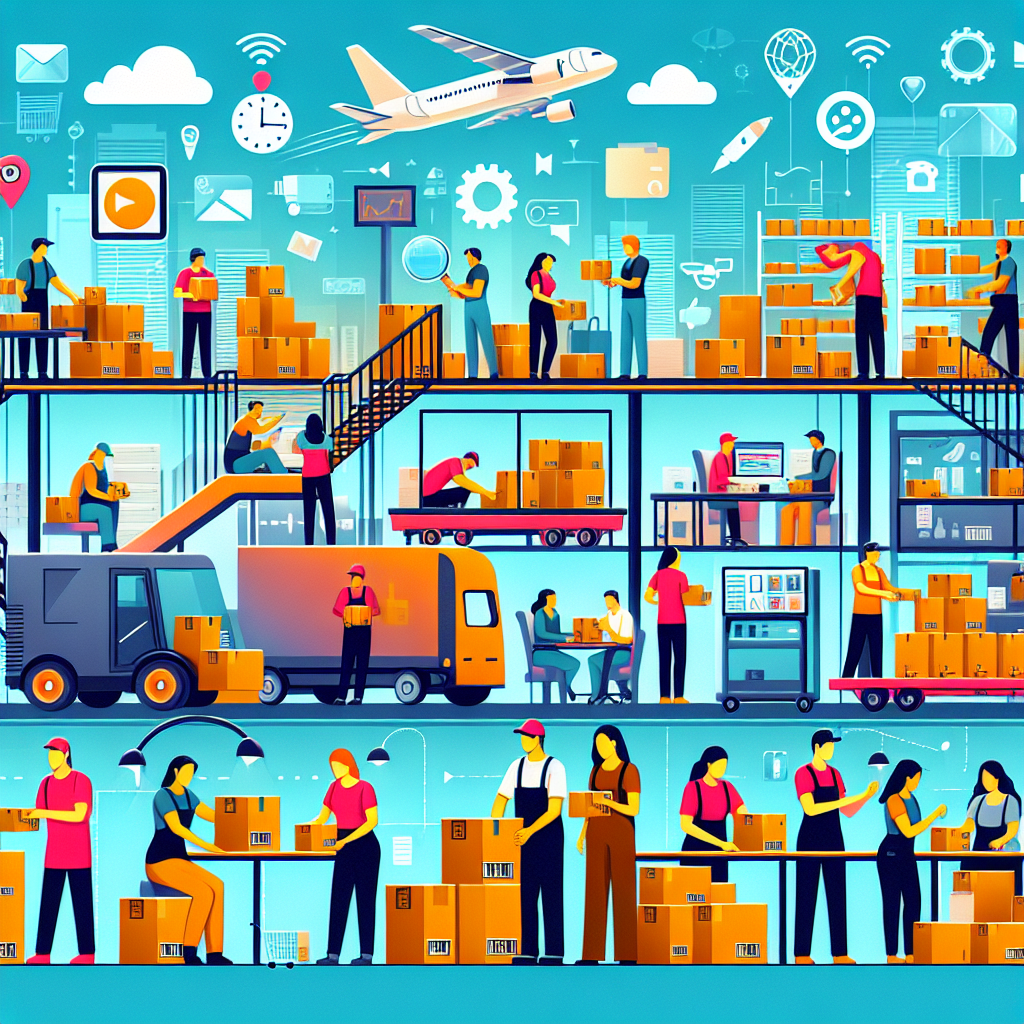
Amazon started thirty years ago and has become a huge company known as "The Everything Company." This change is clear in its big operations, like the fulfillment center in Dartford, near London. With millions of items available and hundreds of thousands sold every day, Amazon is very efficient, claiming it can process an order in just two hours. But this is just a small part of what Amazon does, which also includes streaming services like Amazon Prime Video, smart home devices like Alexa and Ring, and a strong presence in cloud computing with Amazon Web Services.
Jeff Bezos founded Amazon in 1994, and since then, it has grown quickly and kept coming up with new ideas. Even though the company has faced criticism for its working conditions and tax practices, it still leads in many areas. As Amazon enters its fourth decade, people are wondering how it will keep growing. Analysts like Sucharita Kodali are thinking about how hard it will be to keep double-digit growth when the company is already making half a trillion dollars. One way to do this might be to use the shopping data from Prime members to improve advertising on its streaming service, which is becoming more dependent on commercial revenue.
Amazon's many different business areas also create challenges. For example, it’s not clear how its satellite division, Kuiper, and its grocery store chain, Whole Foods, can work together. Experts suggest that Amazon should keep trying new business ideas, even if some don't succeed. The company recently stopped a robot line after just nine months, showing it's willing to take risks. But as Amazon grows, it also has to deal with more rules about how it uses data, its impact on the environment, and its overall size.
Amazon's size creates problems, especially in cities where the infrastructure can’t handle all the deliveries. Juozas Kaziukėnas, the founder of Marketplace Pulse, points out that emerging markets like India, Mexico, and Brazil are important for Amazon's future growth. However, entering these markets means Amazon needs to build the right infrastructure to support e-commerce. This is a big challenge as the company tries to expand globally. Additionally, competition from Chinese retailers like Temu and Shein is another issue Amazon must face, especially since these companies attract customers with lower prices during tough economic times. While some believe these competitors will stay small, any serious challenge to Amazon will likely need a big change in how consumers shop or new technology, possibly involving artificial intelligence. As Amazon looks back and plans for the future, it must stay alert and flexible in a changing market.
Original news source: Amazon at 30: What next for 'The Everything Company'? (BBC)
🎧 Listen:
📖 Vocabulary:
Group or Classroom Activities
Warm-up Activities:
– CHARADES
Instructions: Students will take turns acting out different aspects of Amazon's business model or services (e.g., delivery, Prime Video, Alexa) without speaking. The rest of the class will guess what they are mimicking.
– OPINION POLL
Instructions: Students will be given statements related to Amazon, such as "Amazon should improve its working conditions" or "Amazon's expansion into new markets is beneficial." They will move to different sides of the room to indicate their agreement or disagreement, followed by a group discussion on their viewpoints.
– SKETCH IT
Instructions: In pairs, students will choose a specific business area of Amazon (e.g., e-commerce, cloud computing, grocery stores) and sketch a quick diagram illustrating how it operates or its impact on consumers. Afterward, they will present their sketches to the class.
– FUTURE PREDICTIONS
Instructions: Students will brainstorm and write down their predictions for Amazon's future in the next 10 years based on the article. They will then share their predictions in small groups and discuss the likelihood of each.
– MIND MAP
Instructions: As a class, students will create a mind map on the whiteboard around the central idea of Amazon. They will add branches for different aspects of the company mentioned in the article, such as services, challenges, and competitors, encouraging contributions from all students.
🤔 Comprehension Questions:
Amazon offers streaming services like Amazon Prime Video, smart home devices like Alexa and Ring, and cloud computing services through Amazon Web Services.
Jeff Bezos founded Amazon in 1994.
Amazon faces challenges like maintaining double-digit growth, finding ways to integrate its various business areas, and dealing with increased regulations regarding data use and environmental impact.
Amazon plans to use shopping data from Prime members to enhance advertising on its streaming service, which is becoming more reliant on commercial revenue.
Developing infrastructure in emerging markets is important for Amazon to support e-commerce and ensure it can handle the logistics of deliveries in those regions.
Amazon recently stopped a robot line after just nine months, which shows that the company is willing to take risks and try out new ideas, even if some don't succeed.
Competition from companies like Temu and Shein affects Amazon's strategies by pushing it to adapt and possibly lower prices, especially as these competitors attract customers during tough economic times.
As Amazon expands globally, it must consider regulations related to data usage, its environmental impact, and how its size affects local markets and infrastructure.
🎧✍️ Listen and Fill in the Gaps:
Amazon started thirty years ago and has become a huge company known as "The Everything Company." This change is clear in its big operations, like the fulfillment center in Dartford, near . With millions of items available and hundreds of thousands sold every day, Amazon is very efficient, it can process an order in just two hours. But this is just a part of what Amazon does, which also includes streaming services like Amazon Prime Video, smart home devices like Alexa and Ring, and a strong in cloud computing with Amazon Web Services. Jeff Bezos founded Amazon in 1994, and since then, it has grown quickly and kept coming up with new ideas. Even though the company has faced criticism for its working conditions and tax practices, it still leads in many areas. As Amazon enters its fourth decade, people are how it will keep growing. Analysts like Sucharita are thinking about how hard it will be to keep double-digit when the company is already making half a trillion dollars. One way to do this might be to use the data from Prime members to improve advertising on its streaming service, which is becoming more dependent on commercial revenue. Amazon's many different business areas also create challenges. For example, it’s not clear how its satellite division, Kuiper, and its grocery store chain, Whole Foods, can work together. Experts suggest that Amazon should keep trying new business ideas, even if some don't succeed. The recently a robot line after just nine months, showing it's willing to take risks. But as Amazon grows, it also has to deal with more rules about how it uses data, its impact on the environment, and its overall size. Amazon's size creates problems, especially in cities where the infrastructure can’t handle all the deliveries. Juozas Kaziukėnas, the founder of Marketplace , points out that emerging markets like , Mexico, and Brazil are important for Amazon's future growth. However, entering these means Amazon needs to build the right infrastructure to support e-commerce. This is a big challenge as the company tries to expand globally. Additionally, competition from retailers like Temu and Shein is another issue Amazon must face, especially since these companies attract with lower prices during tough economic times. While some believe these competitors will stay small, any serious challenge to Amazon will likely need a big change in how consumers shop or new technology, possibly involving artificial . As Amazon looks back and plans for the future, it must stay alert and flexible in a changing market.
💬 Discussion Questions:
1. What is your opinion about online shopping compared to shopping in physical stores? Why?
2. How would you feel if Amazon stopped offering free shipping for Prime members?
3. Do you think it's important for companies like Amazon to be environmentally friendly? Why or why not?
4. What is a product you would love to see Amazon sell that they don’t currently offer?
5. How do you think Amazon's size affects small businesses?
6. Do you like the idea of using smart home devices like Alexa? Why or why not?
7. How would you feel if you had to rely on only one company for all your shopping needs?
8. Do you think Amazon’s success will continue in the future? Why or why not?
9. What is your experience with online shopping? Do you prefer it over traditional shopping?
10. How do you feel about the idea of companies using your shopping data to advertise products to you?
11. Do you think Amazon should focus more on expanding into new markets or improving its current services? Why?
12. What is a challenge you think Amazon might face as it grows even larger?
13. How would you feel if you had to pay more for products because of Amazon's competition with other retailers?
14. Do you think shopping habits will change in the future? If so, how?
15. What is a way you think Amazon could improve its services for customers?
Individual Activities
📖💭 Vocabulary Meanings:
Click a dot next to a word, then click the dot next to its meaning to draw a line connecting them.
Words
Meanings
🔡 Multiple Choice Questions:
🕵️ True or False Questions:
📝 Write a Summary:
Write a summary of this news article in two sentences.
Check your writing now with the best free AI for English writing!