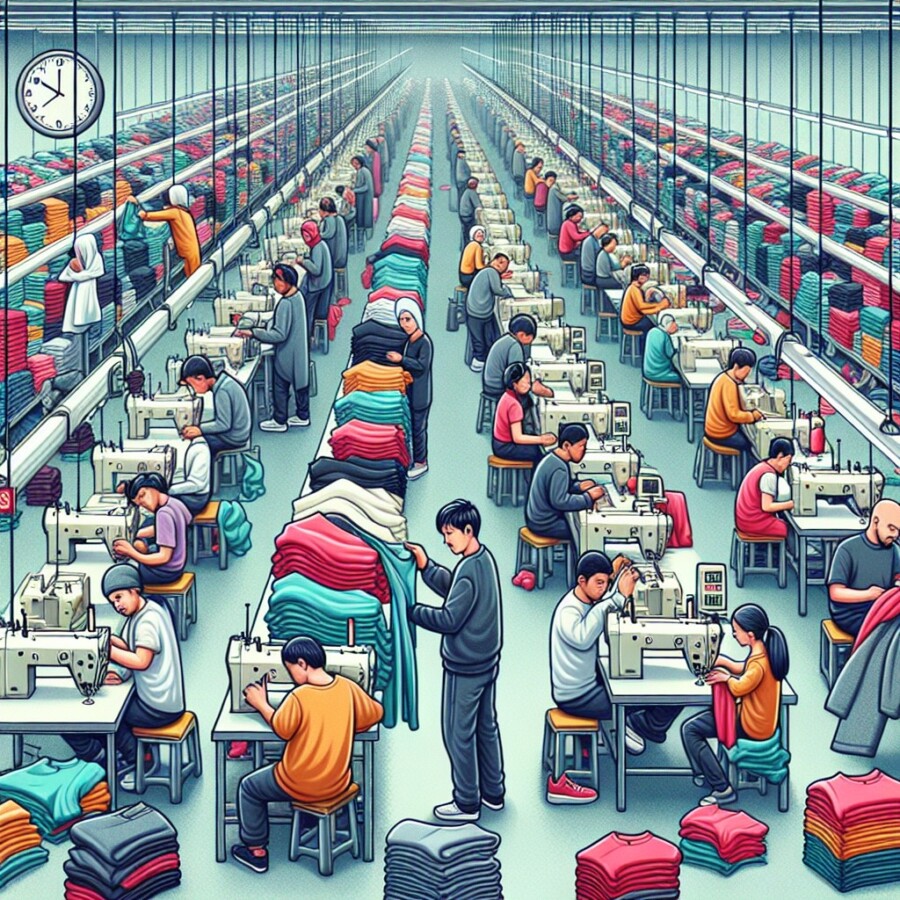
Popular clothing retailer Boohoo has been caught putting "Made in the UK" labels on clothes that were actually made in South Asia, according to a recent investigation by BBC Panorama. This means that the labels on the clothes were lying about where they were made. The clothes had their original labels taken off at Boohoo's main factory in Leicester. This happened between January and October 2023 and could affect a lot of clothes. Boohoo says it was a mistake and they are taking steps to make sure it doesn't happen again.
This mistake has made people worried about how Boohoo checks its clothes. Chris Grayer, who used to be in charge of making sure suppliers followed the rules at Next, said that if a mistake like this happened at Next, they would recall the clothes and fix the labels. Sylvia Rook from the Chartered Trading Standards Institute also said that changing the labels to say "Made in the UK" when they weren't could trick people. Philip Dunne MP, who leads a committee on the environment, said that this is a serious accusation and it's important to be honest with customers about where clothes come from.
On top of the label problem, Boohoo is thinking about closing its factory in Leicester. This factory opened in 2022 and was meant to be a great place for making clothes in the UK. If it closes, people are worried about what will happen to ethical and sustainable fashion in the country. Boohoo has been criticized before for bad working conditions and low pay at its suppliers. In 2020, the company promised to make big changes, but this recent label issue makes people question if they are really committed to making clothes ethically.
In conclusion, the mistake with the labels and the possible closure of Boohoo's factory in Leicester have made people think about how the company makes its clothes and if it really cares about doing it in a fair way. This investigation shows that the fashion industry needs to have better checks and be more open about how clothes are made. This way, customers can trust that they are getting what they pay for and workers are being treated well.
Original news source: Boohoo put 'Made in UK' labels on clothes made overseas (BBC)
🎧 Listen:
📖 Vocabulary:
Group or Classroom Activities
Warm-up Activities:
– News Summary
Instructions:
1. Divide the students into pairs or small groups.
2. Provide each group with a copy of the article or read it aloud to the class.
3. Instruct the students to read the article and then work together to write a brief summary of the main points.
4. Encourage the groups to use their own words and focus on the most important information.
5. After a designated time, have each group share their summaries with the class and discuss any differences or similarities.
– Opinion Poll
Instructions:
1. Divide the students into pairs or small groups.
2. Provide each group with a list of discussion questions related to the article, such as "Do you think Boohoo's label mistake was intentional or a genuine mistake?" or "Should clothing companies be required to disclose where their products are manufactured?"
3. Instruct the students to discuss the questions and share their opinions with their group members.
4. After a designated time, have each group share their opinions with the class and facilitate a class-wide discussion on the topic.
5. Encourage the students to respectfully listen to different viewpoints and provide evidence to support their own opinions.
– Sketch It
Instructions:
1. Divide the students into pairs or small groups.
2. Provide each group with a blank sheet of paper and drawing materials.
3. Instruct the students to work together to create a visual representation of the article, focusing on the main points and key details.
4. Encourage the students to use symbols, images, and captions to convey their understanding.
5. After a designated time, have each group share their sketches with the class and explain their choices.
6. Facilitate a class discussion on the different interpretations and visual representations of the article.
– Vocabulary Pictionary
Instructions:
1. Divide the students into pairs or small groups.
2. Provide each group with a list of vocabulary words from the article, such as "ethics," "sustainable," "accusation," "supplier," etc.
3. Instruct the students to take turns drawing one of the words while their group members guess what it is.
4. Encourage the students to use their knowledge of the article and context clues to help them guess the words.
5. After a designated time, have each group share their drawings and discuss the meanings of the words.
6. Facilitate a class-wide discussion on the importance of understanding and using vocabulary related to the fashion industry and ethical practices.
– Future Predictions
Instructions:
1. Divide the students into pairs or small groups.
2. Instruct each group to imagine themselves as fashion industry experts and predict what will happen in the future based on the information from the article.
3. Provide guiding questions, such as "Will Boohoo be able to regain customer trust?" or "What changes do you think will be made in the fashion industry to prevent similar label mistakes?"
4. Encourage the students to use their critical thinking skills and reasoning to support their predictions.
5. After a designated time, have each group share their predictions with the class and discuss the likelihood and potential impacts of their predictions.
6. Facilitate a class-wide discussion on the future of the fashion industry and the importance of ethical practices.
🤔 Comprehension Questions:
🎧✍️ Listen and Fill in the Gaps:
Popular clothing retailer Boohoo has been caught putting "Made in the UK" labels on that were actually made in South Asia, according to a recent investigation by BBC . This means that the labels on the clothes were lying about where they were made. The clothes had their labels taken off at Boohoo's main in Leicester. This happened between January and October 2023 and could affect a lot of clothes. Boohoo says it was a mistake and they are taking steps to make sure it doesn't happen again. This mistake has made people worried about how Boohoo checks its clothes. Chris Grayer, who used to be in charge of making sure suppliers followed the rules at Next, said that if a mistake like this happened at Next, they would the clothes and fix the labels. Sylvia Rook from the Trading Institute also said that changing the labels to say "Made in the UK" when they weren't could trick people. Philip Dunne MP, who leads a committee on the , said that this is a serious accusation and it's important to be honest with customers about where clothes come from. On top of the label problem, Boohoo is thinking about closing its factory in . This factory in 2022 and was meant to be a great place for clothes in the UK. If it closes, people are worried about what will happen to ethical and sustainable fashion in the country. Boohoo has been criticized before for bad working conditions and low pay at its . In 2020, the company promised to make big changes, but this recent label issue makes people question if they are really to making clothes ethically. In , the mistake with the labels and the possible closure of Boohoo's factory in Leicester have made people think about how the makes its clothes and if it really cares about doing it in a fair way. This shows that the fashion industry needs to have better checks and be more open about how clothes are made. This way, customers can trust that they are getting what they pay for and workers are being treated well.
💬 Discussion Questions:
1. What is the problem with the labels on the clothes at Boohoo?
2. How would you feel if you bought clothes that were labeled as "Made in the UK" but were actually made in South Asia?
3. Do you think it's important for clothing companies to be honest about where their clothes are made? Why or why not?
4. What do you think should happen to the clothes that were mislabeled? Should they be recalled and fixed?
5. Why do you think people are worried about how Boohoo checks its clothes?
6. What is ethical and sustainable fashion? Do you think it's important?
7. How do you feel about the possible closure of Boohoo's factory in Leicester?
8. Do you think Boohoo is committed to making clothes ethically? Why or why not?
9. Why do you think the fashion industry needs better checks and transparency?
10. How can customers trust that they are getting what they pay for when buying clothes?
11. Have you ever bought clothes from Boohoo? How was your experience?
12. What do you think should be done to improve working conditions and pay at clothing suppliers?
13. How do you think this investigation will affect people's opinions of Boohoo as a brand?
14. Do you think other clothing companies may also have issues with mislabeling their clothes? Why or why not?
15. What changes do you think need to be made in the fashion industry to ensure ethical and fair practices?
Individual Activities
📖💭 Vocabulary Meanings:
Click a dot next to a word, then click the dot next to its meaning to draw a line connecting them.
Words
Meanings
🔡 Multiple Choice Questions:
🕵️ True or False Questions:
📝 Write a Summary:
Write a summary of this news article in two sentences.
Check your writing now with the best free AI for English writing!