

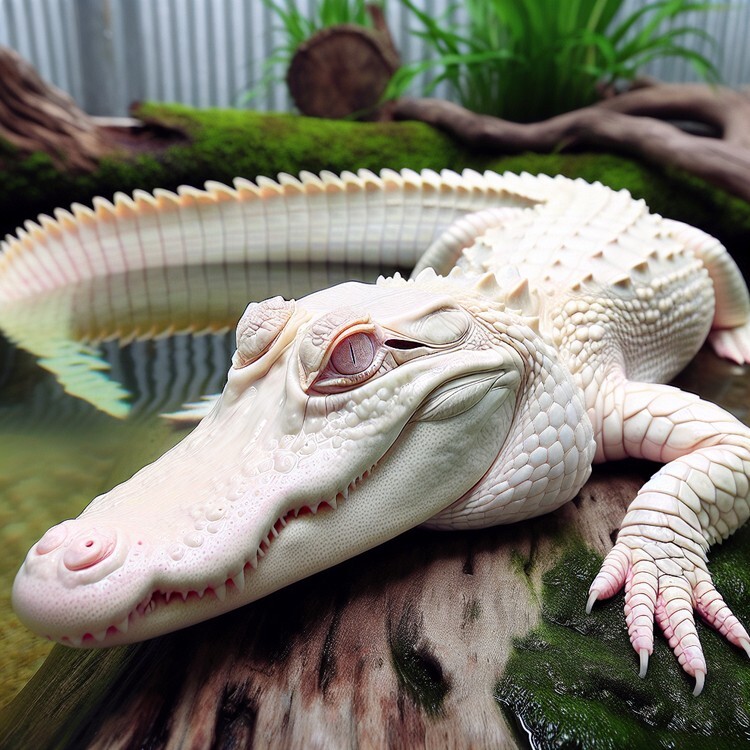
A super rare alligator was born at a wildlife park in Orlando, Florida. This special alligator is one of only seven in the whole world. It's called a leucistic alligator, which means it has a partial loss of color. Unlike albino alligators, which have pink eyes and no color at all, leucistic alligators are just really pale. The president of the park said this is an incredibly rare event and it's really amazing.
Leucistic alligators are really cool to see because they look so different from regular alligators. This new baby alligator is getting a lot of attention from experts and the public. It's a reminder of how diverse and awesome nature is.
The birth of this special alligator is a reminder that we need to take care of wildlife. We have to protect these incredible animals and the places they live. The wildlife park where the alligator was born is important because it teaches people about conservation and shows them how amazing nature is.
This baby alligator is one of only seven in the whole world. It's a really special animal and we should be happy about its birth. It reminds us how beautiful and unique animals can be. We need to make sure we take care of these rare and amazing creatures so that future generations can enjoy them too.
Original news source: See 'beyond rare' white baby alligator born in US (BBC)
🎧 Listen:
📖 Vocabulary:
Group or Classroom Activities
Warm-up Activities:
– Word Association
Instructions:
1. Divide the class into pairs or small groups.
2. Give each group a few minutes to brainstorm words that they associate with the concept of a rare alligator.
3. After the brainstorming session, have each group share their word associations with the class.
4. Encourage discussion and explanation of the connections between the words and the concept of a rare alligator.
– News Summary
Instructions:
1. Provide each student with a copy of the article.
2. Ask students to read the article individually and take notes on the key points.
3. After reading, divide the class into pairs or small groups.
4. Have students take turns summarizing the article to their partners or group members.
5. Encourage discussion and ask follow-up questions to check comprehension.
– Opinion Poll
Instructions:
1. Write two statements on the board: "The birth of the rare alligator is a cause for celebration" and "The birth of the rare alligator is not a big deal."
2. Divide the class into two groups and assign each group one of the statements.
3. Give students a few minutes to discuss and form opinions within their groups.
4. Conduct a class poll by asking each student to stand up and state whether they agree or disagree with the statement assigned to their group.
5. After the poll, facilitate a class discussion where students can share their opinions and provide reasons for their stance.
– Sketch It
Instructions:
1. Divide the class into pairs.
2. Give each pair a piece of paper and a pen or pencil.
3. Ask one student in each pair to describe the rare alligator from the article to their partner, while the partner sketches what they hear.
4. After a few minutes, have the students switch roles.
5. Encourage students to compare their sketches and discuss any differences or similarities.
– Future Predictions
Instructions:
1. Ask students to imagine and discuss what they think the future holds for the rare alligator species.
2. Divide the class into small groups and give each group a few minutes to brainstorm and write down their predictions.
3. After the brainstorming session, have each group share their predictions with the class.
4. Encourage discussion and ask follow-up questions to explore the students' reasoning behind their predictions.
🤔 Comprehension Questions:
A leucistic alligator has a partial loss of color, while an albino alligator has pink eyes and no color at all.
The birth of this alligator is considered rare and amazing because there are only seven leucistic alligators in the whole world.
Leucistic alligators are really pale and look different from regular alligators, which have darker coloration.
This baby alligator is getting a lot of attention from experts and the public because it is a rare and special animal.
The birth of this special alligator reminds us about the beauty and uniqueness of animals.
It is important to protect wildlife and their habitats because they play a crucial role in maintaining the balance of ecosystems and preserving biodiversity.
There are only seven leucistic alligators in the whole world.
We should take care of rare and amazing creatures like this alligator because they are part of our natural heritage and future generations should have the opportunity to appreciate and enjoy them.
🎧✍️ Listen and Fill in the Gaps:
A super rare alligator was born at a wildlife park in Orlando, Florida. This special alligator is one of only seven in the whole . It's called a leucistic alligator, which means it has a loss of color. Unlike , which have pink eyes and no color at all, leucistic alligators are just really pale. The of the park said this is an incredibly rare and it's really amazing. alligators are really cool to see because they look so different from regular alligators. This new baby alligator is getting a lot of attention from experts and the . It's a reminder of how diverse and nature is. The of this special alligator is a reminder that we need to take care of wildlife. We have to protect these animals and the they live. The wildlife park where the alligator was born is important because it teaches people about conservation and shows them how amazing nature is. This baby alligator is one of only seven in the whole world. It's a really special animal and we should be about its birth. It us how beautiful and unique can be. We need to make sure we take care of these rare and amazing creatures so that generations can enjoy them too.
💬 Discussion Questions:
1. What is a leucistic alligator?
2. How would you feel if you saw a leucistic alligator in person?
3. Do you like animals? Why or why not?
4. What do you think makes this alligator so special?
5. How do you think the public is reacting to the birth of this alligator?
6. Have you ever seen an animal that looked different from others of its kind? How did it make you feel?
7. Do you think it's important to protect and take care of wildlife? Why or why not?
8. Why do you think the wildlife park is important in teaching people about conservation?
9. How do you think future generations will feel if they can't see these rare and amazing creatures?
10. Have you ever been to a wildlife park? If so, what was your favorite part?
11. Do you think it's possible for alligators to live in other parts of the world? Why or why not?
12. What other types of rare animals do you know about?
13. How do you think the birth of this alligator can inspire people to care more about nature?
14. Would you like to work at a wildlife park? Why or why not?
15. What can we do as individuals to help protect and conserve wildlife?
Individual Activities
📖💭 Vocabulary Meanings:
Click a dot next to a word, then click the dot next to its meaning to draw a line connecting them.
Words
Meanings
🔡 Multiple Choice Questions:
🕵️ True or False Questions:
📝 Write a Summary:
Write a summary of this news article in two sentences.
Check your writing now with the best free AI for English writing!