

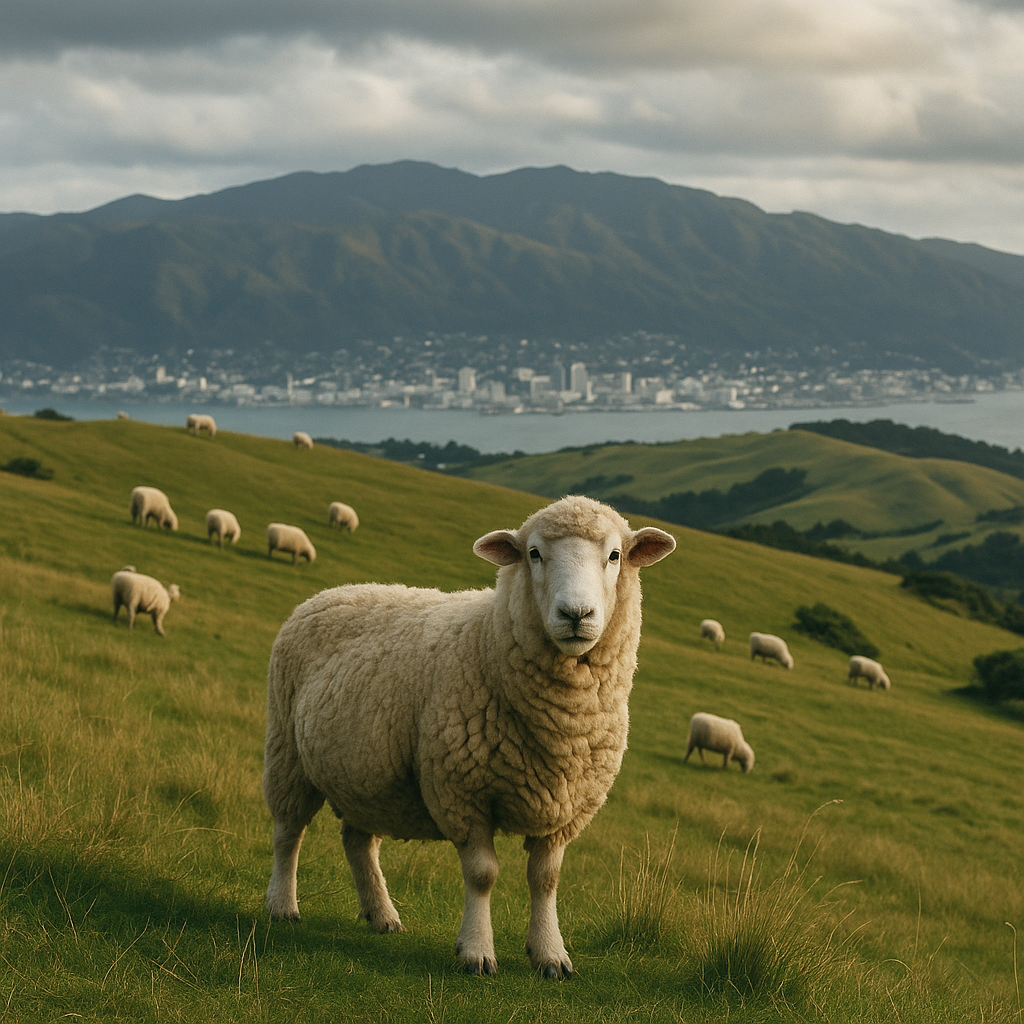
Wellington, New Zealand, is famous for having a lot more sheep than people, which has become a funny topic for New Zealanders living in other countries. Right now, there are about 23.6 million sheep and only 5.3 million people in New Zealand. This means there are around 4.5 sheep for every person. However, this number has dropped a lot since 1982, when there were about 22 sheep for each person. This change shows how farming in New Zealand has evolved over the years.
Sheep farming has been really important for New Zealand's economy for a long time. Back in 1982, there were over 70 million sheep and only 3.2 million people. The sheep industry provided meat and wool, and it helped shape how the world saw New Zealand, especially before the tourism boom from the "Lord of the Rings" movies. Pictures of green fields filled with sheep and beautiful mountains became a big part of New Zealand's image.
Recently, the sheep industry has faced some tough problems. Global wool prices have dropped because many people are choosing synthetic materials instead. This has made farmers rethink how they run their farms. Because of this, the number of sheep has gone down, and dairy farming has become more popular in New Zealand. In 2023, it was reported that there were less than five sheep for every person for the first time, which is a worrying sign for traditional sheep farming.
To deal with these changes, many farmers are looking for more profitable options, like dairy farming or turning their land into pine forests to sell carbon offsets. Toby Williams, a spokesperson for a farmers' group, is worried that the wool industry might be in serious trouble and could disappear in its current form. This change shows a bigger shift in what New Zealand is focusing on in agriculture. The government is trying to help the wool industry by encouraging the use of local wool in public buildings and limiting the conversion of farmland to carbon forestry, but experts are unsure if these efforts will be enough to stop the decline in sheep numbers. Australia is facing a similar situation, where sheep also outnumber people, but their sheep population is decreasing too.
Original news source: Yes, New Zealand still has more sheep than people. But humans are catching up (AP News)
🎧 Listen:
📖 Vocabulary:
Group or Classroom Activities
Warm-up Activities:
– CHARADES
Instructions: Students will take turns acting out key terms related to the article (e.g., sheep, farming, wool, tourism) without speaking, while the rest of the class guesses the word. This activity helps enhance vocabulary and communication skills.
– OPINION POLL
Instructions: Create a few statements based on the article (e.g., "Wool production is more important than dairy farming"). Students will walk around the classroom, asking their classmates whether they agree or disagree with each statement. This encourages speaking practice and critical thinking.
– HEADLINE CREATION
Instructions: In groups, students will create catchy headlines for the article that capture its main themes. After discussing their ideas, each group will present their headline and explain their reasoning. This promotes creativity and summarization skills.
– MIND MAP
Instructions: On a large sheet of paper or a whiteboard, students will work together to create a mind map that outlines the article's main ideas, including the history of sheep farming, economic impact, and current challenges. This visual activity helps with comprehension and organization of information.
– FUTURE PREDICTIONS
Instructions: After discussing the article, students will write down their predictions about the future of sheep farming in New Zealand. They should consider factors like market trends and environmental issues. Students will then share their predictions in small groups, facilitating discussion and speaking practice.
🤔 Comprehension Questions:
The current ratio is about 4.5 sheep for every person. In 1982, the ratio was about 22 sheep for each person, showing a significant decrease over the years.
Historically, sheep farming has been very important for New Zealand's economy by providing meat and wool, and it helped shape the country's image internationally, especially before tourism became popular.
Consumer preferences have shifted towards synthetic materials, which has led to a drop in global wool prices, negatively impacting the wool industry in New Zealand.
Some farmers are considering dairy farming or converting their land into pine forests to sell carbon offsets as more profitable options.
Toby Williams is worried that the wool industry might be in serious trouble and could potentially disappear in its current form due to the decline in sheep numbers and changing market conditions.
The government is trying to support the wool industry by promoting the use of local wool in public buildings and limiting the conversion of farmland to carbon forestry.
The "Lord of the Rings" movies helped create a strong image of New Zealand, showcasing its beautiful landscapes filled with green fields and mountains, which attracted more tourists.
Australia is facing a similar situation, where sheep also outnumber people, but their sheep population is also decreasing, just like in New Zealand.
🎧✍️ Listen and Fill in the Gaps:
Wellington, New , is famous for having a lot more sheep than , which has become a funny topic for New Zealanders living in other . Right now, there are about 23.6 million sheep and only 5.3 million people in New Zealand. This means there are around 4.5 sheep for every person. However, this has dropped a lot since 1982, when there were about 22 sheep for each person. This change shows how farming in New Zealand has evolved over the years. Sheep farming has been really important for New Zealand's economy for a long time. Back in 1982, there were over 70 million sheep and only 3.2 million people. The sheep industry provided meat and wool, and it helped shape how the world saw New Zealand, especially before the boom from the "Lord of the Rings" movies. Pictures of fields filled with sheep and mountains became a big part of New Zealand's . Recently, the sheep industry has faced some tough problems. Global wool prices have dropped because many people are choosing synthetic materials instead. This has made farmers rethink how they run their farms. Because of this, the number of sheep has gone down, and dairy farming has become more in New Zealand. In 2023, it was reported that there were less than five sheep for every for the first time, which is a worrying sign for traditional sheep farming. To deal with these changes, many farmers are looking for more profitable , like dairy farming or turning their land into pine forests to sell carbon offsets. Toby Williams, a spokesperson for a farmers' , is worried that the wool industry might be in serious and could disappear in its current form. This change shows a bigger shift in what New Zealand is focusing on in agriculture. The is trying to help the wool industry by encouraging the use of local wool in public buildings and limiting the conversion of farmland to carbon forestry, but experts are unsure if these will be enough to stop the decline in sheep numbers. is facing a similar situation, where sheep also outnumber people, but their sheep population is decreasing too.
💬 Discussion Questions:
1. What is your opinion on the idea of having more sheep than people in a country?
2. How would you feel if you lived in a place where there were a lot more animals than people?
3. Do you think it's important for a country to have a strong farming industry? Why or why not?
4. Have you ever visited a farm or seen farm animals? What was your experience like?
5. What is your favorite type of animal, and why do you like it?
6. Do you think synthetic materials are better than natural materials like wool? Why or why not?
7. How would you feel if you had to change your job because the industry you worked in was declining?
8. Do you think the government should support traditional industries like sheep farming? Why or why not?
9. What is a popular product from your country that you think should be promoted more?
10. Have you ever seen a movie that changed how you view a place or culture? What was it?
11. Do you think people should focus more on sustainable farming practices? Why or why not?
12. How would you feel if your favorite food became too expensive or hard to find?
13. What is a challenge that farmers in your country face today?
14. Do you think it's important to protect traditional farming practices? Why or why not?
15. How would you feel if you had to choose between eating meat and supporting local farmers?
Individual Activities
📖💭 Vocabulary Meanings:
Click a dot next to a word, then click the dot next to its meaning to draw a line connecting them.
Words
Meanings
🔡 Multiple Choice Questions:
🕵️ True or False Questions:
📝 Write a Summary:
Write a summary of this news article in two sentences.
Check your writing now with the best free AI for English writing!