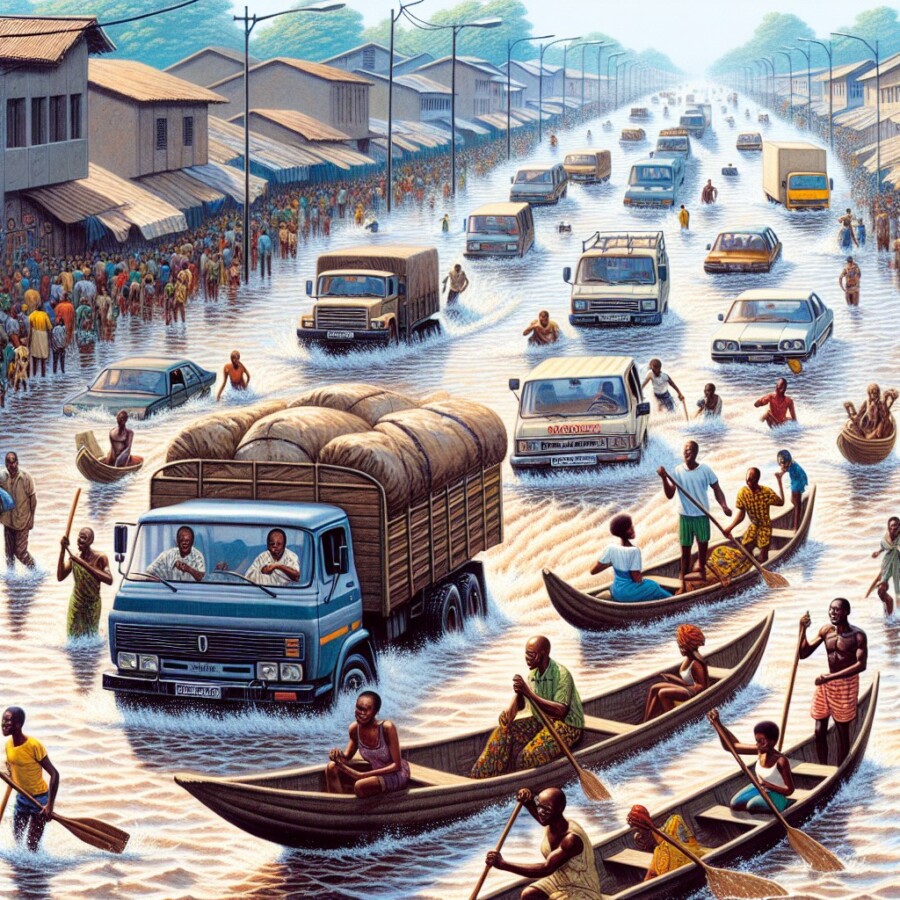
Because there isn't enough water, the meadows where farmers keep their pashmina goats are getting smaller. This means it's not worth it for the farmers to keep so many goats, so they're giving up their traditional jobs and moving to other parts of India to find different work. The people who grow apricots are also struggling to find water for their crops, so they're leaving Ladakh too. The changing landscape and lack of water are really affecting the lives of the people in Ladakh.
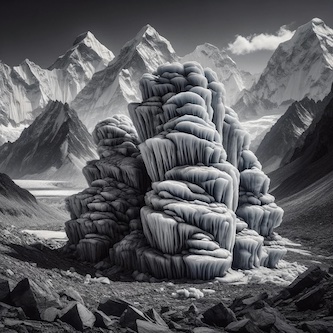
But there is some hope for Ladakh. An engineer named Sonam Wangchuk came up with a clever idea to help with the water shortage. He and his team made ice stupas, which are big cones of ice. They can be over 100 feet tall and they provide water for the community during the dry spring season. The ice stupas are not only helpful, but they're also fun. People have competitions to see who can make the tallest stupa every year.
Wangchuk says that just having new inventions isn't enough to solve the problem of climate change. He wants to use the ice stupas to make people aware of the need to change their behavior and to show that it's not fair that the people in Ladakh are suffering because of pollution caused by other countries. Climate change is a problem for the whole world, so it's really important for countries to work together to fight it and protect places like Ladakh.
Original news source: Climate change: The villagers building 100ft ice towers (BBC)
📖 Vocabulary:
Group or Classroom Activities
Warm-up Activities:
– News Summary
Instructions: Divide the class into pairs. Each pair will read the article together and then summarize the main points in a news format. They can take turns being the news anchor and the reporter. After they have prepared their news summary, they will present it to the rest of the class.
– Opinion Poll
Instructions: Divide the class into groups of four. Each group will discuss the following question: "Do you think it is important for countries to work together to fight climate change? Why or why not?" After discussing, each group will take turns presenting their opinions to the class. The rest of the class can ask questions or provide counterarguments.
– Vocabulary Pictionary
Instructions: Prepare a list of vocabulary words from the article (e.g. climate change, floods, glaciers, meadows, inventions). Divide the class into pairs. One student from each pair will choose a word from the list and draw a picture to represent it, while the other student guesses the word. They can switch roles after each word. The pair with the most correct guesses wins.
– Speed Summarizing
Instructions: Divide the class into pairs. Give each pair a copy of the article. Set a timer for 3 minutes. Each pair will take turns summarizing the article to their partner within the time limit. After 3 minutes, they will switch roles. The pair with the most accurate and concise summary wins.
– Future Predictions
Instructions: In small groups, students will discuss and make predictions about the future of Ladakh and other regions affected by climate change. They can discuss potential solutions, challenges, and possible outcomes. Each group will present their predictions to the class and engage in a group discussion.
🤔 Comprehension Questions:
The Ladakh region is facing the problem of climate change.
Floods used to happen once every 70 years in Ladakh.
Now, floods happen four times in less than 10 years in Ladakh.
Climate change has caused the floods and other changes in Ladakh.
Farmers in Ladakh are giving up their traditional jobs because there isn't enough water for their pashmina goats, which makes it not worth it to keep so many goats.
People who grow apricots are leaving Ladakh because they are struggling to find water for their crops.
Ice stupas are big cones of ice that can be over 100 feet tall. They help with the water shortage by providing water for the community during the dry spring season.
Sonam Wangchuk wants to use the ice stupas to make people aware of the need to change their behavior and to show that it's not fair that the people in Ladakh are suffering because of pollution caused by other countries.
🎧✍️ Listen and Fill in the Gaps:
The Ladakh region in northern India is facing a big problem: change. In the past, Ladakh had lots of sunny days and hardly any rain, so floods were very rare. But now, because of climate change, there have been terrible floods. They used to happen once every 70 years, but now they happen four in less than 10 years. The climate has also caused unpredictable and the melting of glaciers, which means there isn't enough water and it's affecting the people who live there. Because there isn't enough water, the meadows where keep their pashmina goats are smaller. This means it's not worth it for the farmers to keep so many goats, so they're giving up their traditional jobs and moving to parts of India to find different work. The people who grow apricots are also to find water for their crops, so they're leaving Ladakh too. The changing landscape and lack of water are really affecting the lives of the people in Ladakh. But there is some hope for Ladakh. An engineer Sonam came up with a clever idea to help with the water shortage. He and his team made ice , which are big cones of ice. They can be over 100 feet tall and they provide water for the during the dry spring season. The ice stupas are not only helpful, but they're also fun. People have competitions to see who can make the tallest stupa every year. Wangchuk says that just new inventions isn't enough to solve the problem of climate change. He wants to use the ice stupas to make aware of the need to change their behavior and to show that it's not fair that the people in are suffering because of pollution caused by other countries. Climate change is a problem for the whole world, so it's really important for countries to work together to fight it and protect like Ladakh.
💬 Discussion Questions:
1. What is climate change and why is it a problem?
2. How do you think the floods in Ladakh have affected the people who live there?
3. Do you think it is fair that the people in Ladakh are suffering because of pollution caused by other countries? Why or why not?
4. How would you feel if you had to give up your traditional job and move to a different place for work?
5. Do you think it's important for countries to work together to fight climate change? Why or why not?
6. What do you think about the idea of making ice stupas to help with the water shortage in Ladakh?
7. How do you think the ice stupas are helpful to the community in Ladakh?
8. Why do you think people have competitions to see who can make the tallest stupa every year?
9. Do you think inventions alone can solve the problem of climate change? Why or why not?
10. How do you think the changing landscape and lack of water are affecting the lives of the people in Ladakh?
11. What other ways do you think people can raise awareness about climate change?
12. How do you think the meadows getting smaller is affecting the farmers and their pashmina goats?
13. If you were living in Ladakh, what would you do to cope with the water shortage?
14. Do you like the idea of the ice stupas being both helpful and fun? Why or why not?
15. How do you think the melting of glaciers is affecting the water supply in Ladakh?
Individual Activities
📖💭 Vocabulary Meanings:
Click a dot next to a word, then click the dot next to its meaning to draw a line connecting them.
Words
Meanings
🔡 Multiple Choice Questions:
🕵️ True or False Questions:
📝 Write a Summary:
Write a summary of this news article in two sentences.
Check your writing now with the best free AI for English writing!