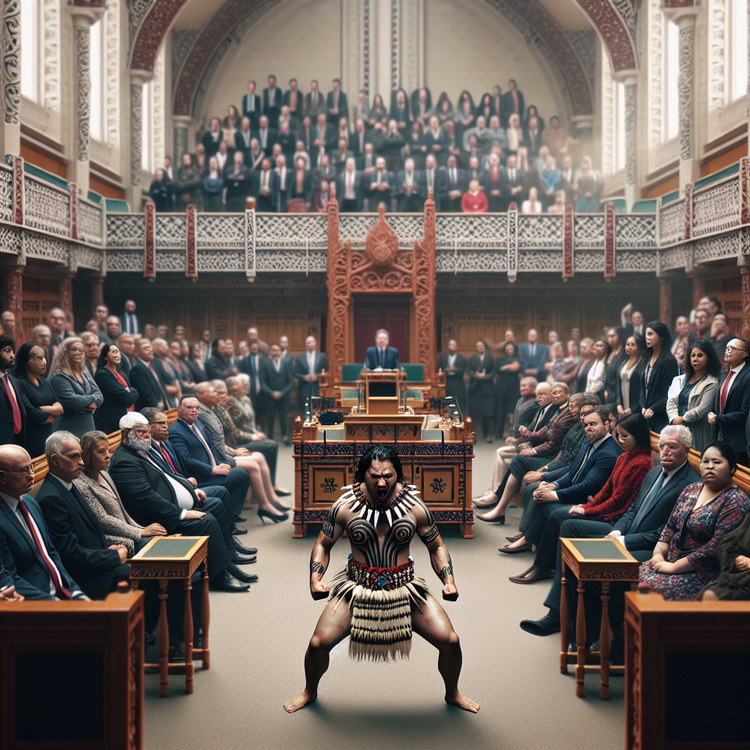
The haka is a big deal in Maori culture. It's done on important occasions to show pride and identity. Waititi's decision to do the haka before taking his oath was seen as a strong statement of his commitment to Maori rights. It also got people talking about the role of Maori culture and language in New Zealand's government and society.
Some people think it's really important to protect and celebrate Maori culture because it's a big part of New Zealand's identity. Others think it's not necessary and causes division. The controversy around affirmative action policies and the use of the Maori language shows that Maori people are still fighting for recognition and equality in New Zealand.
Waititi's haka got mixed reactions. Some people thought it was powerful and meaningful, while others thought it was disrespectful to break the rules of the ceremony. But no matter what people think, Waititi's haka has started a conversation about Maori rights and the place of indigenous cultures in New Zealand.
Original news source: Watch: Maori MP performs haka before swearing oath to King (BBC)
🎧 Listen:
📖 Vocabulary:
Group or Classroom Activities
Warm-up Activities:
– News Summary
Instructions: Divide the class into pairs or small groups. Give each group a few minutes to read the article. Then, ask them to summarize the main points of the article in 2-3 sentences. Afterward, have each group share their summaries with the class.
– Opinion Poll
Instructions: Create a list of statements related to the article, such as "I think it's important to protect and celebrate indigenous cultures in a country." Have students move to different areas of the classroom to indicate their level of agreement or disagreement with each statement. Once students are in their chosen spots, encourage them to discuss their opinions in small groups and share their reasons for their positions.
– Vocabulary Pictionary
Instructions: Select key vocabulary words from the article, such as "haka," "Maori," "affirmative action," etc. Divide the class into teams and give each team a set of vocabulary words. One student from each team will come to the front of the class and draw a picture to represent one of the words, while their teammates try to guess the word. The team with the most correctly guessed words wins.
– Pros and Cons
Instructions: Divide the class into two groups. One group will discuss the pros of Waititi's haka, while the other group will discuss the cons. Give students a few minutes to brainstorm their ideas, and then have them share their points with the opposite group. Encourage respectful debate and ask students to consider different perspectives.
– Future Predictions
Instructions: In pairs or small groups, have students discuss and make predictions about the future impact of Waititi's haka. Will it lead to more recognition and rights for Maori people? Will it change the way indigenous cultures are viewed in New Zealand? After their discussions, have each group share their predictions with the class and facilitate a class discussion about the possibilities.
🤔 Comprehension Questions:
He did a traditional Maori dance called a haka.
He wanted to show that he cares about Maori rights and wants to bring attention to the issues that Maori people face.
The haka represents strength and unity in Maori culture. It is a way for Maori people to show pride and identity.
Some people thought it was powerful and meaningful, while others thought it was disrespectful to break the rules of the ceremony.
Some people think it's really important to protect and celebrate Maori culture because it's a big part of New Zealand's identity. Others think it's not necessary and causes division.
The controversy shows that Maori people are still fighting for recognition and equality in New Zealand.
People had mixed reactions. Some thought it was powerful and meaningful, while others thought it was disrespectful to break the rules of the ceremony.
Waititi's haka started a conversation about Maori rights and the place of indigenous cultures in New Zealand. It got people talking about the role of Maori culture and language in the government and society.
🎧✍️ Listen and Fill in the Gaps:
A politician in New named Rawiri Waititi did something pretty cool when he was being sworn into . Instead of just saying some words, he did a dance called a haka. The haka is a way for Maori people to show their strength and unity. Waititi wanted to show that he cares about Maori rights and wants to bring attention to the issues that Maori face. The haka is a big deal in Maori culture. It's done on important occasions to show pride and . Waititi's decision to do the haka before his oath was seen as a strong statement of his commitment to Maori rights. It also got people talking about the role of Maori culture and in New Zealand's government and . Some people think it's really important to protect and celebrate Maori culture because it's a big part of New Zealand's identity. think it's not necessary and causes . The controversy around affirmative policies and the use of the Maori language shows that Maori people are still fighting for recognition and in New Zealand. Waititi's haka got reactions. Some people thought it was and meaningful, while others thought it was disrespectful to break the rules of the . But no matter what people think, Waititi's haka has started a conversation about Maori rights and the place of indigenous cultures in New Zealand.
💬 Discussion Questions:
1. What is a haka and why is it important in Maori culture?
2. How would you feel if you were in parliament and someone did a traditional dance like the haka during the ceremony?
3. Do you think it's important for politicians to show their commitment to the rights of indigenous people? Why or why not?
4. What do you think about the controversy surrounding the use of the Maori language and affirmative action policies in New Zealand?
5. How do you think Waititi's haka has started a conversation about Maori rights and indigenous cultures in New Zealand?
6. What is your opinion on protecting and celebrating indigenous cultures as part of a country's identity?
7. How do you think the haka can be a powerful way to show pride and identity?
8. Do you think it's disrespectful to break the rules of a ceremony, like Waititi did with his haka? Why or why not?
9. How do you think indigenous cultures can be better recognized and given equality in society?
10. What are some ways that governments can support and promote the rights of indigenous peoples?
11. Do you think it's important for politicians to use their position to bring attention to the issues faced by marginalized communities? Why or why not?
12. How can cultural traditions, like the haka, help to bridge divides and bring people together?
13. What do you think about the role of indigenous languages in government and society?
14. How would you feel if your own cultural traditions were not recognized or celebrated in your country?
15. Do you think it's important for young people to learn about and appreciate the cultures of indigenous peoples? Why or why not?
Individual Activities
📖💭 Vocabulary Meanings:
Click a dot next to a word, then click the dot next to its meaning to draw a line connecting them.
Words
Meanings
🔡 Multiple Choice Questions:
🕵️ True or False Questions:
📝 Write a Summary:
Write a summary of this news article in two sentences.
Check your writing now with the best free AI for English writing!