

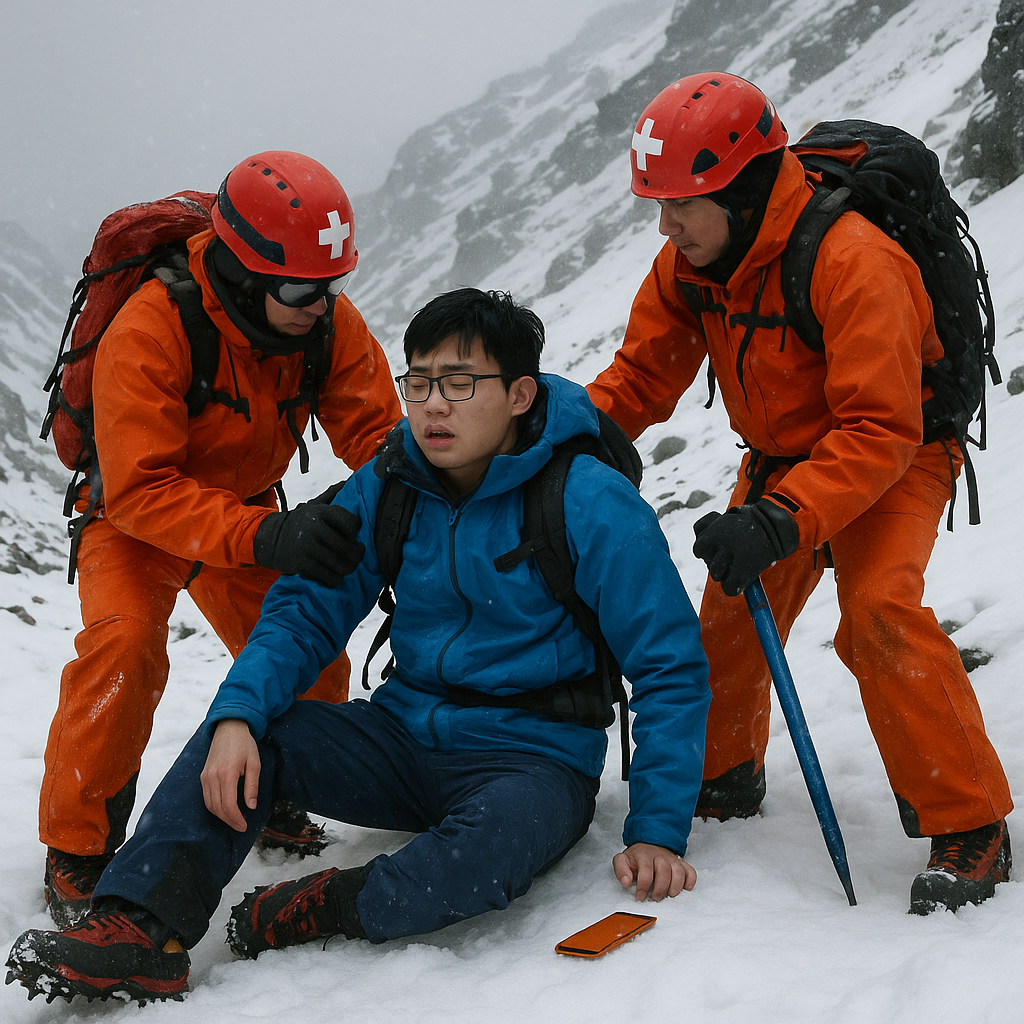
A 27-year-old student from China recently caught the attention of the media after needing to be rescued from Mount Fuji in Japan two times in just four days. The first rescue happened on April 22 when the student, who has not been named, called for help because he was suffering from altitude sickness while climbing the Fujinomiya trail. This trail goes up to about 3,000 meters (almost 10,000 feet) high. The incident occurred during the mountain's off-season, a time when climbers are warned about the harsh weather conditions that can happen.
Just four days after his first rescue, the student went back to Mount Fuji to look for his phone and other things he had left behind. Unfortunately, he got altitude sickness again and was found unable to move by another climber. This led to a second emergency call for help, and the rescue team quickly came to assist him once more.
Many people on social media reacted strongly to this situation, with some saying the student should face consequences for going back to the mountain after his first rescue. While there are no official penalties for climbers who need help, the public's reaction shows a concern for safety and responsibility when it comes to outdoor activities. The Shizuoka police have reminded all climbers to be careful, especially since low temperatures and snow can still be present in spring.
Mount Fuji's hiking trails are only officially open from July to early September, but there isn’t a complete ban on climbing during the off-season. Local authorities have started charging entry fees and limiting the number of climbers on the most popular trail, with plans to do the same for other trails later this year. However, climbing during the off-season and off-trail is still free, which raises questions about safety for those who choose to hike outside of the official season. This incident highlights the risks of mountain climbing and the importance of being prepared and paying attention to safety warnings.
Original news source: Student rescued from mountain twice in four days – after going back to find his phone (Sky News)
🎧 Listen:
📖 Vocabulary:
Group or Classroom Activities
Warm-up Activities:
– CHARADES
Instructions: Divide the students into two teams. Give each team a set of phrases related to mountain climbing and rescue operations (e.g., altitude sickness, rescue team, hiking gear). One member from each team will act out the phrase without speaking while their team tries to guess what it is.
– OPINION POLL
Instructions: Pose a question to the class related to the article, such as "Should climbers face penalties for needing rescue?" Students will walk around the room, asking their classmates for their opinions and tallying the results. Afterward, have a discussion about the different viewpoints shared.
– MIND MAP
Instructions: On a large piece of paper or a whiteboard, write "Mountain Climbing Risks" in the center. Students will work in small groups to brainstorm and add branches related to risks, safety measures, and consequences of climbing during the off-season. Each group will then present their mind map to the class.
– HEADLINE CREATION
Instructions: Ask students to create a catchy headline for the article that captures its essence. They can work individually or in pairs. After they’ve crafted their headlines, students will share them with the class, and the class can vote on the most engaging one.
– VOCABULARY PICTIONARY
Instructions: Choose key vocabulary words from the article (e.g., altitude, rescue, consequences). Divide the class into small groups and give each group a few words to illustrate. One member will draw the word while the others guess what it is, promoting vocabulary recall and understanding through visual representation.
🤔 Comprehension Questions:
The student needed to be rescued twice in four days due to altitude sickness while climbing Mount Fuji.
The Fujinomiya trail goes up to about 3,000 meters (almost 10,000 feet) high.
He went back to look for his phone and other belongings that he had left behind during his first climb.
Many people reacted strongly, with some saying the student should face consequences for returning after his first rescue, showing concern for safety and responsibility.
The Shizuoka police reminded climbers to be careful due to the potential for harsh weather conditions, including low temperatures and snow in spring.
Mount Fuji's hiking trails are officially open from July to early September.
Local authorities plan to charge entry fees and limit the number of climbers on the most popular trail, with plans to do the same for other trails later this year.
This incident highlights the risks of mountain climbing and the need for climbers to be prepared and pay attention to safety warnings.
🎧✍️ Listen and Fill in the Gaps:
A 27-year-old student from China recently caught the attention of the media after needing to be rescued from Mount Fuji in Japan two times in just four days. The first rescue happened on April 22 when the student, who has not been , for help because he was suffering from sickness while climbing the Fujinomiya trail. This trail goes up to about 3,000 meters (almost 10,000 feet) high. The occurred during the mountain's off-season, a time when climbers are warned about the weather conditions that can happen. Just four days after his first , the student went back to Mount Fuji to look for his phone and other things he had left behind. Unfortunately, he got altitude sickness again and was found unable to move by another climber. This led to a second emergency call for help, and the rescue team quickly came to him once more. Many people on social reacted strongly to this situation, with some saying the student should face consequences for back to the mountain after his first rescue. While there are no penalties for climbers who need help, the public's reaction shows a concern for and responsibility when it comes to outdoor activities. The Shizuoka police have reminded all climbers to be careful, especially since low and snow can still be present in spring. Mount Fuji's hiking trails are only officially open from July to early September, but there isn’t a complete ban on climbing during the off-. Local authorities have started charging entry fees and limiting the number of climbers on the most popular , with plans to do the same for other trails later this year. However, climbing during the off-season and off-trail is still free, which raises questions about safety for those who choose to hike outside of the official season. This incident highlights the risks of climbing and the importance of being prepared and paying to safety warnings.
💬 Discussion Questions:
1. What is your opinion on climbing mountains during the off-season?
2. How would you feel if you had to be rescued while climbing a mountain?
3. Do you think it's responsible to go back to a dangerous place after having a bad experience? Why or why not?
4. Have you ever done something risky or dangerous? What happened?
5. What is a safety warning that you think is important to follow in outdoor activities?
6. How do you think social media influences people's opinions about situations like this rescue?
7. Do you like outdoor activities like hiking or climbing? Why or why not?
8. What do you think should happen to someone who repeatedly needs rescue in dangerous situations?
9. How would you feel if you were the climber who got altitude sickness twice?
10. Do you think the authorities should charge fees for climbing during the off-season? Why or why not?
11. What is your experience with heights? Do you enjoy being up high, or does it make you nervous?
12. How do you think climbers can better prepare themselves for challenges like altitude sickness?
13. Do you think it's fair for climbers to face criticism for their decisions in dangerous situations? Why or why not?
14. What is a lesson you think people can learn from this student's experience?
15. How do you feel about the idea of limiting the number of climbers on popular trails? Do you think it’s a good idea? Why or why not?
Individual Activities
📖💭 Vocabulary Meanings:
Click a dot next to a word, then click the dot next to its meaning to draw a line connecting them.
Words
Meanings
🔡 Multiple Choice Questions:
🕵️ True or False Questions:
📝 Write a Summary:
Write a summary of this news article in two sentences.
Check your writing now with the best free AI for English writing!