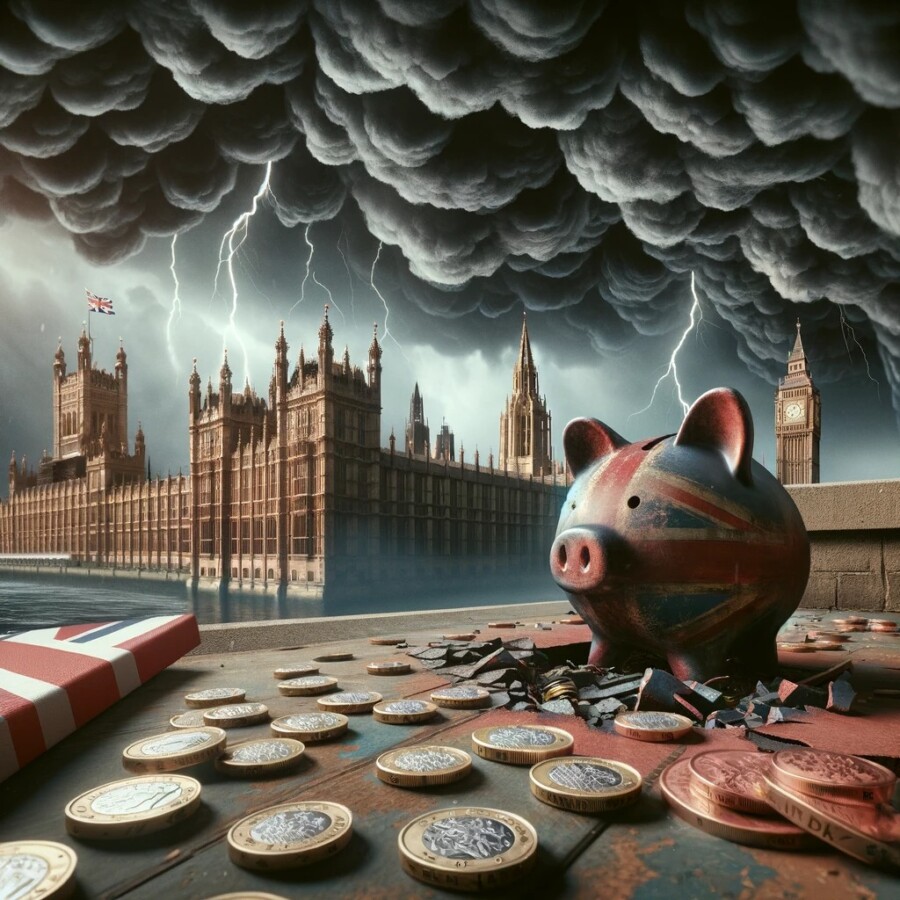
The UK is in danger of going into a recession because new information shows that the economy shrank between July and September. The numbers were revised and now show a 0.1% decrease, which is different from what was previously thought. This comes after no growth between April and June, which was originally reported as a 0.2% increase. A recession happens when the economy shrinks for two quarters in a row. People are worried about the UK's weak economic growth, and experts think that growth will stay slow until 2024.
When the economy is growing, it's usually a good thing because it means companies are making more money, there are more jobs available, and wages can go up. But when the economy is not growing or is shrinking, people tend to feel worse off. Companies might cut jobs, which makes it harder for young people to find work. The state of the economy is expected to be an important issue in the upcoming election.
The Bank of England has been raising interest rates to try to control inflation. But now that inflation is lower than expected, some people think the Bank might lower interest rates next year. Chancellor Jeremy Hunt is hopeful about the future of the UK economy, but the shadow chancellor, Rachel Reeves, says the prime minister hasn't done enough to help it grow. We won't know for sure if the UK is in a recession until February when the numbers for the last quarter of the year are released.
New information from the Office for National Statistics (ONS) shows that rising interest rates have made people spend less money. Higher interest rates can help with inflation and benefit people who save money, but they can also make it more expensive for people and businesses to borrow money, which affects the economy. The ONS also changed its numbers for the three months after getting more information. They found that sectors like film production, engineering and design, telecommunications, and smaller businesses in the hospitality and IT sectors didn't do as well as they thought.
Compared to other advanced economies in the G7, the UK's growth rate is one of the weakest when you look at the time before and after Covid. The UK's economy is now 1.4% higher than it was before the pandemic, which is less than what was previously thought. Germany currently has the worst economy based on this measure. Retail sales data from the ONS showed that sales were better than expected in November because of Black Friday discounts. But some retailers are worried about how long the sales last and how often things are discounted.
Original news source: UK at risk of recession after economy shrinks (BBC)
🎧 Listen:
📖 Vocabulary:
Group or Classroom Activities
Warm-up Activities:
– News Summary
Instructions: Divide the class into pairs or small groups. Give each group a few minutes to read the article. Then, ask each group to summarize the main points of the article in a few sentences. Afterward, have each group share their summaries with the rest of the class. Encourage discussion and clarification of any difficult vocabulary or concepts.
– Opinion Poll
Instructions: Have the class form two lines facing each other. Assign one side as "Agree" and the other side as "Disagree." Read out a statement related to the article, such as "The UK's weak economic growth is a major concern." Give the students a few seconds to decide if they agree or disagree with the statement, then have them move to the appropriate side. Once they have chosen their side, encourage them to discuss their reasons with the person facing them. After a couple of minutes, randomly select a few students to share their opinions with the class.
– Vocabulary Pictionary
Instructions: Divide the class into small groups. Give each group a list of vocabulary words from the article. One person from each group must draw a picture representing a word from the list, while the other group members try to guess the word. The person drawing cannot use any letters or numbers. The group that guesses the most words correctly wins.
– Pros and Cons
Instructions: Divide the class into two groups. Assign one group to represent the pros and the other group to represent the cons of the UK's weak economic growth. Give each group a few minutes to brainstorm their arguments and gather evidence from the article. Then, have each group take turns presenting their arguments to the class. Encourage respectful debate and discussion.
– Future Predictions
Instructions: In pairs or small groups, have the students discuss and make predictions about the future of the UK economy based on the information in the article. They should consider factors such as interest rates, inflation, and the upcoming election. After the discussion, ask each group to share their predictions with the class and explain their reasoning. Encourage critical thinking and analysis.
🤔 Comprehension Questions:
When the UK is in a recession, it means that the economy is shrinking for two quarters in a row. This is not a good thing because it can lead to job cuts and make it harder for people to find work.
When the economy is not growing or is shrinking, people tend to feel worse off because companies may cut jobs and wages may not increase. This makes it harder for people to make money and can lead to financial difficulties.
The Bank of England has been raising interest rates to control inflation. By raising interest rates, they make it more expensive for people and businesses to borrow money, which can help control inflation.
Lower interest rates can affect the economy by making it cheaper for people and businesses to borrow money. This can encourage spending and investment, which can help stimulate economic growth.
According to the Office for National Statistics, sectors such as film production, engineering and design, telecommunications, and smaller businesses in the hospitality and IT sectors did not perform as well as expected.
The UK's growth rate is one of the weakest compared to other advanced economies in the G7. This means that the UK's economy is not growing as quickly as countries like the United States, Germany, and Japan.
Sales were better than expected in November because of Black Friday discounts. Many retailers offered special deals and discounts, which encouraged people to spend more money.
Some retailers are worried about the frequency of sales and discounts because they may devalue their products and make it harder to sell them at full price. If sales and discounts happen too often, customers may start to expect them and be less willing to pay full price for items.
🎧✍️ Listen and Fill in the Gaps:
The UK is in danger of into a recession because new information shows that the shrank between July and September. The numbers were and now show a 0.1% decrease, which is different from what was previously thought. This comes after no growth between April and June, which was originally reported as a 0.2% increase. A recession when the economy shrinks for two quarters in a row. People are worried about the UK's weak economic growth, and experts think that growth will stay slow until 2024. When the economy is growing, it's usually a good thing because it means companies are making more money, there are more jobs available, and wages can go up. But when the economy is not growing or is shrinking, people tend to feel worse off. might cut jobs, which makes it harder for people to find work. The state of the economy is to be an important issue in the upcoming election. The Bank of England has been raising interest rates to try to control inflation. But now that inflation is lower than expected, some people the Bank might lower interest rates next year. Chancellor Jeremy Hunt is hopeful about the future of the UK economy, but the shadow chancellor, Rachel Reeves, says the prime minister hasn't done enough to help it grow. We won't know for sure if the UK is in a recession until February when the numbers for the last quarter of the year are released. New information from the Office for National Statistics (ONS) shows that rising interest rates have made people spend less money. Higher interest rates can help with inflation and benefit people who save money, but they can also make it more expensive for people and businesses to borrow money, which affects the economy. The ONS also changed its numbers for the three after getting more information. They found that sectors like film , and , telecommunications, and smaller in the hospitality and IT didn't do as well as they . Compared to other advanced economies in the G7, the UK's growth rate is one of the weakest when you look at the time before and after Covid. The UK's economy is now 1.4% higher than it was before the pandemic, which is less than what was previously thought. Germany currently has the worst economy based on this measure. Retail data from the ONS showed that sales were better than expected in November because of Black Friday discounts. But some retailers are worried about how long the sales last and how often things are discounted.
💬 Discussion Questions:
1. What is a recession and why is it a concern for a country?
2. How would you feel if you couldn't find a job because the economy was shrinking?
3. Do you think it's important for the economy to grow? Why or why not?
4. How do rising interest rates affect people's spending habits?
5. Do you think the government should lower interest rates to encourage spending? Why or why not?
6. Why is inflation a concern for the Bank of England?
7. How do interest rates affect borrowing money for individuals and businesses?
8. What do you think the government can do to help the UK economy grow?
9. How do you think the state of the economy will impact the upcoming election?
10. What sectors of the economy do you think were most affected by the pandemic?
11. How do you feel about Black Friday sales and discounts? Do you think they are good for the economy?
12. What measures can retailers take to encourage people to continue shopping after Black Friday?
13. How do you think the UK's economy compares to other countries in the G7?
14. What are some potential consequences of a weak economy for individuals and businesses?
15. How does economic growth impact job opportunities and wages?
Individual Activities
📖💭 Vocabulary Meanings:
Click a dot next to a word, then click the dot next to its meaning to draw a line connecting them.
Words
Meanings
🔡 Multiple Choice Questions:
🕵️ True or False Questions:
📝 Write a Summary:
Write a summary of this news article in two sentences.
Check your writing now with the best free AI for English writing!