

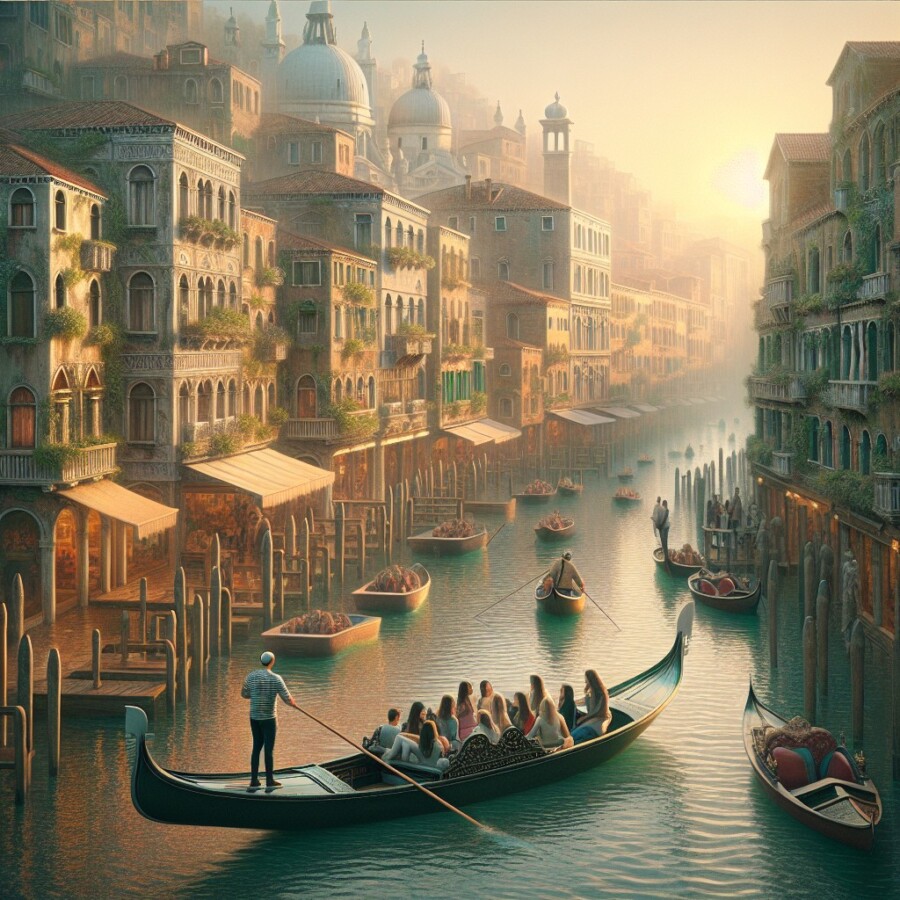
Venice, a super popular tourist spot in Europe, is making some changes to deal with the problem of too many tourists. Starting in June, the city will not allow loudspeakers and will limit tourist groups to 25 people at most. This is because Venice is a small city and had almost 13 million visitors in 2019, with even more expected in the future.
The ban on loudspeakers is to stop the confusion and noise caused by tour guides using microphones. The loud noise from big groups of tourists has been a big problem for the people who live there and the authorities. By limiting the size of tourist groups, the city hopes to manage the visitors better in the historic center. These changes are part of a bigger plan to balance tourism and protect Venice's cultural heritage.
Because of all the tourists, fewer people are living in Venice because they're worried about being overwhelmed. Groups of citizens have done studies to see how many places there are for tourists and locals to stay. The results show that there are now more than 50,000 beds for tourists, which is more than what's available for the people who live there. This has made people worried about how sustainable tourism is in the city.
Venice's struggle with too many tourists has gotten attention from around the world. In July, experts from UNESCO suggested that Venice should be added to a list of places in danger because of climate change and too many tourists. In the end, Venice wasn't added to the list, but it showed that there needs to be a plan to deal with the problems the city is facing.
Venice isn't the only place dealing with too many tourists. Other popular cities in Europe, like Florence and Rome, have made rules to manage the number of tourists. They've banned new vacation rentals in historic areas and given fines for bad behavior. Other famous places like Portofino in Italy and Athens in Greece have also made restrictions to protect their cultural heritage and manage the number of visitors.
In conclusion, Venice is taking steps to deal with too many tourists by banning loudspeakers and limiting the size of tourist groups. The city is trying to find a balance between tourism and protecting its cultural heritage. Other popular tourist spots are also making changes to manage the problems caused by too many visitors.
Original news source: Venice to ban large tourist groups and loudspeakers (BBC)
🎧 Listen:
📖 Vocabulary:
Group or Classroom Activities
Warm-up Activities:
– News Summary
Instructions: Divide the class into pairs or small groups. Give each group a copy of the article. Instruct them to read the article and summarize the main points in a few sentences. After they have finished, ask each group to share their summary with the class and discuss any differences or similarities in their summaries.
– Opinion Poll
Instructions: Write the following question on the board: "Do you think limiting the size of tourist groups is an effective solution to manage tourism in Venice?" Divide the class into pairs or small groups. Instruct them to discuss the question and come up with their opinions. Once they have finished, conduct an opinion poll by asking each pair or group to share their opinions with the class and explain their reasoning.
– Vocabulary Pictionary
Instructions: Write a list of vocabulary words from the article on the board (e.g. loudspeakers, tourist groups, cultural heritage, sustainable tourism, etc.). Divide the class into two teams. One member from each team will come to the front of the class and choose a word from the list. They must then draw a picture on the board to represent the word, while their team tries to guess what the word is. The team that guesses correctly gets a point. Continue until all the words have been used and tally up the points to determine the winning team.
– Speed Summarizing
Instructions: Divide the class into pairs or small groups. Give each group a copy of the article. Instruct them to take turns summarizing one paragraph of the article to their partner/group as quickly as possible, without reading directly from the article. The partner/group must then try to summarize the paragraph based on what they heard. After each round, discuss any differences or similarities in the summaries and clarify any misunderstandings.
– Keyword Taboo
Instructions: Write a list of keywords from the article on separate index cards or pieces of paper. Divide the class into two teams. One member from each team will come to the front of the class. Show them a keyword from the list, but they are not allowed to say the word or any derivatives of it. They must give clues to their team using synonyms, descriptions, or actions to help their team guess the keyword. The team that guesses correctly gets a point. Continue until all the keywords have been used and tally up the points to determine the winning team.
🤔 Comprehension Questions:
Venice is making changes because it has had a huge number of tourists, which is causing problems for the city and its residents.
Starting in June, Venice will ban the use of loudspeakers by tour guides.
The purpose of limiting the size of tourist groups is to better manage the visitors in the historic center of Venice and reduce the noise and confusion caused by large groups.
Fewer people are living in Venice because they are worried about being overwhelmed by the large number of tourists.
Experts from UNESCO suggested that Venice should be added to a list of places in danger due to climate change and too many tourists.
Some other popular cities in Europe that are dealing with too many tourists include Florence and Rome in Italy, as well as Portofino and Athens.
Other popular tourist spots have made changes such as banning new vacation rentals in historic areas and imposing fines for bad behavior.
Venice is trying to balance the needs of tourism with the protection of its cultural heritage.
🎧✍️ Listen and Fill in the Gaps:
Venice, a super popular tourist spot in Europe, is making some changes to deal with the problem of too many tourists. in June, the city will not allow and will limit tourist groups to 25 at most. This is because Venice is a small city and had almost 13 million visitors in 2019, with even more expected in the future. The ban on loudspeakers is to stop the confusion and noise caused by tour guides microphones. The loud noise from big groups of tourists has been a big problem for the people who live there and the authorities. By limiting the size of tourist groups, the city to manage the visitors better in the historic center. These changes are part of a bigger plan to tourism and protect Venice's heritage. Because of all the , fewer people are living in Venice because they're worried about being overwhelmed. Groups of citizens have done studies to see how many places there are for tourists and locals to stay. The results show that there are now more than 50,000 beds for tourists, which is more than what's available for the people who live there. This has made people worried about how tourism is in the city. Venice's struggle with too many tourists has gotten attention from around the world. In July, experts from suggested that Venice should be added to a list of places in danger because of climate change and too many tourists. In the end, Venice wasn't added to the list, but it showed that there to be a plan to deal with the problems the city is facing. Venice isn't the only place dealing with too many tourists. Other popular in Europe, like Florence and Rome, have made rules to manage the number of tourists. They've banned new rentals in historic areas and given fines for bad behavior. Other famous places like Portofino in Italy and Athens in Greece have also made to protect their cultural heritage and manage the number of visitors. In conclusion, Venice is taking steps to deal with too many tourists by banning loudspeakers and limiting the size of tourist . The city is trying to find a balance between tourism and protecting its cultural heritage. Other popular tourist spots are also changes to manage the problems caused by too many visitors.
💬 Discussion Questions:
1. What is a tourist group and why do you think Venice is limiting the size of them?
2. How would you feel if you lived in Venice and there were constantly loud and noisy tourist groups outside your home?
3. Do you think it's fair that there are more beds available for tourists than for the people who live in Venice? Why or why not?
4. What do you think could be the consequences of too many tourists for a city like Venice?
5. How do you think the ban on loudspeakers will help manage the visitors in Venice?
6. Do you think it's important for cities to protect their cultural heritage? Why or why not?
7. What are some other popular tourist spots that you know of that are facing similar problems with too many visitors?
8. If you were in charge of managing tourism in a popular city, what rules or restrictions would you put in place to manage the number of tourists?
9. How do you think tourism can impact the environment and climate change?
10. Have you ever been to a place that was overcrowded with tourists? How did it make you feel?
11. Do you think it's the responsibility of tourists to be respectful and considerate when visiting popular destinations? Why or why not?
12. What are some ways that you think tourists can help support the local economy of a city they are visiting?
13. How do you think the COVID-19 pandemic has affected tourism in popular destinations like Venice?
14. Do you think it's possible for a city to find a balance between tourism and protecting its cultural heritage? Why or why not?
15. If you could visit any popular tourist spot in the world, where would you go and why?
Individual Activities
📖💭 Vocabulary Meanings:
Click a dot next to a word, then click the dot next to its meaning to draw a line connecting them.
Words
Meanings
🔡 Multiple Choice Questions:
🕵️ True or False Questions:
📝 Write a Summary:
Write a summary of this news article in two sentences.
Check your writing now with the best free AI for English writing!