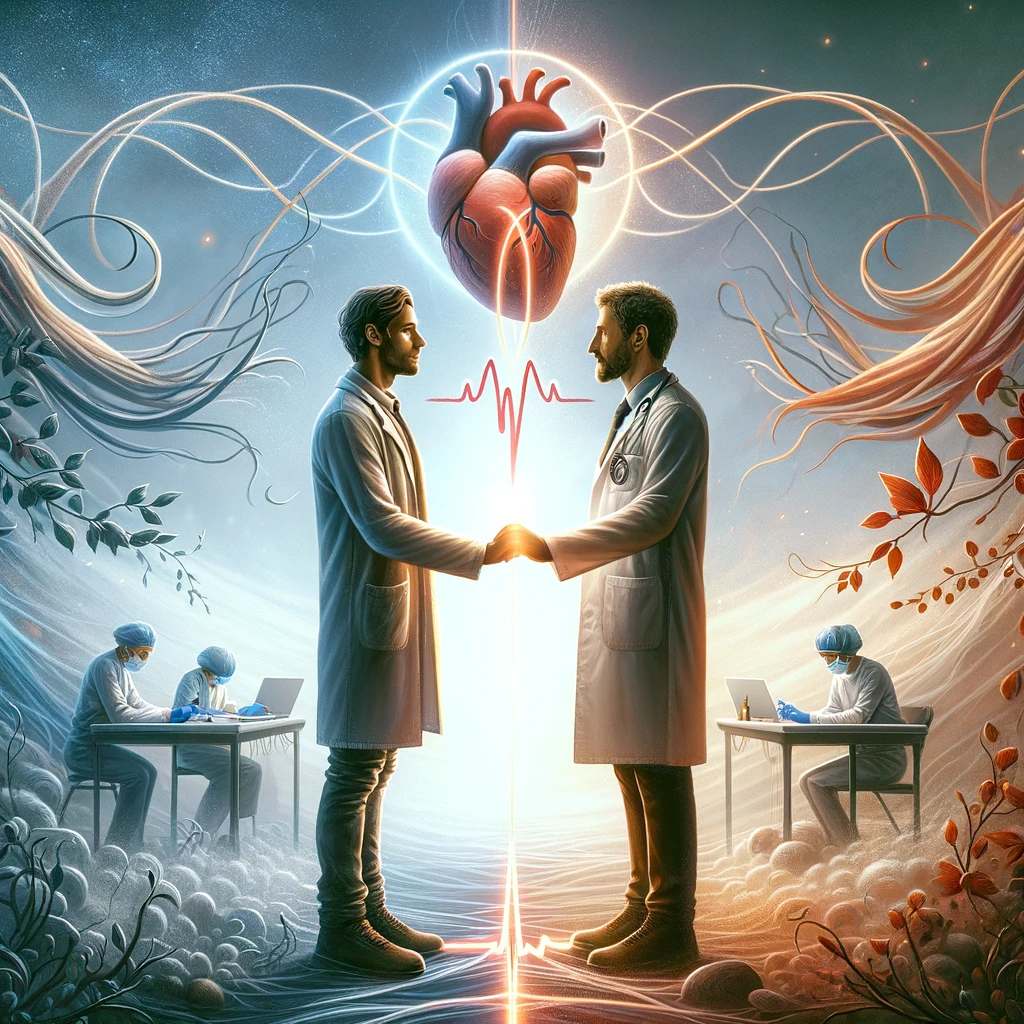
In a heartwarming story, a man from Germany named Marius Werner saved the life of a doctor from the UK, Dr. Nick Embleton. Dr. Embleton had a rare type of blood cancer and needed a bone marrow transplant to survive. They couldn't find a match in the UK, so they searched all over the world. After two years, BBC News and the charity Anthony Nolan helped them find each other. Now, they consider themselves "blood brothers."
Dr. Embleton has been working in a special unit for babies in Newcastle for more than 20 years. When he found out he had cancer, he was really sad. He thought he might die and even made a will. It was really hard for him to tell his wife and kids. The only way he could survive was with a bone marrow transplant. This is when they take healthy blood cells from someone else and put them into your body. But finding a person who matches is really difficult.
Both the person who donates their cells and the person who gets them have to stay secret until the transplant is done. When Dr. Embleton found out the transplant worked, he wanted to meet the person who saved his life. With the help of Anthony Nolan, they found Marius, who had been on the donor list since he was a teenager. He agreed to meet Dr. Embleton in the UK. They met at a place that helps people with cancer, and they hugged and said thank you to each other.
When they met, Marius said he cried when he found out the transplant worked. He also said that before this, he had a hard time with his mental health and even tried to kill himself. He thinks that saving Dr. Embleton's life gave him a reason to keep going and helped him find his way in life. Now, they plan to stay in touch as "blood brothers."
This story shows how important it is to be kind to others, even if you don't know them. It also shows how much of a difference donating organs and stem cells can make. If you or someone you know is going through something similar, you can get help from BBC Action Line.
Original news source: The strangers who saved each other’s lives (BBC)
🎧 Listen:
📖 Vocabulary:
Group or Classroom Activities
Warm-up Activities:
– News Summary
Instructions: Divide the class into pairs or small groups. Each group will read the article and then create a summary of the main points. They should focus on the key details and try to condense the article into a few sentences. Afterward, each group can present their summary to the class.
– Opinion Poll
Instructions: Prepare a list of questions related to the article, such as "Do you think it's important to donate organs?" or "Have you ever had a personal experience with cancer?" Have the students move around the room and ask their classmates the questions. They should record their classmates' answers and then share the results with the class.
– Vocabulary Pictionary
Instructions: Create a list of vocabulary words from the article, such as "transplant," "donate," and "cancer." Divide the class into teams. One student from each team will come to the front of the class and draw a picture representing one of the vocabulary words. The rest of their team will try to guess the word based on the picture. The team that guesses correctly gets a point.
– Pros and Cons
Instructions: Divide the class into two groups. One group will discuss the pros of organ donation and the other group will discuss the cons. Give them a few minutes to brainstorm their ideas, and then have a debate where each group presents their arguments. Encourage students to use evidence from the article to support their points.
– Future Predictions
Instructions: In pairs or small groups, have the students discuss and make predictions about what might happen in the future for the two individuals in the article. For example, "Do you think they will continue to stay in touch?" or "Will Marius continue to be an advocate for organ donation?" Afterward, have a class discussion where students share their predictions and explain their reasoning.
🤔 Comprehension Questions:
The man from Germany who saved the life of the doctor from the UK is Marius Werner.
Dr. Nick Embleton needed a bone marrow transplant because he had a rare type of blood cancer and it was the only way for him to survive.
Dr. Embleton has been working in a special unit for babies in Newcastle for more than 20 years.
It was difficult for Dr. Embleton to tell his wife and kids about his cancer because he was really sad and thought he might die. He even made a will, which made it harder for him to share the news with his family.
A bone marrow transplant is a medical procedure where healthy blood cells from a donor are taken and put into the body of a person who needs them. It is often used to treat certain types of cancer or other serious blood disorders.
The donor and recipient of a bone marrow transplant have to stay secret until the transplant is done to protect their privacy and ensure their safety.
Marius felt emotional and cried when he found out the transplant worked. It was a moment of relief and happiness for him.
The main message of this story is the importance of kindness and the impact that organ and stem cell donations can have on someone's life. It also highlights the importance of reaching out for help when going through difficult times.
🎧✍️ Listen and Fill in the Gaps:
In a heartwarming story, a man from Germany named Marius Werner saved the life of a doctor from the UK, Dr. Nick Embleton. Dr. Embleton had a rare type of cancer and needed a bone marrow transplant to . They couldn't find a match in the UK, so they searched all over the . After two years, BBC News and the charity Anthony Nolan helped them find each other. Now, they themselves "blood brothers." Dr. Embleton has been working in a special unit for babies in Newcastle for more than 20 years. When he found out he had cancer, he was really sad. He thought he might die and even made a will. It was really hard for him to tell his wife and kids. The only way he could survive was with a bone marrow transplant. This is when they take healthy blood from someone else and put them into your body. But finding a who is really difficult. Both the person who donates their cells and the person who gets them have to stay until the transplant is done. When Dr. found out the worked, he wanted to meet the person who his life. With the help of Anthony Nolan, they found Marius, who had been on the donor list since he was a teenager. He agreed to meet Dr. Embleton in the UK. They met at a place that helps people with cancer, and they hugged and said you to each other. When they met, Marius said he cried when he found out the transplant worked. He also said that before this, he had a hard time with his mental and even tried to kill himself. He thinks that saving Dr. Embleton's life gave him a reason to keep and helped him find his way in life. Now, they plan to stay in touch as "blood brothers." This shows how important it is to be kind to others, even if you don't know them. It also shows how much of a difference donating organs and stem cells can make. If you or someone you know is going through something , you can get help from BBC Action Line.
💬 Discussion Questions:
1. What is a bone marrow transplant and why is it important for someone with blood cancer?
2. How do you think Dr. Embleton felt when he found out he had cancer? Why?
3. How would you feel if you were in Dr. Embleton's position and had to tell your family about your illness?
4. Do you think it's difficult to find a person who matches for a bone marrow transplant? Why or why not?
5. What is the significance of keeping the donor and recipient's identities secret until the transplant is done?
6. How do you think Marius felt when he found out that the transplant worked and he saved someone's life?
7. Why do you think Marius said that saving Dr. Embleton's life gave him a reason to keep going and helped him find his way in life?
8. How important do you think it is to be kind to others, even if you don't know them? Why?
9. Do you know anyone who has donated organs or stem cells? How do you think their actions can make a difference?
10. Have you ever been in a situation where you needed help from someone you didn't know? How did it make you feel?
11. How do you think meeting Marius and expressing gratitude made Dr. Embleton feel?
12. Why do you think the story mentions that Marius had a hard time with his mental health before saving Dr. Embleton's life?
13. How do you think Marius and Dr. Embleton will stay in touch as "blood brothers"?
14. What other ways can you think of to help people who are going through difficult times?
15. Do you think it's important for stories like this to be shared in the media? Why or why not?
Individual Activities
📖💭 Vocabulary Meanings:
Click a dot next to a word, then click the dot next to its meaning to draw a line connecting them.
Words
Meanings
🔡 Multiple Choice Questions:
🕵️ True or False Questions:
📝 Write a Summary:
Write a summary of this news article in two sentences.
Check your writing now with the best free AI for English writing!