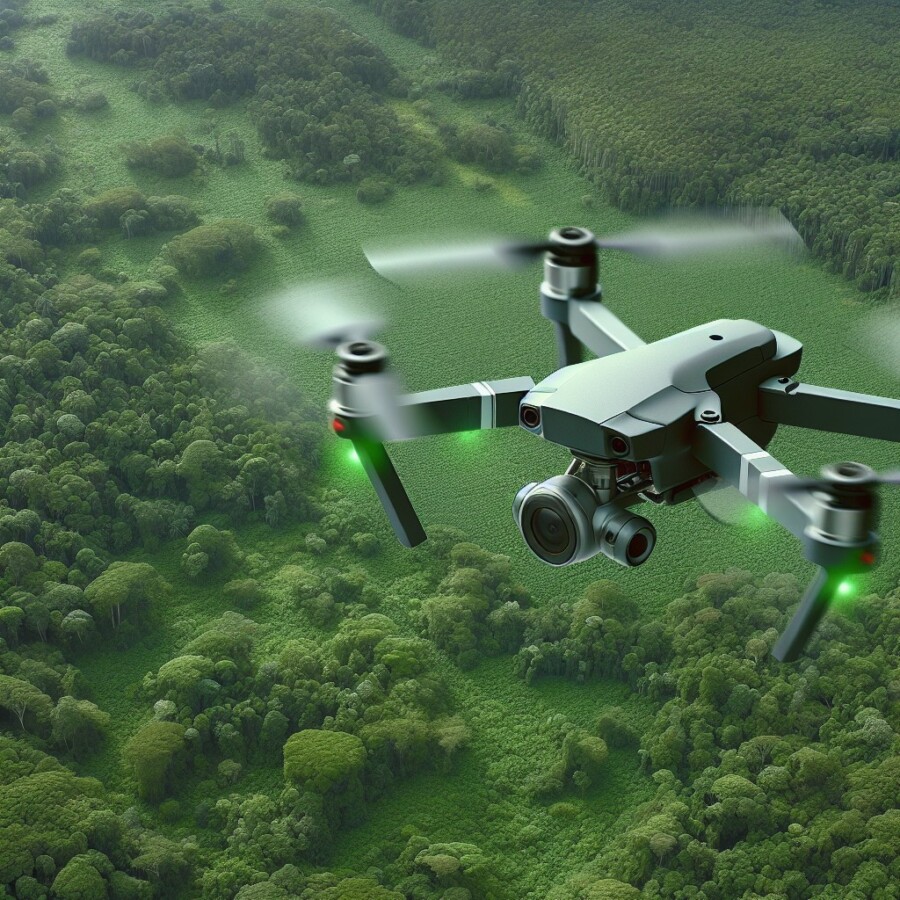
A dog got lost and was away from home for 12 days. People used a flying robot with a special camera to find the dog. The camera could see the dog's body heat, and the dog looked like a white spot on the camera. The robot followed the white spot to a bush where the dog was hiding. The dog's family was very happy to have him back and now they want to help get more robots to find other lost pets.
The flying robot with the camera is very good at finding animals that are lost. It helped see where the dog was because the dog was warm and stood out. The dog was in the bush for a long time, but the robot helped find him. The family is now trying to get money so the people who have the robot can buy another one. They want to help find more pets that are lost and bring them back to their families.
Original news source: Missing dog found using thermal drone in Bedfordshire (BBC)
🎧 Listen:
📖 Vocabulary:
Group or Classroom Activities
Warm-up Activities:
– Charades
Instructions: Divide the class into small groups. Give each group a word or phrase related to the article (e.g. "lost dog," "flying robot," "body heat"). One person from each group will act out the word or phrase without speaking, while the rest of the group tries to guess what it is.
– News Summary
Instructions: Have the students work in pairs. One student will read the article and summarize it in their own words. Then, the other student will listen and try to retell the article based on their partner's summary. Afterward, they can compare their versions and discuss any differences.
– Opinion Poll
Instructions: Ask the students a series of questions related to the article, such as "Do you think using a flying robot to find lost pets is a good idea?" or "Should more money be raised to buy more robots?" Have the students discuss their opinions in small groups and then report back to the class with their findings.
– Vocabulary Pictionary
Instructions: Write down key vocabulary words from the article on separate index cards. Divide the class into pairs or small groups. Give each group a set of cards. One person from each group will pick a card and try to draw a picture representing the word, while the rest of the group tries to guess what it is. Continue until all the cards have been used.
– Speed Summarizing
Instructions: Divide the class into pairs. Give each pair a copy of the article. Set a timer for a short amount of time (e.g. 1 minute). One student will read the article as quickly as possible while their partner listens attentively. When the timer goes off, the second student will try to summarize the article based on what they remember. Switch roles and repeat the activity with a longer timer.
🤔 Comprehension Questions:
The dog got lost and was away from home for 12 days.
They used a flying robot with a special camera to find the dog.
The camera on the robot helped see the dog's body heat.
The dog was hiding in a bush.
The dog's family felt very happy when they found him.
They want to use the money to buy more robots to find other lost pets.
They want to find more lost pets to bring them back to their families.
🎧✍️ Listen and Fill in the Gaps:
A dog got lost and was away from home for 12 days. People used a flying robot with a camera to find the dog. The camera could see the dog's body heat, and the dog looked like a spot on the camera. The robot the white spot to a bush where the dog was hiding. The dog's family was very happy to have him back and now they want to help get more robots to find other lost . The flying robot with the camera is very at finding animals that are lost. It helped see where the dog was because the dog was warm and stood out. The dog was in the for a long time, but the robot helped find him. The family is now trying to get so the who have the robot can buy another one. They want to help find more pets that are lost and bring them back to their families.
💬 Discussion Questions:
1. What is a flying robot?
2. How would you feel if your pet got lost?
3. Do you like dogs? Why or why not?
4. What is a camera?
5. How do you think the robot found the dog?
6. Do you think it's good to have robots help find lost pets? Why or why not?
7. Have you ever seen a bush? What does it look like?
8. How do you think the dog's family felt when they found him?
9. Do you have a pet? What kind of pet do you have?
10. What do you think the robot can do to help find other lost pets?
11. Why do you think the family wants to get more robots?
12. How can you help if you see a lost pet?
Individual Activities
📖💭 Vocabulary Meanings:
Click a dot next to a word, then click the dot next to its meaning to draw a line connecting them.
Words
Meanings
🔡 Multiple Choice Questions:
🕵️ True or False Questions:
📝 Write a Summary:
Write a summary of this news article in two sentences.
Check your writing now with the best free AI for English writing!