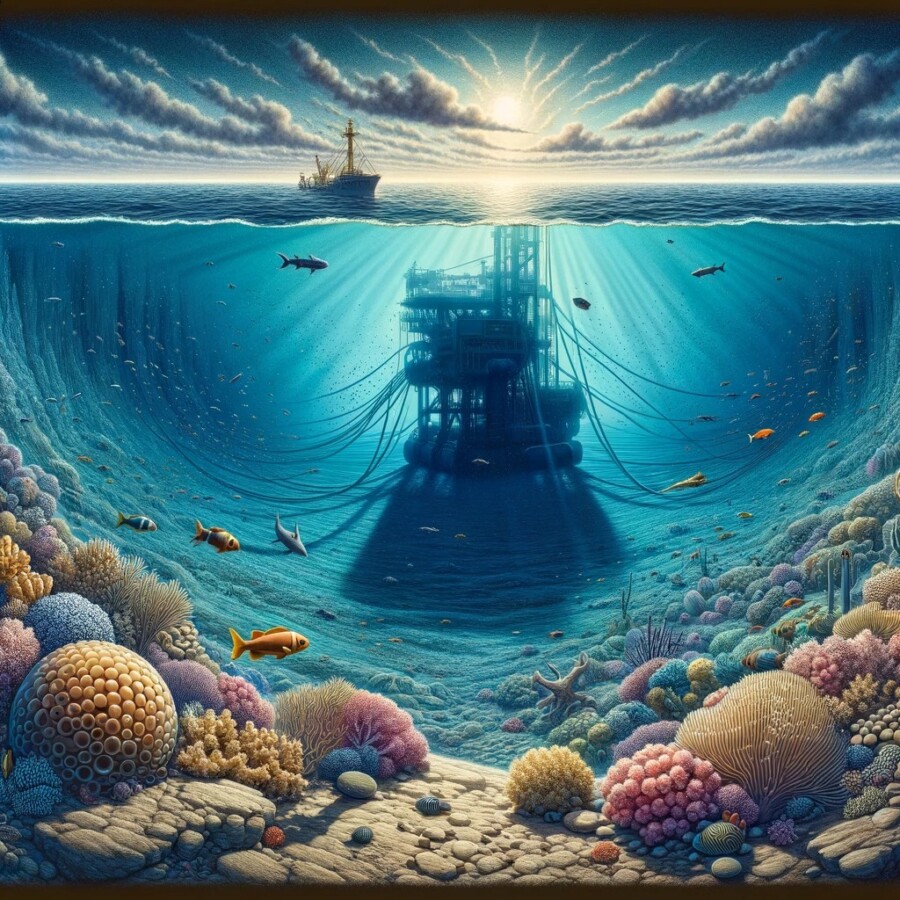
Seabed mining, the extraction of minerals from the ocean floor, is a topic of debate. Some argue that it is an economic necessity, while others see it as a hazard to the environment. The Metals Company, a deep-sea mining firm, claims that its extraction method has minimal impact on the environment. They use remote-controlled machines to scoop up rocks from the seabed, which are then processed to extract minerals like cobalt, nickel, copper, and manganese. The company hopes to start commercial mining in international waters by the end of 2025, pending authorization from the International Seabed Authority (ISA).
However, there are concerns about the environmental impact of seabed mining. Many countries, including the UK, Brazil, Canada, France, and Germany, want to continue the ban on commercial extraction due to these concerns. The World Wide Fund for Nature (WWF) opposes all deep-sea mining, citing the potential destruction of habitats and species. The European Academies Science Advisory Council (EASAC) also questions the need for deep-sea mining, as some of the minerals produced are not considered to be at supply risk.
The area of the north Pacific that The Metals Company wants to mine is called the Clarion-Clipperton Zone, which is a vast section of ocean between Hawaii and Mexico. The company argues that mining in this zone would cause less environmental disturbance than land-based mining, such as nickel extraction in Indonesia and the Philippines. They claim that the abyssal zone where the rocks are located has minimal flora and fauna compared to other mining areas.
Critics argue that investing in the processing of existing mining waste and increasing recycling efforts could reduce the demand for new mineral mining sites. They also suggest that research into alternative technologies may decrease the future demand for key minerals. Norway's Loke Minerals, another company interested in deep-sea mining, acknowledges the need for further study on the environmental impact.
The decision on whether to allow commercial deep-sea mining lies with the ISA. The organization faces the challenge of balancing the potential economic benefits with the environmental risks. Strong environmental regulations are necessary to mitigate these risks. Ultimately, the outcome of this debate will shape the future of deep-sea mining and its impact on the environment.
Original news source: Is seabed mining an economic necessity or a hazard? (BBC)
🎧 Listen:
📖 Vocabulary:
Group or Classroom Activities
Warm-up Activities:
– News Summary
Instructions: In pairs or small groups, have students read the article and then summarize the main points in their own words. They should focus on the arguments for and against seabed mining, as well as the potential environmental impact. After summarizing, have students share their summaries with the class.
– Opinion Poll
Instructions: Divide the class into two groups: one in favor of seabed mining and one against. Have students brainstorm reasons to support their position and then conduct an opinion poll within their group. Each student should ask at least three classmates for their opinion and record their responses. After gathering the data, have students share their findings with the class and discuss the results.
– Sketch It
Instructions: Provide each student with a piece of paper and a pen or pencil. Instruct them to read the article and choose one aspect of seabed mining that they find interesting or controversial. Then, have students sketch a visual representation of their chosen aspect. After everyone has finished, ask volunteers to share their sketches with the class and explain their choices.
– Vocabulary Pictionary
Instructions: Create a list of key vocabulary words from the article related to seabed mining and its environmental impact. Divide the class into pairs or small groups and give each group a set of vocabulary words. One student from each group should draw a picture representing one of the words, while the other group members try to guess what it is. After a set amount of time, rotate roles so that each student has a chance to draw and guess.
– Pros and Cons
Instructions: Divide the class into small groups and assign each group either the "pros" or "cons" of seabed mining. In their groups, students should brainstorm as many points as possible to support their assigned position. After a few minutes, have groups come together and take turns sharing one point at a time. Encourage respectful discussion and debate among students as they weigh the advantages and disadvantages of seabed mining.
🤔 Comprehension Questions:
The Metals Company uses remote-controlled machines to scoop up rocks from the seabed.
The countries in favor of continuing the ban on commercial extraction of seabed mining include the UK, Brazil, Canada, France, and Germany.
The concerns raised by the WWF regarding deep-sea mining include the potential destruction of habitats and species.
The Clarion-Clipperton Zone is a vast section of ocean between Hawaii and Mexico. The Metals Company wants to mine there because they argue that it would cause less environmental disturbance compared to land-based mining.
Critics suggest reducing the demand for new mineral mining sites by investing in the processing of existing mining waste and increasing recycling efforts. They also suggest researching alternative technologies that may decrease the future demand for key minerals.
Norway's Loke Minerals acknowledges the need for further study on the environmental impact of deep-sea mining.
The International Seabed Authority (ISA) has the authority to decide whether to allow commercial deep-sea mining.
The International Seabed Authority (ISA) needs to consider the potential economic benefits of deep-sea mining as well as the environmental risks associated with it. They need to balance these factors and ensure strong environmental regulations are in place to mitigate the risks.
🎧✍️ Listen and Fill in the Gaps:
Seabed , the extraction of minerals from the ocean , is a topic of debate. Some argue that it is an necessity, while others see it as a hazard to the environment. The Metals Company, a deep-sea mining firm, claims that its extraction method has minimal impact on the environment. They use remote-controlled machines to scoop up from the seabed, which are then processed to extract minerals like cobalt, nickel, copper, and manganese. The company hopes to start commercial mining in international waters by the end of 2025, pending authorization from the International Seabed Authority (ISA). However, there are concerns about the environmental impact of seabed mining. Many countries, including the UK, Brazil, Canada, France, and Germany, want to continue the ban on commercial extraction due to these concerns. The World Wide Fund for Nature (WWF) opposes all deep-sea mining, citing the potential of and . The European Academies Science Advisory Council (EASAC) also questions the need for deep-sea mining, as some of the minerals produced are not considered to be at supply risk. The area of the north Pacific that The Metals wants to mine is called the Clarion-Clipperton Zone, which is a vast section of ocean between Hawaii and Mexico. The company argues that mining in this zone would cause less environmental disturbance than land-based mining, such as nickel extraction in Indonesia and the . They claim that the abyssal zone where the rocks are located has minimal flora and fauna compared to other mining areas. Critics argue that in the processing of existing mining waste and increasing recycling efforts could reduce the demand for new mineral mining sites. They also that into alternative may decrease the future demand for key minerals. Norway's Loke Minerals, another company interested in deep-sea mining, the need for further study on the environmental impact. The decision on whether to allow commercial deep-sea mining lies with the ISA. The organization faces the challenge of balancing the potential economic benefits with the environmental . environmental regulations are necessary to mitigate these risks. Ultimately, the outcome of this debate will shape the future of deep-sea mining and its impact on the environment.
💬 Discussion Questions:
1. What is seabed mining and why is it a topic of debate?
2. How would you feel if seabed mining was allowed to take place in international waters?
3. Do you think seabed mining is an economic necessity? Why or why not?
4. What is your opinion on the claim that seabed mining has minimal impact on the environment?
5. Do you think the ban on commercial extraction of minerals from the ocean floor should continue? Why or why not?
6. How do you think deep-sea mining could potentially destroy habitats and species?
7. What are your thoughts on the argument that investing in recycling efforts and processing existing mining waste could reduce the need for new mineral mining sites?
8. Do you believe that research into alternative technologies could decrease the future demand for key minerals? Why or why not?
9. What do you think about the idea that deep-sea mining in the Clarion-Clipperton Zone would cause less environmental disturbance than land-based mining?
10. How do you think strong environmental regulations can help mitigate the risks of deep-sea mining?
11. What is your opinion on the potential economic benefits of deep-sea mining compared to the environmental risks?
12. How would you feel if the International Seabed Authority allowed commercial deep-sea mining to proceed?
13. Do you think the future of deep-sea mining should be shaped by this debate? Why or why not?
14. What are your thoughts on the need for further study on the environmental impact of deep-sea mining?
15. How do you think the decision on commercial deep-sea mining will impact the environment in the long term?
Individual Activities
📖💭 Vocabulary Meanings:
Click a dot next to a word, then click the dot next to its meaning to draw a line connecting them.
Words
Meanings
🔡 Multiple Choice Questions:
🕵️ True or False Questions:
📝 Write a Summary:
Write a summary of this news article in two sentences.
Check your writing now with the best free AI for English writing!