

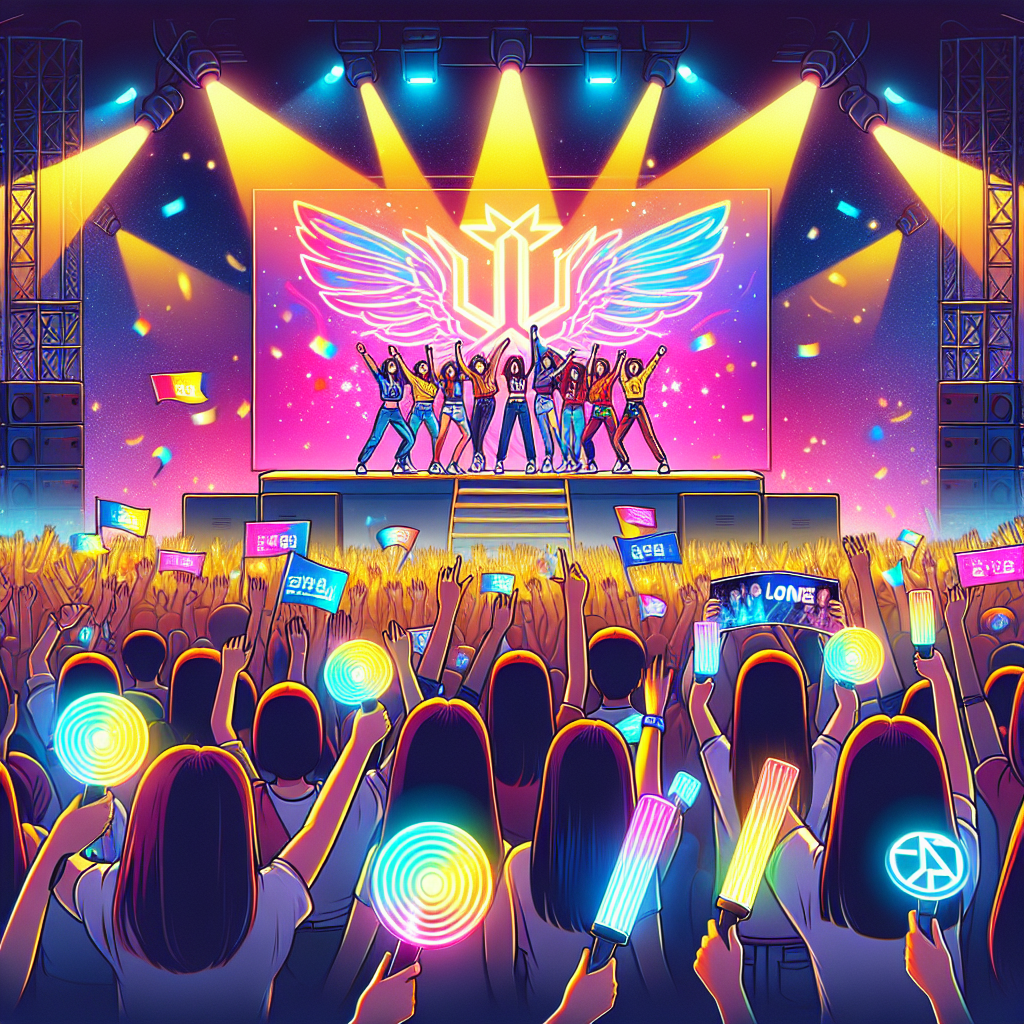
K-pop star Karina recently posted an apology on Instagram for being in a relationship with actor Lee Jae-wook. This apology surprised many outside the K-pop scene, but it sheds light on the world of "super fans" in the industry. These fans go to great lengths to support their favorite stars, such as streaming their music 24/7, organizing mass voting sessions, and even sponsoring digital billboard ads. However, when news of Karina's relationship broke, some fans reacted negatively, driving a truck to her management agency and questioning whether their love and support was enough.
This reaction contrasts with how celebrities' romantic lives are often publicized and celebrated in other parts of the world. The difference in attitudes can be attributed to the concept of "false intimacy" that exists between K-pop idols and their fans. Fans often view themselves as being in one-sided relationships with the idols, expending time, energy, and money on them. As the industry encourages fans to express their fandom through consumerism, their desire for compensation grows, leading to demands and sometimes even threats.
K-pop agencies have facilitated this "false intimacy" by creating social apps that give fans a glimpse into their idols' lives. Fans are also actively involved in promoting their idols' success by streaming their music, voting for them on music platforms and award shows, and sharing voting schedules and streaming guides. Large fan groups organize themselves into teams to navigate the rules for each platform and ensure their idols' success. However, this level of involvement comes at a cost, both in terms of time and money.
Some idols may feel obligated to keep their fans happy due to the fragility of their careers. The short-lived nature of K-pop groups, typically lasting four to five years, puts pressure on idols to maintain a positive image and assure fans of their dedication to their music. However, as K-pop gains global popularity, attitudes in the industry may be changing. Many international fans expressed outrage at Karina's apology, and there is hope that fan bases will become more supportive and open-minded in the future.
In conclusion, the world of K-pop is driven by passionate "super fans" who go to great lengths to support their favorite idols. However, this level of devotion can sometimes lead to negative reactions when idols' private lives are revealed. As the industry evolves and gains global recognition, there is hope for a more supportive and open-minded fan culture in the future.
Original news source: How jealous K-pop super fans try to dictate their idols' private lives (BBC)
🎧 Listen:
📖 Vocabulary:
Group or Classroom Activities
Warm-up Activities:
– News Summary
Instructions: Divide the class into small groups. Give each group a few minutes to read the article. Then, ask each group to summarize the main points of the article in a news format, including the who, what, when, where, why, and how. Each group will take turns presenting their news summary to the class.
– Opinion Poll
Instructions: Write three discussion questions related to the article on the board. For example: 1) Do you think K-pop idols should be allowed to have private relationships? 2) Do you think "super fans" have a positive or negative impact on the industry? 3) Should K-pop agencies do more to protect their idols' privacy? Divide the class into pairs or small groups and give them a few minutes to discuss each question. Then, conduct an opinion poll by asking each group to share their opinions and reasons with the rest of the class.
– Sketch It
Instructions: Divide the class into pairs. Give each pair a whiteboard or a piece of paper and a marker or pen. Instruct one student to describe a scene or situation related to the article to their partner without mentioning any specific names or details. The other student must then try to sketch what they think is being described. After a few minutes, have the pairs switch roles and repeat the activity. Finally, have the pairs share and compare their sketches with the rest of the class.
– Vocabulary Pictionary
Instructions: Write a list of vocabulary words from the article on the board. For example: K-pop, super fans, false intimacy, idols, fragility. Divide the class into two teams. One student from each team will take turns choosing a word from the list and attempting to draw it on the board, while their team members try to guess the word. Set a time limit for each round and keep score. The team with the most points at the end wins.
– Think-Pair-Share
Instructions: Ask the students to think about and write down their personal opinions on the following question: "Do you think the concept of 'false intimacy' between K-pop idols and their fans is unique to the industry, or does it exist in other forms of entertainment as well?" Give the students a few minutes to brainstorm and write their thoughts. Then, pair them up and have them share and discuss their opinions with their partners. Finally, open up the discussion to the whole class and encourage students to share their findings and insights.
🤔 Comprehension Questions:
Karina apologized on Instagram for being in a relationship with actor Lee Jae-wook.
"Super fans" support their favorite K-pop stars by streaming their music 24/7, organizing mass voting sessions, and even sponsoring digital billboard ads.
Some fans reacted negatively when news of Karina's relationship broke. They drove a truck to her management agency and questioned whether their love and support was enough.
In other parts of the world, celebrities' romantic lives are often publicized and celebrated, whereas in the K-pop industry, fans may react negatively and question their idols' dedication.
The concept of "false intimacy" refers to the one-sided relationships that fans feel they have with K-pop idols. Fans invest time, energy, and money into their idols and view themselves as being intimately connected to them.
K-pop agencies facilitate "false intimacy" by creating social apps that give fans a glimpse into their idols' lives. Fans are also actively involved in promoting their idols' success through streaming, voting, and sharing schedules.
Fans actively promote their idols' success by streaming their music, voting for them on music platforms and award shows, and sharing voting schedules and streaming guides. Large fan groups organize themselves into teams to navigate the rules for each platform.
Some idols feel obligated to keep their fans happy because their careers are often short-lived, lasting only four to five years. They need to maintain a positive image and assure fans of their dedication to their music in order to sustain their careers.
🎧✍️ Listen and Fill in the Gaps:
K-pop star Karina recently posted an apology on Instagram for being in a relationship with actor Lee Jae-wook. This apology surprised many outside the K-pop scene, but it sheds light on the world of "super fans" in the . These fans go to great lengths to support their favorite stars, such as streaming their music 24/7, organizing mass voting , and even sponsoring digital ads. However, when news of Karina's relationship broke, some fans reacted negatively, driving a truck to her management agency and whether their love and support was enough. This reaction contrasts with how celebrities' romantic are often publicized and celebrated in other parts of the . The difference in attitudes can be attributed to the concept of "false intimacy" that exists between K-pop idols and their fans. Fans often view themselves as being in one-sided relationships with the idols, expending time, energy, and money on them. As the industry encourages fans to express their fandom through consumerism, their for grows, leading to demands and sometimes even threats. K-pop agencies have facilitated this "false intimacy" by creating social apps that give fans a glimpse into their idols' lives. Fans are also actively involved in promoting their idols' by streaming their music, voting for them on music platforms and award shows, and sharing voting schedules and streaming guides. Large fan groups organize themselves into teams to navigate the rules for each platform and their idols' success. However, this level of involvement comes at a cost, both in terms of time and money. Some idols may feel obligated to keep their fans happy due to the fragility of their careers. The short-lived nature of K-pop groups, typically four to five , puts pressure on idols to maintain a positive image and assure fans of their dedication to their music. However, as K-pop gains global popularity, attitudes in the industry may be changing. Many international fans expressed outrage at Karina's apology, and there is hope that fan bases will become more ive and open-minded in the . In conclusion, the world of K-pop is driven by passionate "super fans" who go to great lengths to support their idols. However, this level of devotion can sometimes lead to negative reactions when idols' private lives are revealed. As the industry evolves and gains global , there is hope for a more supportive and open-minded fan culture in the future.
💬 Discussion Questions:
1. What is a "super fan" and how do they show their support for their favorite idols?
2. How would you feel if you were a K-pop idol and had to keep your romantic relationships a secret from your fans?
3. Do you think it's fair for fans to react negatively when idols' private lives are revealed? Why or why not?
4. How do you think the concept of "false intimacy" affects the relationship between K-pop idols and their fans?
5. Do you think it's healthy for fans to view themselves as being in one-sided relationships with idols? Why or why not?
6. What are some ways that K-pop agencies have facilitated the "false intimacy" between idols and fans?
7. How do you think the pressure to maintain a positive image affects K-pop idols' personal lives?
8. Do you think the short-lived nature of K-pop groups contributes to the intense devotion of fans? Why or why not?
9. How do you think the attitudes of international fans differ from those of fans in South Korea when it comes to idols' private lives?
10. Do you think fan culture in the K-pop industry will become more supportive and open-minded in the future? Why or why not?
11. How do you think the global popularity of K-pop will impact the industry and fan culture?
12. Do you think it's fair for fans to demand compensation from idols for their support? Why or why not?
13. How would you feel if you were a K-pop idol and had to constantly navigate the rules of different platforms to ensure your success?
14. Do you think the intense devotion of fans in the K-pop industry is healthy for the idols? Why or why not?
15. How do you think the K-pop industry can strike a balance between maintaining a positive image and allowing idols to have personal lives?
Individual Activities
📖💭 Vocabulary Meanings:
Click a dot next to a word, then click the dot next to its meaning to draw a line connecting them.
Words
Meanings
🔡 Multiple Choice Questions:
🕵️ True or False Questions:
📝 Write a Summary:
Write a summary of this news article in two sentences.
Check your writing now with the best free AI for English writing!