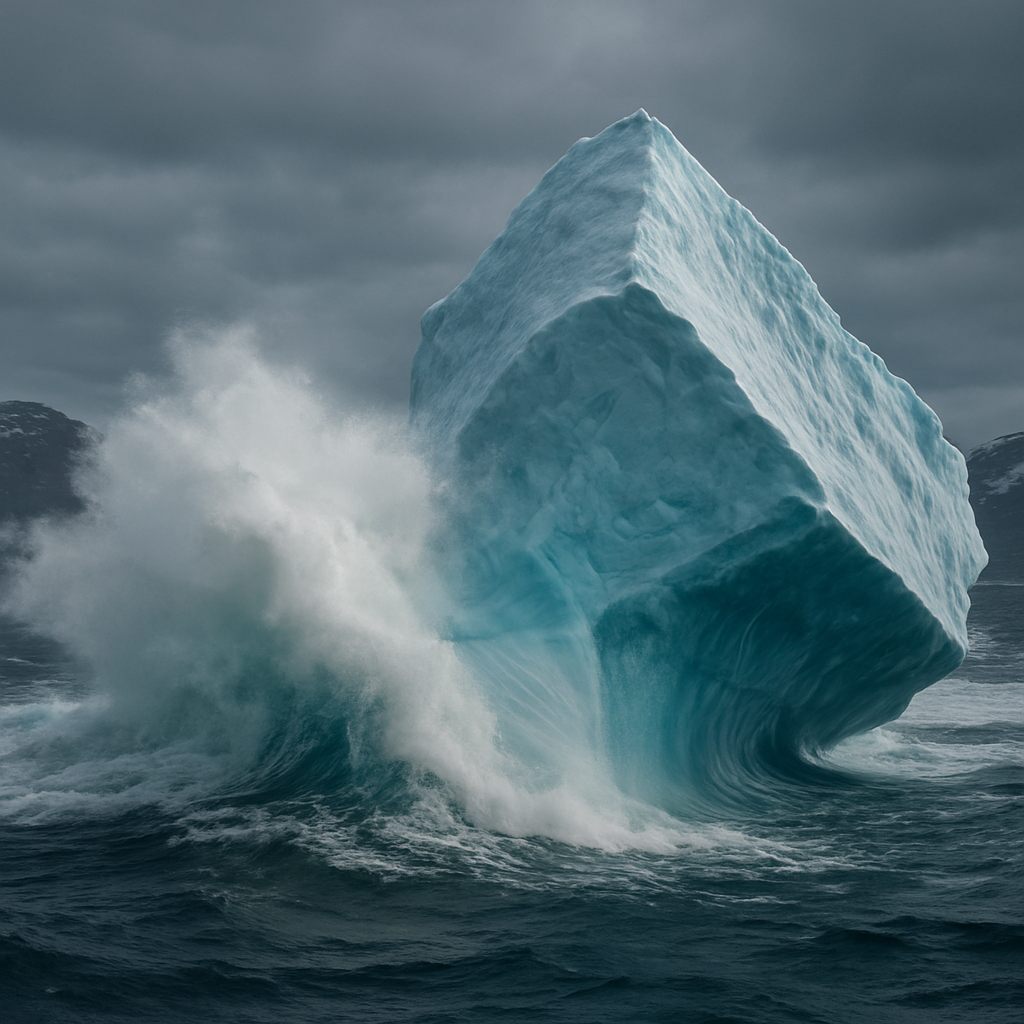
A massive iceberg was observed capsizing near the coastal city of Ilulissat in Greenland, a remarkable event that was captured on video by a bystander. The dramatic turning of the iceberg resulted in the creation of substantial waves that rippled through the coastal waters. Ilulissat, renowned for hosting the UNESCO World Heritage site, the Ilulissat Icefjord, draws numerous visitors to its shores due to the spectacular views and dynamic ice formations that characterize the landscape. These icebergs, a significant draw for both tourists and researchers, are known to shift and capsize particularly during warmer temperatures when melting destabilizes their structure. Scientists closely monitor these movements to gain insights into ongoing climate change impacts. Observations of such events contribute to the growing body of research that examines the ebb and flow of Arctic ice. Melting patterns, iceberg movements, and changes in sea levels are crucial data points for understanding larger environmental trends. Greenland's ice loss has become an area of global concern as it is intricately linked with rising sea levels and the broader effects of climate change. As such, these natural events serve as both a spectacle and a data source in climate science studies.
Original news source: Giant iceberg turns over near Greenland's coast – BBC News (BBC)
🎧 Listen:
📖 Vocabulary:
Group or Classroom Activities
Warm-up Activities:
1. Describe the term "capsizing" in your own words and why icebergs capsize.
2. Discuss your thoughts on how climate change impacts Arctic regions.
3. Share what you know about UNESCO World Heritage sites.
4. Talk about any time you've witnessed significant climate effects like floods or heatwaves.
5. Brainstorm why tourists and scientists might be interested in visiting Ilulissat.
🤔 Comprehension Questions:
An iceberg capsized, creating significant waves.
A bystander captured the iceberg capsizing on video.
Ilulissat is renowned for its UNESCO World Heritage site, offering spectacular views and dynamic ice formations.
Warmer temperatures lead to melting, destabilizing the icebergs.
They provide crucial data points for understanding climate change impacts.
It is linked to rising sea levels and broader climate change effects.
They are both a spectacle and a valuable data source for climate science studies.
🎧✍️ Listen and Fill in the Gaps:
A iceberg was observed capsizing near the coastal city of Ilulissat in Greenland, a remarkable event that was captured on by a bystander. The dramatic turning of the iceberg in the creation of substantial waves that rippled through the coastal . Ilulissat, renowned for hosting the UNESCO World Heritage site, the Ilulissat Icefjord, draws numerous visitors to its shores due to the spectacular views and dynamic ice that characterize the landscape. These icebergs, a draw for both tourists and researchers, are known to and capsize particularly during warmer when melting their structure. Scientists closely monitor these to gain insights into ongoing climate change impacts. Observations of such events contribute to the growing body of that examines the ebb and flow of Arctic ice. Melting patterns, iceberg movements, and changes in sea are crucial data points for understanding environmental trends. Greenland's ice loss has become an area of global concern as it is intricately linked with rising sea levels and the broader effects of . As such, these events serve as both a spectacle and a data source in climate science studies.
💬 Discussion Questions:
1. What are your views on the significance of monitoring icebergs?
2. How do you think climate change is affecting the natural phenomena in Greenland?
3. In your opinion, why might ice formations be appealing to tourists?
4. Can you discuss any potential consequences of rising sea levels?
5. Why do you think it's important to capture and document natural events like iceberg capsizing?
6. How do you think local communities might be affected by ice loss?
7. What steps can individuals take to mitigate climate change effects?
8. Why is understanding the ebb and flow of Arctic ice essential to climate science?
9. Do you think enough research is being done on climate change? Why or why not?
10. How do places like Ilulissat contribute to global environmental research?
11. What role do videos and photographs play in raising awareness about climate change?
12. What personal actions can you take to reduce your carbon footprint?
Individual Activities
📖💭 Vocabulary Meanings:
Click a dot next to a word, then click the dot next to its meaning to draw a line connecting them.