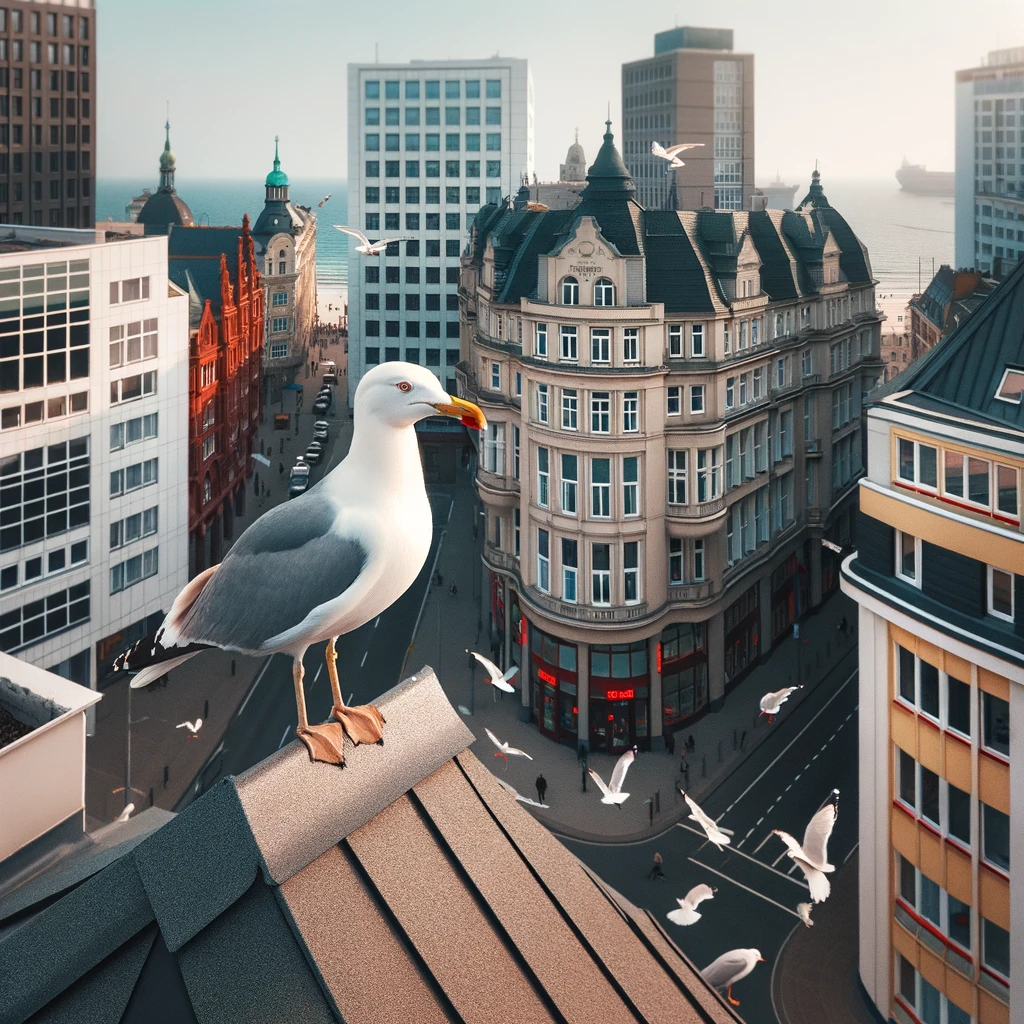
Seagulls are moving to cities because they are losing their homes in nature. Scientists say we should learn to live with them. Gulls are having a hard time finding food in the wild because there are not enough fish and some are getting sick. So, they come to cities to find food, but this sometimes causes problems with people. Experts think we should not be mad at them but understand they are smart birds and try to get along. We can help by using big trash cans that close tightly and not leaving food outside.
Gulls are not as many as before and people are worried. In the UK, all the main types of gulls are not doing well. Scientists counted them in winter to see how many there are and where they stay. They will use this information to help protect gulls. Some people think there are more gulls living on buildings now, but we are not sure. Experts say gulls are interesting animals and we should like them. They suggest we can live together peacefully if we learn about gulls and help keep our cities clean. More counting of gulls will happen later to help them more.
Original news source: Seagulls 'charismatic' not 'criminal', say scientists (BBC)
🎧 Listen:
📖 Vocabulary:
Group or Classroom Activities
Warm-up Activities:
– Charades
Instructions: Divide the class into small groups. Give each group a list of words related to the article (e.g. seagull, city, food, nature, trash can). One student from each group will act out a word without speaking, while the other group members try to guess the word. The group that guesses the most words correctly wins.
– News Summary
Instructions: Have the students read the article individually or in pairs. After they have read it, ask each student to write a one-sentence summary of the article. Then, have them share their summaries with a partner and discuss any differences or similarities. Finally, ask a few students to share their summaries with the whole class.
– Vocabulary Pictionary
Instructions: Divide the class into pairs. Give each pair a list of vocabulary words from the article (e.g. seagull, city, food, nature, trash can). One student from each pair will choose a word and draw a picture to represent it, while the other student tries to guess the word. The pair that guesses the most words correctly wins.
– Headline Creation
Instructions: Divide the class into small groups. Give each group a headline template (e.g. "Seagulls Invade Cities in Search of Food"). Ask each group to create a headline related to the article using the template. After they have created their headlines, ask each group to present their headline to the class and explain why they chose it.
– Opinion Poll
Instructions: Divide the class into pairs. Ask each pair to discuss their opinion on the topic of seagulls moving to cities. Do they think it is a problem or not? After they have discussed their opinions, ask each pair to conduct a mini poll by asking other pairs their opinion. Finally, ask a few pairs to share the results of their poll with the whole class.
🤔 Comprehension Questions:
Seagulls are moving to cities because they are losing their homes in nature.
There are not enough fish in the wild, so some fish are getting sick and seagulls can't find enough food.
Seagulls sometimes cause problems with people in cities because they try to find food and can make a mess or take food from people.
We can help seagulls in cities by using big trash cans that close tightly and not leaving food outside.
No, there are not as many seagulls as before. They are becoming fewer in number.
Scientists are counting seagulls in winter to see how many there are and where they stay. They will use this information to help protect seagulls.
We can live peacefully with seagulls in cities by learning about them and keeping our cities clean.
🎧✍️ Listen and Fill in the Gaps:
Seagulls are moving to cities because they are losing their homes in nature. Scientists say we should learn to live with them. are a hard time finding food in the wild because there are not enough fish and some are getting sick. So, they come to cities to find food, but this sometimes causes problems with . Experts think we should not be mad at them but understand they are smart and try to get along. We can help by using big trash cans that close tightly and not leaving food outside. Gulls are not as many as before and people are worried. In the UK, all the main of gulls are not doing well. Scientists counted them in winter to see how there are and where they stay. They will use this information to help protect gulls. Some people think there are more gulls living on now, but we are not sure. say gulls are interesting animals and we should like them. They suggest we can live together peacefully if we learn about gulls and help keep our cities clean. More counting of gulls will happen later to help them more.
💬 Discussion Questions:
1. What are seagulls?
2. How do seagulls feel when they can't find enough food in nature?
3. Do you think it's a good idea for seagulls to come to cities to find food? Why or why not?
4. How do people sometimes feel about seagulls coming to cities?
5. Do you think we should be mad at seagulls for coming to cities? Why or why not?
6. Why do you think seagulls come to cities to find food?
7. How can we help seagulls find food in cities?
8. Are there more or fewer seagulls now than before? Why do you think that is?
9. Do you like seagulls? Why or why not?
10. Do you think it's important to protect seagulls? Why or why not?
11. How can we live peacefully with seagulls in cities?
12. What do you think scientists can learn from counting seagulls?
Individual Activities
📖💭 Vocabulary Meanings:
Click a dot next to a word, then click the dot next to its meaning to draw a line connecting them.
Words
Meanings
🔡 Multiple Choice Questions:
🕵️ True or False Questions:
📝 Write a Summary:
Write a summary of this news article in two sentences.
Check your writing now with the best free AI for English writing!