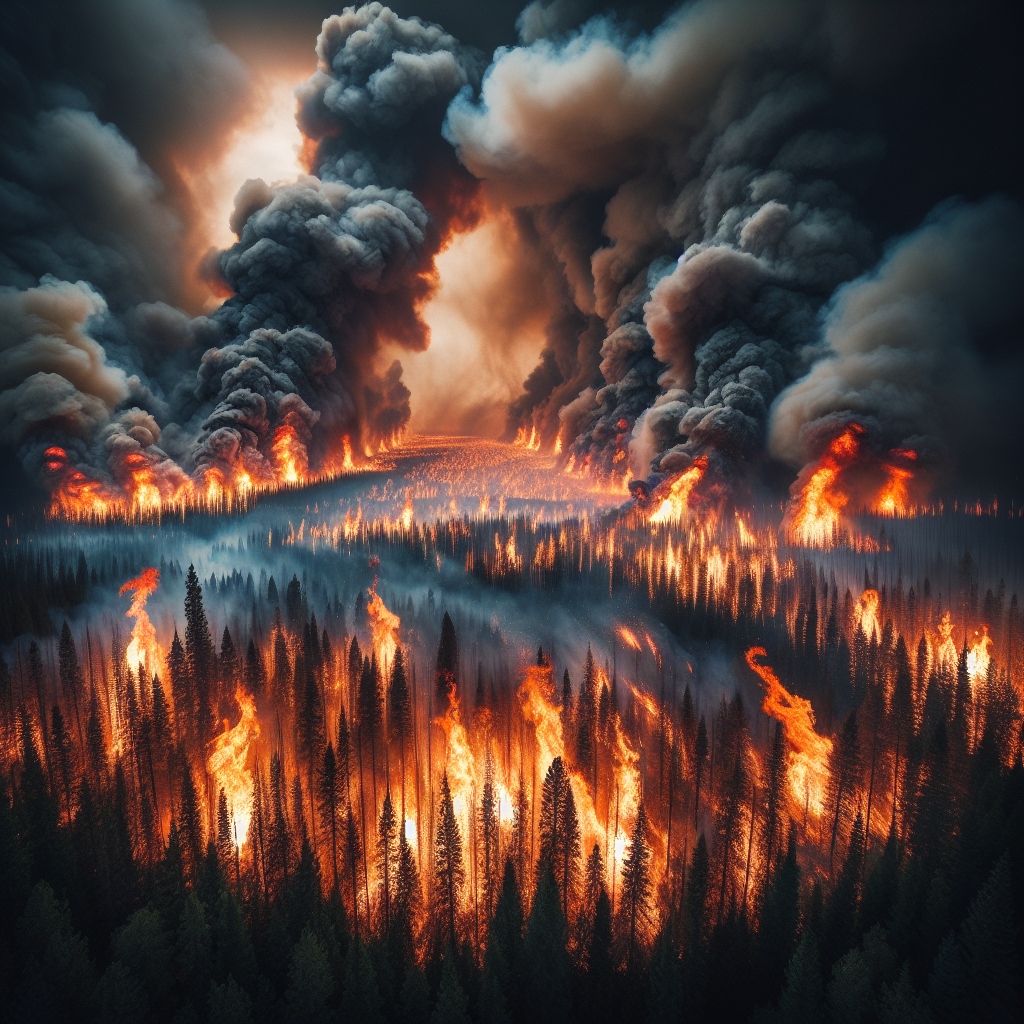
Canada is having many wildfires this year because of dry weather and warmer temperatures. These fires have made thousands of people leave their homes in places like Alberta, British Columbia, and Manitoba. Some fires started from lightning, and others from things like trees falling on power lines. Right now, there are 135 fires burning, and 39 of them are out of control.
In recent years, wildfire season in Canada has been starting earlier. It used to start in July or August, but now it can start as early as May. Last year was the worst fire season ever, with a huge amount of land burned. This year, the fires started early again, but experts think it might not be as bad as last year.
The dry weather, lightning, and human actions, along with warmer temperatures from climate change, make Canada more likely to have wildfires. These more frequent and severe wildfires show that it's important to take action against climate change. It's also important to find ways to protect people and the environment from these fires.
Original news source: Why is Canada having so many wildfires this season? (BBC)
🎧 Listen:
📖 Vocabulary:
Group or Classroom Activities
Warm-up Activities:
– Charades
Instructions: Divide the class into small groups. Write key words from the article on separate slips of paper and put them in a hat. Each group will take turns choosing a slip of paper and acting out the word without speaking. The other groups must guess the word. The group that guesses correctly earns a point.
– News Summary
Instructions: Have the students read the article individually or in pairs. Then, ask each student to write a summary of the article in 3-4 sentences. Afterward, have them share their summaries with a partner and discuss any differences or similarities between their summaries.
– Vocabulary Pictionary
Instructions: Divide the class into pairs. Give each pair a list of vocabulary words from the article. One student will draw a picture to represent a word while the other student tries to guess the word. They can only use gestures and cannot speak. The pair that guesses the most words correctly wins.
– Speed Summarizing
Instructions: Divide the class into small groups. Give each group a timer and ask them to summarize the article in one minute. They can take turns speaking or work together to come up with a concise summary. After each group presents, discuss the main points of the article as a class.
– Think-Pair-Share
Instructions: Have the students discuss the following question with a partner: "What actions do you think should be taken to prevent wildfires and protect people and the environment?" After a few minutes, ask some pairs to share their ideas with the class. Encourage a class discussion on the topic.
🤔 Comprehension Questions:
There are many wildfires in Canada this year because of dry weather and warmer temperatures.
Some fires started from lightning, and others from things like trees falling on power lines.
Currently, there are 135 fires burning in Canada.
Wildfire season in Canada used to start in July or August.
Yes, last year was a bad year for wildfires in Canada.
Factors that make Canada more likely to have wildfires are dry weather, lightning, human actions, and warmer temperatures from climate change.
It is important to take action against climate change because it can help prevent more frequent and severe wildfires. It can also protect people and the environment from the damage caused by these fires.
🎧✍️ Listen and Fill in the Gaps:
Canada is having many wildfires this year because of dry weather and warmer temperatures. These fires have made thousands of people leave their homes in places like Alberta, Columbia, and . Some fires started from , and others from things like falling on power lines. Right now, there are 135 burning, and 39 of them are out of control. In recent years, wildfire in Canada has been starting earlier. It used to start in July or August, but now it can start as early as May. Last was the worst fire season ever, with a huge amount of burned. This year, the fires started early again, but experts think it might not be as bad as last year. The dry weather, lightning, and human actions, along with temperatures from climate change, make Canada more likely to have . These more frequent and severe wildfires show that it's important to take against climate change. It's also important to ways to protect people and the environment from these fires.
💬 Discussion Questions:
1. What is a wildfire?
2. How would you feel if you had to leave your home because of a wildfire?
3. Do you like hot weather? Why or why not?
4. What do you think causes wildfires?
5. Have you ever seen a wildfire? What was it like?
6. How do you think climate change affects wildfires?
7. Do you think it's important to take action against climate change? Why or why not?
8. What are some ways we can protect people and the environment from wildfires?
9. Have you ever been in a situation where you had to evacuate? How did you feel?
10. Do you think wildfires are a big problem? Why or why not?
11. How can we prevent wildfires from happening?
12. What would you do if you saw a wildfire near your home?
Individual Activities
📖💭 Vocabulary Meanings:
Click a dot next to a word, then click the dot next to its meaning to draw a line connecting them.
Words
Meanings
🔡 Multiple Choice Questions:
🕵️ True or False Questions:
📝 Write a Summary:
Write a summary of this news article in two sentences.
Check your writing now with the best free AI for English writing!