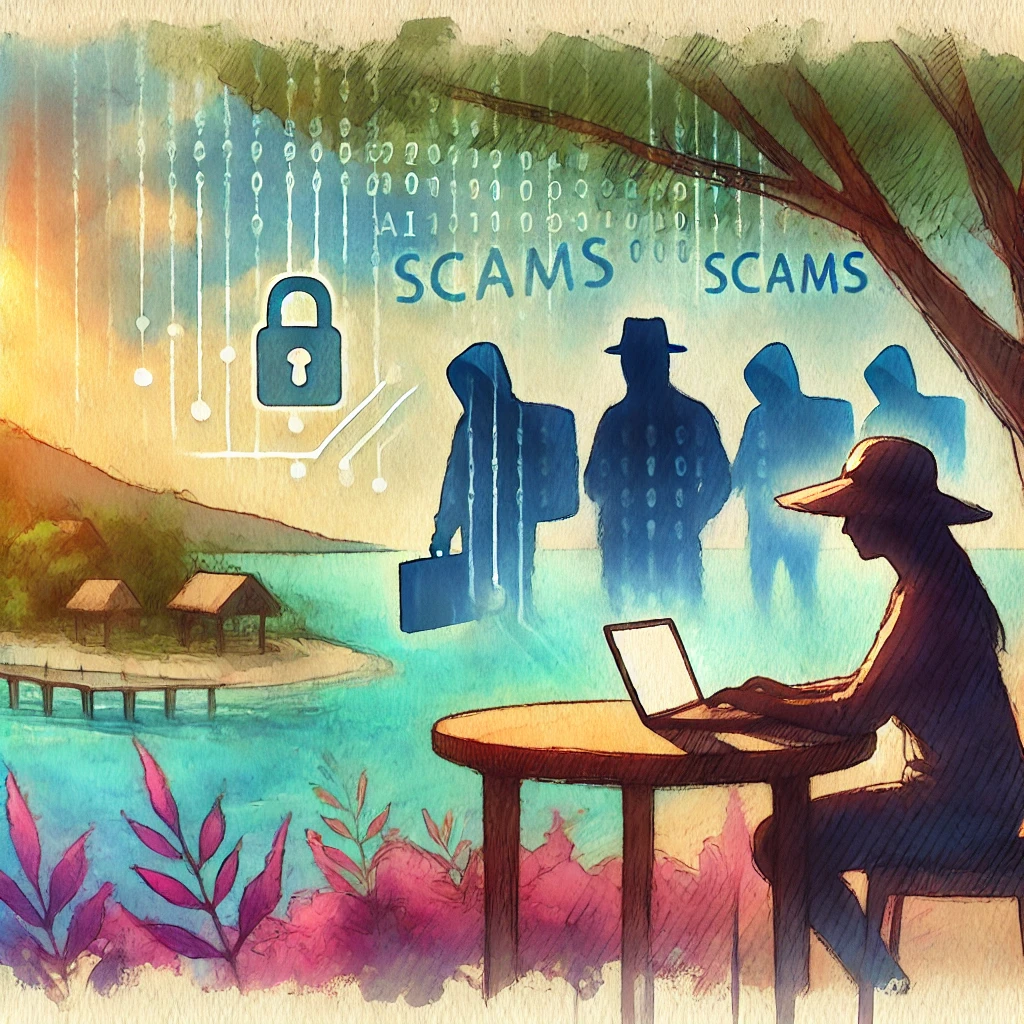
Booking.com, a popular online travel booking platform, has issued a warning about the increasing number of travel scams driven by artificial intelligence (AI). According to Marnie Wilking, the internet safety boss at Booking.com, there has been a significant surge in phishing attacks, where individuals are tricked into revealing their financial information, since the emergence of generative AI tools like ChatGPT. These attacks often involve sending fake booking links that appear very convincing. Scammers target websites like Booking.com and Airbnb because they allow individuals to list their own accommodations. The scammers either disappear after receiving payment or attempt to extract more money through follow-up messages. While these scams have been around for a long time, AI is making them harder to detect due to the generation of realistic images and accurate text in multiple languages.
Wilking recommends that hotels and travelers use two-factor authentication, which involves an additional security check, such as inputting a code sent to your phone, as the best way to combat phishing and credential stealing. She also advises people to be more vigilant when clicking on links. Despite the negative impact of AI on scams, Booking.com is using the technology to quickly identify and remove fake hotels attempting to scam people. They have implemented AI models to detect and block these scams before any bookings are made.
Consumer expert Jane Hawkes suggests that travel providers should increase their efforts to raise awareness about these scams and provide advice on minimizing the risk of falling victim to them. She also recommends conducting thorough research, checking for readily available contact details and telephone numbers on websites, and booking package holidays instead of separate flights and accommodations. Using a credit card for bookings can also provide additional protection.
In conclusion, Booking.com warns of a significant increase in travel scams driven by AI. These scams involve phishing attacks and fake booking links that appear very convincing. Two-factor authentication is recommended as the best defense against these scams, and individuals should be cautious when clicking on links. While AI has made scams harder to detect, Booking.com is using the technology to swiftly remove fake hotels. Travel providers should increase their efforts to educate people about these scams, and individuals should conduct thorough research and consider booking package holidays and using credit cards for added protection.
Original news source: Booking.com warns of up to 900% increase in travel scams (BBC)
🎧 Listen:
📖 Vocabulary:
Group or Classroom Activities
Warm-up Activities:
– News Summary
Instructions: Divide the class into pairs or small groups. Give each group a few minutes to read the article. Then, ask them to write a summary of the article in their own words, focusing on the key points and main ideas. After a few minutes, have each group share their summary with the class.
– Opinion Poll
Instructions: Create a list of questions related to the article, such as "Do you think two-factor authentication is an effective way to combat travel scams?" or "Have you ever fallen victim to a phishing attack?" Have students walk around the classroom and ask their classmates these questions, recording their answers. Afterward, gather the class and discuss the results, allowing students to share their opinions and provide reasoning for their answers.
– Pros and Cons
Instructions: Divide the class into two groups. Assign one group to discuss the pros of using AI in detecting and blocking travel scams, and the other group to discuss the cons. Give each group a few minutes to brainstorm their arguments. Then, have a debate-style discussion where each group presents their points and counters the arguments of the other group. Encourage students to use evidence from the article to support their claims.
– Vocabulary Pictionary
Instructions: Create a list of vocabulary words from the article, such as phishing, authentication, scams, etc. Divide the class into pairs and give each pair a different word. One student from each pair will draw a picture representing the word, while the other student tries to guess the word based on the drawing. After a certain amount of time, have the pairs switch roles and repeat the activity with a new word.
– Future Predictions
Instructions: Divide the class into small groups. Ask each group to discuss and make predictions about the future of travel scams and the role of AI in combating them. They should consider how scams might evolve, what new technologies might be used, and how AI can continue to adapt to prevent scams. After a few minutes, have each group present their predictions to the class and engage in a discussion about the possibilities.
🤔 Comprehension Questions:
🎧✍️ Listen and Fill in the Gaps:
Booking.com, a popular online travel booking platform, has issued a warning about the increasing number of travel scams driven by intelligence (AI). According to Marnie Wilking, the internet safety boss at Booking.com, there has been a significant surge in phishing attacks, where individuals are tricked into revealing their financial , since the emergence of generative AI tools like ChatGPT. These attacks often involve fake booking links that appear very convincing. Scammers target websites like Booking.com and Airbnb because they individuals to list their own accommodations. The scammers either disappear after receiving payment or attempt to extract more money through follow-up messages. While these scams have been around for a long time, AI is making them harder to detect due to the generation of realistic images and accurate text in multiple languages. Wilking recommends that and travelers use two-factor authentication, which an additional security , such as inputting a code sent to your phone, as the best way to combat phishing and credential stealing. She also advises people to be more vigilant when clicking on links. Despite the impact of AI on scams, Booking.com is using the technology to quickly identify and remove fake hotels attempting to scam people. They have implemented AI models to detect and block these scams before any bookings are made. Consumer expert Jane Hawkes suggests that travel providers should increase their efforts to awareness about these scams and provide advice on minimizing the risk of falling victim to them. She also conducting thorough research, checking for readily available contact and telephone numbers on websites, and booking package holidays instead of separate flights and accommodations. a credit card for bookings can also provide additional protection. In conclusion, Booking.com of a significant increase in travel scams driven by AI. These scams involve phishing attacks and fake booking links that appear very convincing. Two-factor authentication is recommended as the best defense against these scams, and individuals should be cautious when clicking on links. While AI has made scams harder to detect, Booking.com is using the technology to swiftly remove fake hotels. Travel providers should increase their efforts to educate people about these scams, and individuals should thorough research and booking holidays and using credit cards for added protection.
💬 Discussion Questions:
1. Have you ever fallen victim to a travel scam? If so, can you share your experience?
2. What steps do you usually take to protect yourself from online scams?
3. How would you feel if you received a fake booking link that appeared very convincing? Why?
4. Do you think two-factor authentication is an effective way to combat phishing attacks? Why or why not?
5. Have you ever used AI technology to detect and remove scams? If not, would you consider using it? Why or why not?
6. How do you think travel providers can raise awareness about travel scams?
7. Do you think conducting thorough research before making travel bookings is important? Why or why not?
8. How do you usually verify the authenticity of a website before making a booking?
9. Do you prefer booking package holidays or separate flights and accommodations? Why?
10. How do you feel about using credit cards for added protection when making travel bookings?
11. What other precautions do you take to ensure your online safety while booking travel?
12. Have you ever encountered a fake hotel listing? How did you handle the situation?
13. What advice would you give to someone who is planning to book accommodation online for the first time?
14. How do you think AI technology can be further utilized to combat travel scams?
15. Do you think the responsibility of preventing travel scams lies more with the individual or the travel providers? Why?
Individual Activities
📖💭 Vocabulary Meanings:
Click a dot next to a word, then click the dot next to its meaning to draw a line connecting them.
Words
Meanings
🔡 Multiple Choice Questions:
🕵️ True or False Questions:
📝 Write a Summary:
Write a summary of this news article in two sentences.
Check your writing now with the best free AI for English writing!